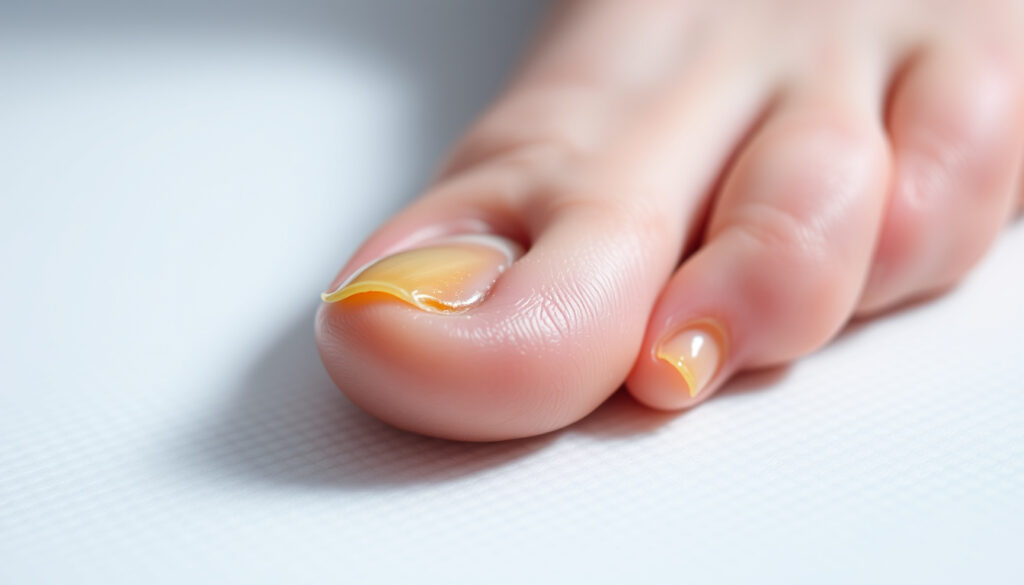
Early Stage Toenail Fungus: Symptoms, Causes, and Care
Anyone who’s noticed a small white or yellow spot under their toenail might wonder if it’s the start of something stubborn. Early stage toenail fungus is surprisingly common, affecting about 10% of adults globally, and it often begins quietly at the nail’s edge — catching it early can save months of treatment and prevent it from spreading to other nails or skin.
Global prevalence: 10% of adults ·
Prevalence in older adults: 20% of those over 60 ·
Nail disorders caused by fungus: 50% of all nail conditions ·
Recurrence rate after treatment: Up to 25%
Quick snapshot
- Onychomycosis is a fungal infection of the nail plate or nail bed (Merck Manual)
- Early signs include white/yellow discoloration, thickening, brittle edges (NHS)
- Oral terbinafine cure rate is 70–80% (American Family Physician)
- KOH preparation is the preferred diagnostic method (American Family Physician)
- Efficacy of home remedies like Vicks VapoRub is not well established (WebMD)
- Whether laser therapy is superior to oral antifungals is still debated (DermNet)
- Exact time when fungal infection becomes contagious is uncertain (WebMD)
- Role of natural remedies like tea tree oil lacks strong evidence (WebMD)
- Initial infection (Day 0): fungal spores colonize under nail (Cleveland Clinic)
- 2–4 weeks: white or yellow spot appears at nail tip (Cleveland Clinic)
- 1–3 months: nail thickens and becomes brittle (DermNet)
- 6+ months untreated: nail may separate; infection spreads (NHS)
- See a doctor if discoloration persists (NHS)
- Consider antifungal treatment options (OTC or prescription) (NHS)
- Practice foot hygiene to prevent spread (Cleveland Clinic)
- Monitor for signs of healing (new clear growth) (NHS)
Five key facts shape the clinical picture of early toenail fungus:
| Fact | Value |
|---|---|
| Prevalence | 10% of adults (Merck Manual) |
| Risk factor | Age over 60 (American Family Physician) |
| Causes | Dermatophyte fungi (Trichophyton rubrum) (DermNet) |
| Treatment timeline | 6–12 months for full nail regrowth (NHS) |
| Cure rate with oral antifungal | 70–80% (American Family Physician) |
How to tell if you have early toenail fungus?
Early signs and symptoms
- White, yellow, or brown discoloration at the tip of the nail (Cleveland Clinic)
- Thickened, brittle, or crumbling nail edges (NHS)
- Slight separation of the nail from the nail bed (Family Foot Care & Surgery)
- Chalky or cloudy spots on the nail surface (Cleveland Clinic)
When to see a doctor
- If OTC treatments haven’t worked after a few weeks (NHS)
- If you have diabetes or a weakened immune system (Cleveland Clinic)
- If the nail becomes painful or shows signs of bacterial infection (redness, swelling, pus)
A small spot today is easier to treat than a crumbling nail tomorrow. Early detection hinges on noticing color changes at the nail tip — the most common first sign.
The implication: catching discoloration within the first 2–4 weeks gives you a head start before thickening and brittleness set in.
What gets mistaken for toenail fungus?
Nail psoriasis vs. nail fungus
Three key differences separate these two common nail conditions:
| Feature | Nail psoriasis | Nail fungus (onychomycosis) |
|---|---|---|
| Cause | Autoimmune inflammation (DermNet) | Dermatophyte fungal infection (Merck Manual) |
| Nail pitting | Common — small pits or dents | Rare or absent |
| Subungual debris | Less common | Yellow-white debris under nail tip |
| Involvement of other nails | Often multiple nails symmetrically | Often starts on one big toe, then spreads |
Other conditions that mimic fungal infection
- Nail trauma: bruising or subungual hematoma can cause dark discoloration (Cleveland Clinic)
- Lichen planus: causes nail thinning, ridging, and scarring (DermNet)
- Bacterial nail infection (pseudomonas) can give a green-black discoloration
Many early‑stage nail changes are not fungal. Without a KOH test or culture, misdiagnosis is common — especially confusing nail psoriasis with fungus.
Why this matters: treating a psoriasis‑affected nail with antifungal creams wastes time and may delay proper management. A dermatophyte test (American Family Physician) can settle the question in minutes.
Is it okay to leave nail fungus untreated?
Potential complications of untreated nail fungus
- Infection can spread to other nails or skin (NHS)
- May cause pain, permanent nail damage, or secondary bacterial infection (Cleveland Clinic)
- People with diabetes or compromised immunity face higher risks, including cellulitis (American Family Physician)
Why early treatment is recommended
- The earlier you treat, the shorter the regimen — mild cases may respond to OTC topicals (WebMD)
- A delay of months can turn a superficial spot into a full‑thickness infection that requires oral medication (NHS)
The pattern: untreated fungus rarely goes away on its own. For most people, the trade‑off is clear — a few weeks of topical treatment now versus six months of pills later.
How to treat the beginning stages of toenail fungus?
Over‑the‑counter topical treatments
- Antifungal creams, gels, and nail lacquers containing clotrimazole, terbinafine, or ciclopirox (WebMD)
- Best for mild infections with only superficial discoloration (American Family Physician)
Home remedies (limited evidence)
- Vicks VapoRub and tea tree oil are commonly tried but lack controlled trials (WebMD)
- Some patients report improvement, but clinical cure rates are not well documented (DermNet)
Prescription oral medications
- Terbinafine (Lamisil) is the first‑line oral antifungal, with cure rates of 70–80% (American Family Physician)
- Itraconazole and fluconazole are alternatives for those who cannot take terbinafine (Merck Manual)
Step‑by‑step approach for early stage
- Confirm the diagnosis with a doctor — a KOH test or nail culture (American Family Physician)
- Start with an OTC antifungal lacquer applied daily for 4–8 weeks (WebMD)
- Keep feet clean and dry; trim nails straight across
- If no improvement after 8 weeks, ask your GP about oral terbinafine (NHS)
- Continue treatment until a healthy nail grows out — typically 6–12 months
Home remedies like vinegar soaks may feel soothing but don’t rely on them as a cure. They lack the antifungal concentration to penetrate the nail plate effectively.
Pros and Cons of oral vs. topical treatment for early stage
Upsides
- Oral: highest cure rate, short course (12 weeks)
- Topical: no systemic side effects, easy to use
- Early intervention may need only OTC topicals
Downsides
- Oral: potential liver enzyme elevation, drug interactions (Merck Manual)
- Topical: low penetration into nail bed, long duration (6–12 months)
- Home remedies: unproven efficacy, may delay effective treatment
The trade‑off: oral terbinafine works faster but requires medical supervision, while topicals are safer but demand patience. For mild early stage, starting with a topical is reasonable.
What absolutely kills nail fungus?
Antifungal ingredients that work
- Terbinafine — kills dermatophytes by inhibiting ergosterol synthesis (American Family Physician)
- Ciclopirox — broad‑spectrum antifungal available as nail lacquer (WebMD)
- Clotrimazole — OTC ingredient for mild cases
Oral versus topical efficacy
- Oral terbinafine achieves mycological cure in 70–80% of patients (American Family Physician)
- Topical ciclopirox lacquer cure rates range from 30% to 50% (DermNet)
Laser and light therapy
- Laser devices are FDA‑cleared for temporary increase of clear nail but not considered first‑line (WebMD)
- Limited evidence from controlled studies; often used as adjunct (DermNet)
The pattern: no single treatment kills fungus instantly. Consistency over weeks to months is what eradicates the infection. For most patients, oral terbinafine remains the closest thing to a guaranteed cure.
Timeline: what to expect during treatment
- Initial infection (Day 0): Fungal spores colonize under nail
- 2–4 weeks: White or yellow spot appears at the nail tip (Cleveland Clinic)
- 1–3 months: Nail thickens and becomes brittle (DermNet)
- 6+ months (untreated): Nail may separate from nail bed; infection spreads to other nails (NHS)
- During treatment: New clear nail grows from the cuticle — full replacement takes 6–12 months (NHS)
The implication: early treatment shortens the overall timeline. The sooner you start, the less time it takes for a healthy nail to grow out.
Clarity: what we know and what remains uncertain
Confirmed facts
- Fungal nail infections are caused by dermatophytes (Merck Manual)
- KOH preparation is the standard diagnostic method (American Family Physician)
- Oral terbinafine achieves 70–80% cure (American Family Physician)
- Untreated fungus can spread and cause permanent nail damage (NHS)
What remains unclear
- Whether home remedies (Vicks, tea tree oil) are effective (WebMD)
- If laser therapy is superior to oral antifungals (DermNet)
- Exactly when a fungal infection becomes contagious
The pattern: while many questions remain, the core treatment pathway is well supported by evidence.
Expert perspectives on early detection and differential diagnosis
“Early signs of nail fungus include a white or yellow spot under the tip of the nail. The earlier it’s caught, the more treatment options are available.”
— Cleveland Clinic (dermatology team)
“Nail psoriasis is often mistaken for fungal infection because both cause thickening and discoloration. A dermatophyte test can quickly tell them apart.”
— DermNet (dermatology reference)
“Systemic antifungals remain the most effective therapy, but topical options can work well for mild, early‑stage disease.”
— American Family Physician (primary care journal)
“Home remedies are popular, but patients should be cautious about relying on them as a primary treatment for fungal nail infections.”
— WebMD (health information platform)
For anyone facing that first yellow speck on their toenail, the decision is clear: get a proper diagnosis, start treatment early, and stick with it until a healthy nail grows in. Waiting only makes the problem harder to resolve.
Related reading: **Heart Palpitations After Eating: Causes, Relief & When to Worry**
pinnacleskin.com, rdash.nhs.uk, emedicine.medscape.com, emjreviews.com, somersetft.nhs.uk
Recognizing the first signs of early stage toenail fungus is crucial for choosing treatments that can stop its progression before the infection worsens.
Frequently asked questions
Can foot fungus live on bed sheets?
Yes — dermatophyte fungi can survive on fabrics for days to weeks. Washing bedding in hot water (60 °C / 140 °F) and drying on high heat reduces the risk of reinfection (CDC).
How long does it take for toenail fungus to go away with treatment?
With oral terbinafine, treatment lasts 12 weeks, but the nail takes 6–12 months to fully grow out healthy (NHS).
Can toenail fungus spread to other people?
Yes — it can spread through direct contact with infected nail debris or contaminated surfaces like shower floors and nail clippers (Cleveland Clinic).
What is the difference between athlete’s foot and toenail fungus?
Athlete’s foot (tinea pedis) is a fungal infection of the skin, causing itching and scaling between toes. Toenail fungus (onychomycosis) infects the nail plate and bed. Both can occur together (DermNet).
Should I see a doctor for early toenail fungus?
Yes — especially if you have diabetes, a weakened immune system, or if OTC treatments haven’t worked after a few weeks (NHS).
Can I prevent toenail fungus from coming back?
Keep feet dry, wear breathable shoes, change socks daily, disinfect nail clippers, and avoid walking barefoot in communal showers (Cleveland Clinic). Recurrence rates are up to 25%.
How to know if toenail fungus is dying?
A healthy pink nail will grow from the cuticle toward the tip, pushing out the discolored portion. The new growth looks clear and smooth — that’s the best sign of healing (WebMD).
More related posts
 Can Men Get Pregnant? Facts, Myths, and Future Possibilities
 Blinded by the Light Lyrics – Meaning and Deuce Explained
 Consignment Stores Near Me: Guide to Selling in Dublin
 Phillies vs Dodgers Match Player Stats: Game 4, Errors & Stories
 Rob Lowe Movies and TV Shows: Complete Guide to His Career
 Claire Danes Movies and TV Shows: Career Guide
 Joel Matthew Caswell FBI Indictment: Charges & Guilty Plea
 Wordle New York Times: Best Starting Words, Access, and History