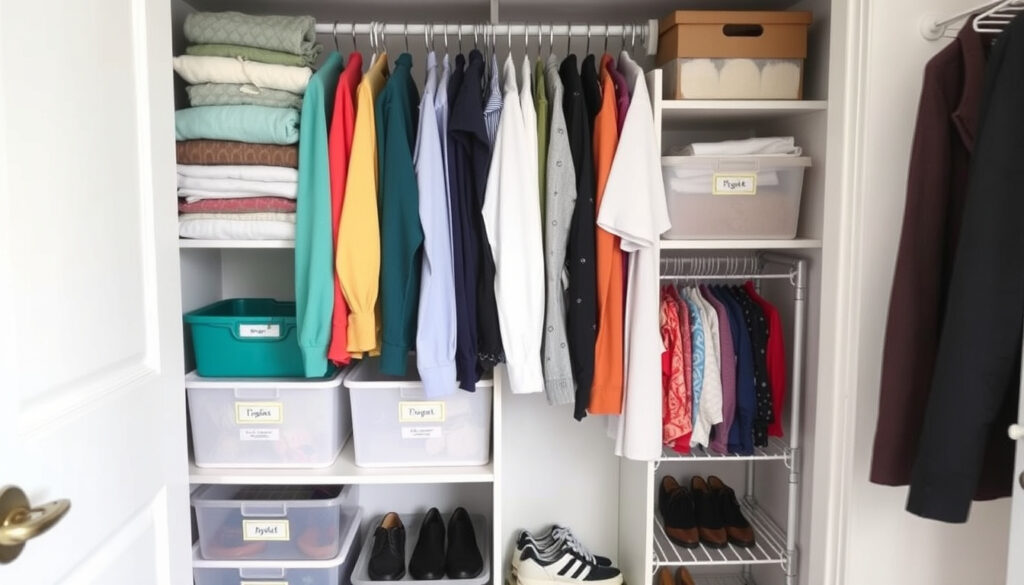
How to Organize a Small Closet: Best Setup, Tips & Mistakes
Anyone who’s tried to squeeze a winter coat, a pile of t-shirts, and a stack of shoes into a six-foot closet already knows the pain. With evidence-backed strategies like the 80/20 rule and smart vertical storage, you can reclaim space and keep most-used items accessible.
Average US closet width: 6 feet ·
Clothing discarded per year per person: 81 pounds ·
Increase in usable space with vertical organizers: up to 30% ·
Percentage of wardrobe worn regularly: 20% ·
Common mistake: buying organizers before decluttering: cited by 3 major guides
Quick snapshot
- Measure depth, width, and height (Tribesigns)
- Decide on double rod vs. shelves (Emily Henderson Design)
- Choose storage for shoes and accessories (Tribesigns)
- Double hanging rod (Emily Henderson Design)
- Shelf risers and overhead bins (Real Simple)
- Door hooks or over-door rack (Wirecutter)
- Use uniform hangers (Wirecutter)
- Fold and stack by category (Wirecutter)
- Refresh seasonally (Wirecutter)
Four patterns, one takeaway: the order matters. Decluttering before buying anything prevents wasted money, and measuring ensures organizers actually fit.
| Fact | Value |
|---|---|
| Average closet width (US) | 6 feet |
| Number of clothes per person (avg US) | 148 items |
| Space saved by thin hangers | 2 inches per item (Wirecutter) |
| Increase in capacity with double rod | up to 50% (Emily Henderson Design) |
What is the best setup for a small closet?
Declutter first
- Remove every item and sort into keep, donate, and discard piles.
- Marie Kondo’s method emphasizes finishing discarding before organizing (Just a Girl and Her Blog).
According to Wirecutter, the product review service of The New York Times, hang only wrinkle-prone items like dresses and blouses; fold jeans, sweaters, and t-shirts to save space. This single habit can free up half the rod.
Double hanging rods
- Double rods can double hanging capacity in a small closet (Emily Henderson, professional interior designer).
- Use the upper rod for shirts and jackets, the lower for pants and skirts.
The trade-off: you lose space for long coats. If you own long coats, store them in a different closet when possible (Strickland’s HOME).
Use vertical space with shelves and hooks
- Shelves above the rod convert wasted upper space into storage for folded items or baskets (Emily Henderson Design).
- Tension rods inside the closet create extra hanging for scarves and belts (Wirecutter).
Vertical storage is your single biggest leverage point in a small closet. Shelves, hooks, and tension rods can increase usable space by up to 30% without a renovation.
The pattern: starting with decluttering, then adding double rods and vertical shelves, creates a system where every item has a logical home. The catch is that skipping the purge means you’re just organizing clutter.
How to organize a small closet with too many clothes?
Apply the 80/20 rule
- Most people wear only 20% of their wardrobe 80% of the time (Vogue).
- Identify that core 20% and keep it at eye level (The Home Depot).
This rule frees significant space because the remaining 80% can be stored higher, lower, or moved out of the main closet entirely.
Seasonal rotation
- Move out-of-season clothes to under-bed bins or a separate storage area (Wirecutter).
- Vacuum bags compress bulky sweaters and coats by up to 50%.
The effect is immediate: a closet stuffed with winter coats in July becomes half-empty and breathable. (Need more bedroom storage? See Full Size Bed Frame Guide.)
Use uniform hangers to maximize space
- Thin velvet hangers save about 2 inches per item compared to thick plastic ones (Wirecutter).
- Having all hangers face the same direction makes the closet easier to scan and more visually calm (Wirecutter).
Thin velvet hangers save space but can be flimsy for heavy coats. Use wooden or padded hangers for suits and jackets to avoid sagging shoulders.
The implication: the 80/20 rule paired with seasonal rotation and uniform hangers isn’t just about fitting more in — it’s about making the 20% you wear every day instantly findable.
What are common closet organizer mistakes?
Skipping the declutter step
- Buying bins, baskets, and rods before decluttering leads to more clutter, not less (Strickland’s HOME).
- As Real Simple notes, sentimental or keepsake clothing should be separated from everyday wear first.
Ignoring vertical space
- The most common mistake is using only the hanging rod and leaving the upper area empty (Wirecutter).
- Adding a shelf above the rod instantly creates storage for folded items, bags, or baskets.
Buying organizers before measuring
- Organizers that don’t fit the closet’s exact dimensions waste money and space. The Tribesigns design team warns that “buying bins without planning leads to clutter” (Tribesigns).
- Always measure depth, width, and height, including the rod height, before purchasing.
The catch: mistakes compound. Skipping decluttering leads to buying the wrong organizers, which then clutter the closet further. Measure twice, buy once.
How to maximize a very small closet?
Install shelving above the rod
- A shelf 12 to 18 inches deep above the hanging rod can hold folded sweaters, handbags, or clear bins (The Home Depot).
- Clear bins improve visibility so you don’t have to pull everything down to find what you need (Real Simple).
Add hanging organizers for accessories
- Over-the-door shoe pockets can hold scarves, belts, jewelry, and small accessories (Wirecutter).
- These organizers use hidden space behind the door without taking up shelf or hanging room.
Use under-shelf baskets
- Baskets that attach beneath a shelf create extra storage for small items like socks, ties, or workout gear (Strickland’s HOME).
- Stackable drawers from brands like those reviewed by Real Simple prevent items from getting buried.
In a very small closet (say, 3 feet wide), every square inch of vertical and door space counts. The combination of an overhead shelf, door organizer, and under-shelf baskets can nearly triple usable storage.
The trade-off: if you overpack the door with heavy items, the door may sag or close poorly. Stick to lightweight accessories for over-door storage.
What is the 80/20 rule for wardrobe?
Identify the core 20% of most-used items
- Track what you wear for two weeks to find your core items (DownshiftingPRO).
- These go at eye level on the most accessible shelves or hangers (The Home Depot).
Store or donate the rest
- Move the 80% you rarely wear to higher shelves, under-bed storage, or donation bags.
- Marie Kondo’s method recommends discarding before organizing, which makes this step easier (Just a Girl and Her Blog).
Apply to shoes and accessories too
- The same 80/20 principle works for shoes: you probably wear 2-3 pairs most of the time. Keep those on the floor or a low shelf; store the rest in boxes or upper racks.
- This reduces decision fatigue and keeps the closet looking tidy (DownshiftingPRO).
The pattern: the 80/20 rule is more than a decluttering trick — it’s a daily time-saver. When you give prime real estate to the 20% you actually wear, choosing an outfit takes seconds, not minutes.
Upsides
- Double rods double hanging capacity without a renovation
- 80/20 rule instantly reduces visual clutter
- Thin hangers reclaim inches per item
- Vertical shelving adds 30% more storage
Downsides
- Long coats and formal wear lose their dedicated rod space
- DIY organizers may not last as long as built-ins
- Some over-door organizers don’t fit all door types securely
- Decluttering can be emotionally difficult for sentimental items
Step-by-Step Quick Guide
- Empty the closet completely. Sort into keep, donate, and trash piles.
- Measure the closet’s width, depth, and height. Note the rod height.
- Install a double hanging rod if your closet is at least 50 inches tall.
- Add a shelf above the rod and clear bins for folded items.
- Mount an over-door organizer for accessories.
- Hang wrinkle-prone items on thin velvet hangers all facing the same way.
- Fold jeans, sweaters, and t-shirts in neat stacks on shelves.
- Place the core 20% of your wardrobe at eye level.
- Move out-of-season clothes to under-bed storage or a spare closet.
- Maintain with a seasonal refresh every 3 months.
Confirmed facts
- Double hanging rods increase hanging capacity significantly (Emily Henderson Design).
- The 80/20 rule helps prioritize what stays in the main closet (Vogue).
- Decluttering before buying organizers is a necessary first step (Real Simple).
- Thin velvet hangers reduce bulk and improve visual scanning (Wirecutter).
What’s unclear
- Long-term durability of DIY organizers vs. store-bought systems hasn’t been studied in a controlled setting.
- Effectiveness of specific over-door organizers varies by door material (solid vs. hollow core).
“A good rule of thumb: hang only what wrinkles. Fold everything else — sweaters, jeans, t-shirts — and you’ll free up half your rod space.”
— Wirecutter editor, The New York Times
“Overcrowding causes damage to both clothes and closet fixtures. Give each item breathing room.”
— Tribesigns design team
For anyone sharing a tiny closet with a partner, the implication is clear: coordinate your 20% together, or fight for hanger space every morning. The evidence-backed approach — declutter, double-rod, vertical shelving, and the 80/20 rule — turns a daily struggle into a system that takes minutes to maintain. Invest the afternoon to set it up, and you’ll save that time back within a week.
charmedbycamille.com, justagirlandherblog.com, blog.onekingslane.com, youtube.com
For those with too many clothes and too little space, a small closet organization guide offers practical strategies that make a cramped closet feel twice as large.
Frequently asked questions
How do I organize a small closet without spending much money?
Use items you already own: tension rods, shoeboxes for accessories, and cardboard dividers. Focus on decluttering first — removing items costs nothing and instantly creates space.
What types of hangers are best for small closets?
Thin velvet hangers save the most space — about 2 inches per item. Use wooden or padded hangers for suits and heavy coats to maintain shape.
Can I use vacuum bags in a small closet?
Yes, vacuum bags are excellent for out-of-season clothing. Store them under the bed or in a storage ottoman to free up closet hanging space.
How often should I reorganize my small closet?
Do a full refresh every season — swap out off-season clothes, reassess your 20%, and donate anything you didn’t wear. A 5-minute tidy-up once a week keeps it functional.
What is the easiest way to keep a small closet tidy?
Use uniform hangers, keep the core 20% accessible, and never let the closet exceed 80% full. The 80/20 rule applies to the closet itself — leave breathing room.
More related posts
 Cast of The Lincoln Lawyer TV Series: Season 4 Cast
 CarMax Sell My Car: No-Haggle Process and Offer Tips
 Alaska PFD Stimulus September 2025: $1,000 Eligibility & Date
 Self Defense Classes Near Me: Ireland Guide 2026
 In the Tall Grass Ending Explained: Plot & Worth Watching?
 Jennifer Aniston Net Worth 2026: Friends Residuals & Divorce
 Boats for Sale Near Me: Find Used Boats in Ireland | Guide
 Department of Health and Human Services: What It Does