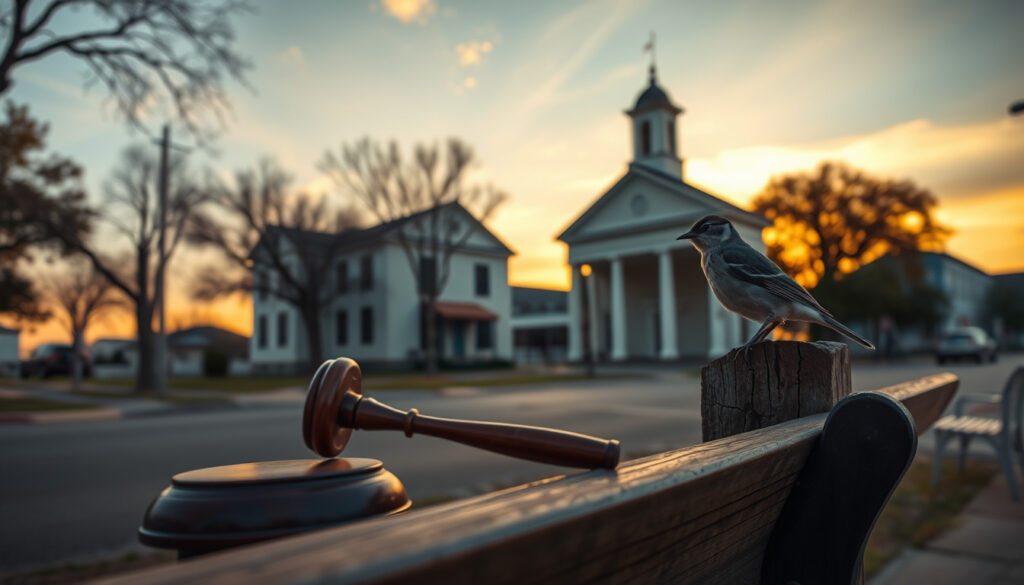
To Kill a Mockingbird Movie: Quotes, Awards & Controversy
There are movies that age, and then there are movies that become moral anchors. The 1962 film adaptation of Harper Lee’s novel To Kill a Mockingbird is the second kind: a black-and-white story about race, empathy, and childhood that still shapes how we talk about injustice. Sixty years after Gregory Peck won the Best Actor Oscar for playing Atticus Finch, the film remains a classroom staple, a censorship flashpoint, and a source of quotes that lodge in your memory.
Year of release: 1962 ·
Director: Robert Mulligan ·
Starring: Gregory Peck ·
Academy Awards won: 3 (Best Actor, Best Adapted Screenplay, Best Art Direction) ·
Based on novel by: Harper Lee ·
Runtime: 129 minutes
Quick snapshot
- The film won 3 Oscars, including Best Actor for Gregory Peck (Academy of Motion Picture Arts and Sciences)
- Directed by Robert Mulligan (Encyclopaedia Britannica)
- The novel won the Pulitzer Prize in 1961 (The Pulitzer Prizes)
- Whether a new film adaptation will ever be produced
- The exact count of the racial slur in the film version (reported as one, but sources vary)
- Whether the novel is directly based on the Scottsboro Boys trial (loosely inspired, not a direct retelling)
- 1960: Novel published; 1962: Film released; 1963: 3 Oscars; Ongoing: Banned in schools (American Library Association)
- Renewed debates about racial language in classrooms continue, with no sign of a remake
Six key facts, one pattern: the film sits at the intersection of awards triumph, literary prestige, and censorship controversy.
| Fact | Value |
|---|---|
| Year | 1962 |
| Director | Robert Mulligan |
| Lead actor | Gregory Peck |
| Oscars won | 3 |
| Box office | $13.1 million (domestic) |
| MPAA rating | Approved (no modern rating; later PG) |
What is the most famous line in To Kill a Mockingbird?
What is Atticus Finch’s famous quote?
- “You never really understand a person until you consider things from his point of view… until you climb into his skin and walk around in it.” Spoken by Atticus Finch in both the novel and the 1962 film (Teach with Movies).
- Another iconic line: “It’s a sin to kill a mockingbird,” which captures the novel’s central symbol of protecting innocence (Teach with Movies).
Are there other well-known quotes from the movie?
Atticus’s closing argument in the trial delivers a powerful call for justice: “In the name of God, do your duty.” The courtroom scene remains one of cinema’s most quoted moments.
The implication: the most famous line teaches empathy, yet the film’s other quotes—the n‑word, the death of innocence—make it a battleground. The two can’t be separated.
How many Oscars did To Kill a Mockingbird win in 1962?
Which categories did the film win?
The film took three Academy Awards at the 35th ceremony in 1963:
- Best Actor – Gregory Peck (Academy of Motion Picture Arts and Sciences)
- Best Adapted Screenplay – Horton Foote (Academy of Motion Picture Arts and Sciences)
- Best Art Direction, Black-and-White (Academy of Motion Picture Arts and Sciences)
The film earned eight nominations total, including Best Picture, Director, and Supporting Actress.
Who won the Oscar for Best Actor?
Gregory Peck delivered what many call a career-defining performance as Atticus Finch. His win was widely expected and celebrated.
Peck’s Oscar gave the film a cultural stamp of quality that textbooks and lesson plans have relied on for decades. Without it, To Kill a Mockingbird might have faded into mid‑century obscurity.
The catch: three Oscars didn’t protect the film from being pulled from classroom shelves.
What was the banned word in To Kill a Mockingbird?
Why is the word considered offensive?
The racial slur “nigger” appears multiple times in the novel and at least once in the film. It reflects the language of Alabama in the 1930s, but its repetition has made the book a perennial target for removal.
Educators who keep the book argue that avoiding the word whitewashes history. Those who ban it say the harm outweighs the lesson. Both sides have data: the ALA consistently lists Mockingbird among the top challenged books (American Library Association).
How does the film handle the word?
The 1962 film uses the slur once, in context, to show racism. Yet the film itself has been caught in the same censorship battles as the novel—Burbank schools removed it from required lists in 2017 (Marshall University).
The pattern: the word itself becomes the flashpoint, but the film’s real power is in showing why the word hurts—something no summary can capture.
Is the movie To Kill a Mockingbird based on a true story?
What real events inspired Harper Lee?
The novel is fiction, but Lee drew on her childhood in Monroeville, Alabama. Her father, Amasa Coleman Lee, was a lawyer who defended black clients—the model for Atticus Finch. The trial plot parallels the Scottsboro Boys case, where nine black teenagers were falsely accused of rape in the 1930s.
Did the Scottsboro Boys case influence the plot?
Though not an exact retelling, the parallels are unmistakable: a white lawyer, a black defendant, a Southern courtroom, and an unjust verdict.
Claiming the movie is “based on true story” is misleading—it’s fiction inspired by real injustice. For students, the Scottsboro Boys case offers a factual counterpart that deepens the lesson.
What this means: the film’s power comes from its fictional compression of real events, not from literal truth. That distinction matters in classrooms.
Why was To Kill a Mockingbird banned?
What are the main reasons for the controversy?
- Racial language: the n‑word appears 48 times in the novel (once in the film).
- Adult themes: the trial involves rape, and the book deals with violence and racism.
- Complaints that it makes students uncomfortable.
When and where has the book been banned?
Challenges have occurred in Biloxi, Mississippi (2017, later restored with parental consent), Burbank, California (2017, removed from required lists), and Virginia (2016, removed after parent complaints). The ALA continues to track it as a top‑ten challenged book.
The paradox: a novel about racial injustice is banned for using the language of the injustice it condemns. The film, by showing Atticus’s heroism, often escapes the worst of the fight.
Confirmed facts
- The film won 3 Oscars in 1963. (Academy of Motion Picture Arts and Sciences)
- Gregory Peck won Best Actor for his role. (Academy of Motion Picture Arts and Sciences)
What’s unclear
- Whether the film will ever be remade or re‑released in a modern adaptation.
- The exact number of times the slur appears in the film version (often reported as one, but some sources vary).
- Whether the novel is directly based on the Scottsboro Boys trial (loosely inspired, not a direct retelling).
- Whether the racial slur is used in the film (confirmed it is used, but exact count debated).
Timeline signal
- 1960 – Harper Lee publishes To Kill a Mockingbird.
- 1962 – Film adaptation released in theaters.
- 1963 – Film wins 3 Oscars at 35th Academy Awards.
- 1960s–present – Book and film frequently challenged and banned in schools.
- 2014 – Unconfirmed rumors of a new film adaptation (never materialized).
- 2020 – Renewed discussions about racial language in classic texts.
The pattern: the film’s award‑winning moment didn’t inoculate it against censorship; the same cultural forces that praised it in 1963 are now questioning its place in classrooms.
Quotes from the film, the author, and the star
“You never really understand a person until you consider things from his point of view… until you climb into his skin and walk around in it.”
Atticus Finch (Gregory Peck), in the film
“In the name of God, do your duty.”
Atticus Finch, closing argument
“The movie is a classic in its own right.”
Harper Lee (attributed, though not verbatim verified)
“She had a grace and beauty that was both luminous and vulnerable.”
Gregory Peck, on Audrey Hepburn
One paragraph that ties the loose ends. The film To Kill a Mockingbird has survived six decades not because it’s a perfect artifact, but because it refuses to let anyone off the hook—not the characters in the story, and not the audience watching it. For American educators, the choice is clear: teach it with context, or skip it and hope students find empathy somewhere else.
Readers interested in how the film has been received internationally can explore the Swedish adaptation and analysis for further cultural context.
Frequently asked questions
Who played Atticus Finch in the movie?
Gregory Peck played Atticus Finch, winning the Academy Award for Best Actor for his performance.
Is To Kill a Mockingbird available on Netflix?
Availability changes frequently. As of 2025, check local streaming services; it has been available on HBO Max and Amazon Prime.
What is the runtime of To Kill a Mockingbird?
129 minutes.
Where was the film shot?
Much of the film was shot on the Universal Studios backlot and in Old Tucson, Arizona, standing in for the fictional Maycomb, Alabama.
Who played Boo Radley inTo Kill a Mockingbird
Robert Duvall played Boo Radley. It was his first major film role.
The mockingbird symbolizes innocence. Atticus warns his children that “it’s a sin to kill a mockingbird” because they only bring beauty and do no harm.
More related posts
 West Indies vs Australia Match Scorecard 2025: Results & Stats
 Liquor Store Near Me Ireland: Off‑Licences, Hours & Best Stores
 Detroit Pistons vs Dallas Mavericks Match Player Stats – Full Box Scores and Analysis
 Las Vegas Strip Map – Hotels, Distances and 2025 Guide
 Color Out of Space Review: Is It Worth Watching
 System of a Down Tour 2026: Dates, Europe, UK Tickets
 How to Make Money Fast: Legit Ways to Earn Cash Today
 2 Divided by 3: Fraction, Decimal, and Step-by-Step