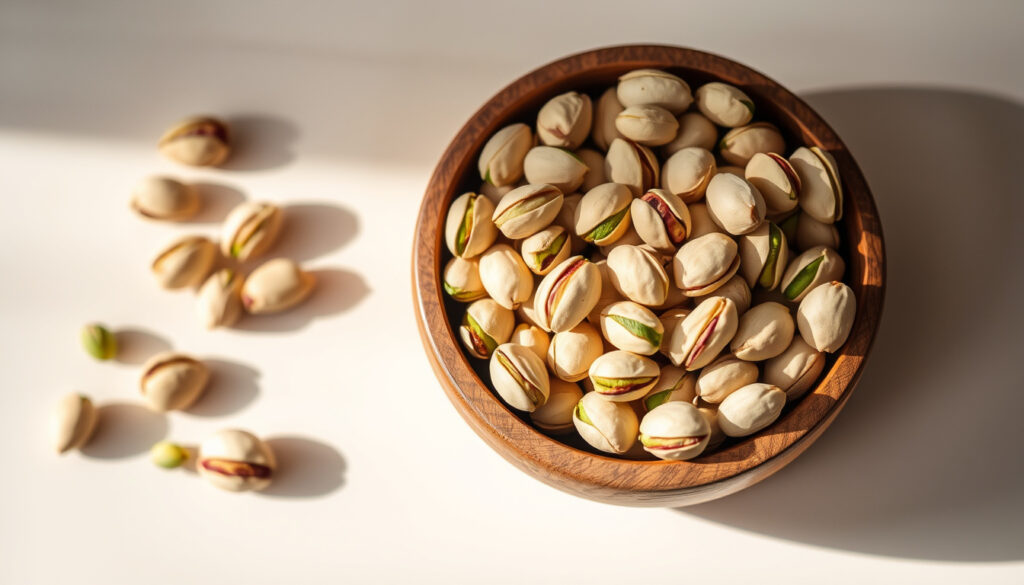
Are Pistachios Good for You? Health Benefits & Nutrition
You’ve probably stood in the snack aisle wondering whether those green pistachios are worth the effort of shelling — the short answer is yes, and a single ounce delivers 6 grams of protein, 3 grams of fiber, and about 25% of your daily vitamin B6 needs, according to Cleveland Clinic Health Essentials (physician-reviewed health site). We’ll break down the science, the serving size, and the trade-offs so you can decide exactly how pistachios fit your diet.
Calories per 1 oz (49 kernels): 160 ·
Protein: 6g ·
Fiber: 3g ·
Total Fat: 13g (mostly unsaturated) ·
Vitamin B6: 25% of Daily Value ·
Potassium: 290mg
Quick snapshot
- Pistachios lower LDL cholesterol in multiple studies (PMC (NIH) — systematic review)
- Provide antioxidant protection from vitamin E and polyphenols (Healthline (evidence-based health publisher))
- Support weight management through satiety from fiber and protein (WebMD (health information provider))
- Exact mechanism for sleep improvement (melatonin vs. other compounds) (Medical News Today (health news outlet))
- Safe dosage during pregnancy beyond general dietary guidelines (Medical News Today (health news outlet))
- Effect on skin health in long-term human trials (Medical News Today (health news outlet))
- Ongoing research explores pistachio’s role in gut health and blood sugar regulation (PMC (NIH) — systematic review)
- Researchers are investigating pistachio’s potential prebiotic effects and impact on metabolic syndrome
Eight key numbers, one pattern: pistachios pack a lot of nutrition into a small package.
| Nutrient | Per 1 oz (49 kernels) |
|---|---|
| Calories | 160 |
| Protein | 6g |
| Fiber | 3g |
| Total fat | 13g |
| Saturated fat | 1.5g |
| Vitamin B6 | 25% DV |
| Potassium | 290mg |
Are pistachios good for you?
Yes — and the evidence is rooted in nutrient density. A 1-ounce serving (about 49 kernels) contains 6 grams of protein and 3 grams of fiber, making it more nutrient-packed than many other common snacks (MyPlate.gov (U.S. dietary guidelines)). Pistachios also stand out for their antioxidant content, particularly lutein and zeaxanthin, which support eye health.
Several studies have linked regular pistachio intake to improved cholesterol markers. A 2022 review published in PMC found that pistachios significantly lower LDL cholesterol while maintaining HDL levels. The CDC notes that replacing saturated fats with unsaturated fats — the kind abundant in pistachios — supports heart health (CDC (U.S. public health agency)).
For weight control, the combination of protein, fiber, and healthy fats increases satiety. A study on pistachio consumption found that people who added them to a heart-healthy diet actually reduced their overall calorie intake over time (American Pistachio Growers (industry research body)).
Pistachios are one of the few complete plant proteins, meaning they provide all nine essential amino acids. That alone puts them in a different category from most nuts.
The implication: pistachios deliver nutritional value that few other nuts can match.
What are the health benefits of pistachios?
Why do I feel so good after eating pistachios?
- The vitamin B6 in pistachios helps convert tryptophan into serotonin, a mood-regulating neurotransmitter. This may explain the mild mood lift after eating them.
Are pistachios good for weight loss?
- High fiber and protein promote fullness, and shelled pistachios slow down eating — the visual cue of shells may help portion control. A Medical News Today analysis notes that replacing processed snacks with pistachios supports weight management.
Are pistachios good for cholesterol?
- Yes. A daily pistachio snack added to a heart-healthy diet has been shown to reduce LDL cholesterol by up to 10% in some trials. The effect is driven by monounsaturated fats and phytosterols.
Are pistachios good for your skin?
- Vitamin E and antioxidants protect skin cells from oxidative stress caused by UV exposure. While long-term human trials are limited, the essential fatty acids in pistachios support skin barrier function.
Are pistachios good for you during pregnancy?
- Pistachios provide iron (for red blood cell production) and folate (for fetal neural development), making them a nutrient-dense choice. However, specific pregnancy dosing guidelines are not established.
Are pistachios good for you before bed?
- Pistachios contain melatonin — about 4.5 mg per 100 g — as well as magnesium and B6, which together may promote sleep onset. A small handful before bed could be beneficial.
The pattern: each benefit builds on the same core nutrients — protein, fiber, healthy fats, and B6.
What are the pros and cons of eating pistachios?
Is there a downside to eating pistachios?
Pistachios come with trade-offs. On the positive side, they support heart health, blood sugar regulation, weight control, and provide a hefty dose of vitamin B6. On the downside, they are calorie-dense (160 per ounce), and salted varieties can push sodium intake high. People with tree nut allergies must avoid them entirely (U.S. FDA (food allergen regulator)).
Additionally, pistachios contain oxalates, which in large amounts may contribute to kidney stone formation in susceptible individuals. For people with irritable bowel syndrome, pistachios may trigger symptoms if eaten in portions larger than about 10 kernels, due to FODMAP content (FODMAP Everyday (digestive health resource)).
For most people, the health gains outweigh the risks — but only at the right serving size. One ounce daily is the sweet spot. Beyond that, you’re trading calorie density for marginal nutrient gain.
The catch: the benefits depend entirely on portion discipline.
How many pistachios should you eat per day?
A standard serving is 1 ounce (about 49 kernels), which delivers 160 calories. This amount fits easily into a balanced diet and provides satiety without overloading calories. Individual needs vary based on total calorie goals, but most research on health benefits uses a daily intake of 1 to 1.5 ounces.
Choosing in-shell pistachios can naturally slow your eating speed — each shell becomes a visual break. A 2011 study found that people ate 36% fewer calories when given in-shell versus shelled pistachios.
What this means: the serving strategy matters as much as the serving size.
How do pistachios compare to other nuts?
Four popular nuts, one pattern: each has a distinct nutritional strength.
| Nut (1 oz) | Calories | Protein | Fiber | Total Fat | Key Benefit |
|---|---|---|---|---|---|
| Pistachios | 160 | 6g | 3g | 13g | Complete protein, high B6, melatonin |
| Almonds | 164 | 6g | 3.5g | 14g | Vitamin E (50% DV), calcium |
| Walnuts | 185 | 4g | 2g | 18g | Omega-3 ALA, highest antioxidant activity |
| Macadamia nuts | 204 | 2g | 2g | 21g | Highest monounsaturated fat, lowest protein |
Data sourced from USDA FoodData Central (official U.S. nutrient database). For artery health, walnuts (omega-3s), almonds (vitamin E), and pistachios (phytosterols) all contribute to reducing inflammation and LDL oxidation. Macadamia nuts, while high in healthy fats, lack in protein and fiber — making them a less balanced daily choice.
Upsides
- Heart health: lowers LDL, raises HDL ratio
- Blood sugar regulation: low glycemic index
- Weight control: high satiety, portion awareness with shells
- Vitamin B6: 25% DV supports neurotransmitter production
Downsides
- Calorie dense: easy to overeat (more than 2 oz can offset benefits)
- Added salt in roasted varieties: up to 120 mg sodium per serving
- Tree nut allergy: one of the top allergens according to FDA
- Oxalates: may contribute to kidney stones in susceptible individuals
What we know vs. what’s still unclear
Confirmed facts
- Pistachios lower LDL cholesterol in multiple studies
- Provide antioxidant protection
- Support weight management through satiety
What’s unclear
- Exact mechanism for sleep improvement (melatonin vs. other compounds)
- Safe dosage during pregnancy beyond general dietary guidelines
- Effect on skin health in long-term human trials
“Pistachios are a good source of fiber and protein, making them a smart snack for weight control.”
WebMD (health information provider)
“Regular pistachio intake has been associated with improvements in lipid and glucose homeostasis in review literature.”
The verdict is clear: pistachios are among the healthiest nuts you can eat, offering a rare combination of complete protein, heart-healthy fats, fiber, and key micronutrients. For health-conscious snackers, the choice is straightforward: keep a 1-ounce portion of raw or dry-roasted pistachios as your go-to snack, or shell out for the in-shell version to naturally limit intake. For those with tree nut allergies or kidney stone history, the trade-off is real — proceed with caution and consult a dietitian.
Related reading: Can Dogs Eat Coconut? Benefits, Risks & Feeding Tips · Ashwagandha Benefits for Women: Hormones, Stress Relief
Frequently asked questions
Can pistachios help with blood pressure?
Yes — the potassium (290 mg per ounce) and magnesium in pistachios can help relax blood vessels, potentially lowering blood pressure. A review found that nut consumption, including pistachios, is associated with reduced hypertension risk.
Are pistachios keto-friendly?
Moderately. A 1-ounce serving has about 8 grams of total carbs and 3 grams of fiber, yielding 5 net carbs. That fits into a strict keto diet only in small amounts — limit to about half an ounce (24 kernels) to stay under 20 net carbs.
Do pistachios cause weight gain?
In moderation, no. Studies show that pistachio eaters actually tend to have lower body weight and waist circumference compared to non-nut eaters. The key is portion control: stick to 1 ounce per day.
Are pistachios good for diabetics?
Yes — pistachios have a low glycemic index and help stabilize blood sugar when eaten with carb-containing meals. A study found that a midday pistachio snack improved glucose and insulin responses in people with type 2 diabetes.
Should you eat pistachios before a workout?
A small handful (about 20 kernels) provides sustained energy from protein and healthy fats without weighing you down. The B6 also supports energy metabolism. Avoid large portions to prevent digestive discomfort.
Are roasted pistachios as healthy as raw?
Dry-roasted pistachios retain most nutrients, but oil-roasted or salted versions add extra calories and sodium. Raw or dry-roasted unsalted is the healthiest choice. A study found no significant difference in antioxidant levels between raw and dry-roasted pistachios.
More related posts
 What Is a PhD? Definition, Duration, and Key Differences
 What Channel Is the Eagles Game On? Watch Today
 Consignment Stores Near Me: Guide to Selling in Dublin
 Early Stage Toenail Fungus: Symptoms, Causes, and Care
 Best Photo Editing Apps – Top Free and Pro Picks for All Platforms
 CP4 Fuel Pump Lawsuit: Silverado Sierra Settlement Explained
 Buccaneers vs Rams Match Player Stats: Game Recap & Analysis
 Guru Nanda Pulling Oil: Benefits, Side Effects & How to Use