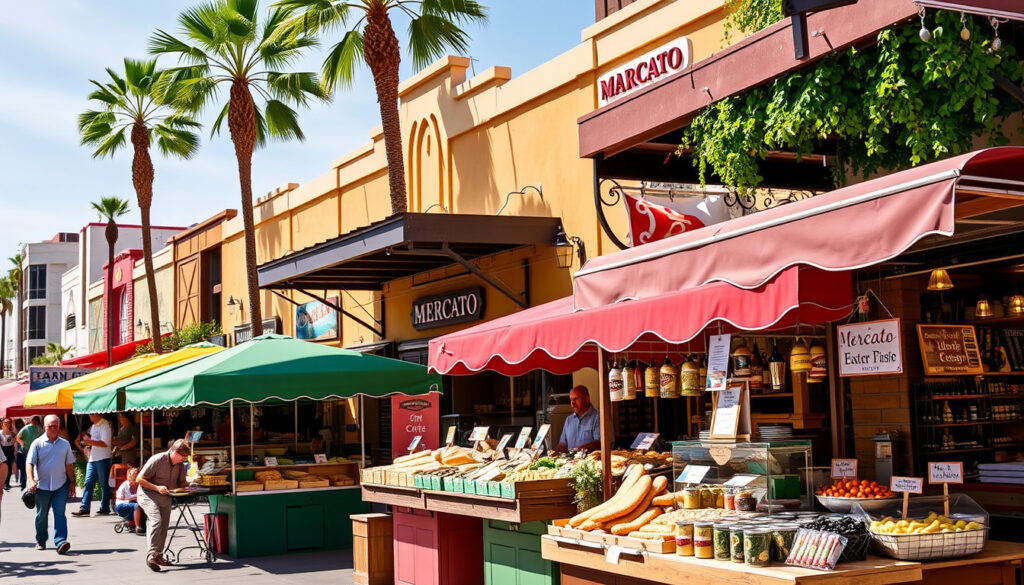
Little Italy San Diego – Restaurants Mercato and Visitor Tips
Little Italy San Diego is a vibrant neighborhood tucked along India Street, where Italian heritage meets a thriving culinary and cultural scene. Originally built around the city’s tuna fishing industry, the 15-block district now draws visitors with authentic restaurants, weekly farmers markets, and walkable piazzas that feel far removed from the typical San Diego tourist trail.
Whether you are planning a weekend food tour, hunting for the best pasta in the city, or simply looking for a walkable neighborhood to explore, Little Italy offers a mix of historic charm and modern energy that stands out in downtown San Diego. The area is particularly known for its Mercato farmers market, its concentration of family-owned Italian eateries, and Piazza della Famiglia—a central plaza that serves as the community’s living room.
Getting there is straightforward from San Diego International Airport, and once you arrive, almost everything worth seeing sits within a few blocks. Here is everything you need to know before your visit.
Where Is Little Italy San Diego and How to Get There?
Little Italy occupies a 15-block area along India Street, stretching roughly from the Santa Fe Train Station at Kettner Boulevard and West B Street northward to Kettner and West Laurel Street. The neighborhood is bordered by downtown San Diego on one side and the waterfront on the other, making it a natural stop for visitors combining multiple attractions.
Getting to Little Italy from the Airport
San Diego International Airport lies just minutes from Little Italy, giving visitors several convenient options. The San Diego Trolley Green Line stops at the Little Italy Transit Center, a roughly 15-minute ride from the airport terminals. Rideshare services typically complete the trip in around 10 minutes depending on traffic. Taxis are also readily available at ground transportation zones outside each terminal.
Navigating the Neighborhood
The neighborhood is exceptionally walkable, with most points of interest clustered along India Street and the surrounding piazzas. Cobblestone pathways, decorative fountains, and shaded benches create an atmosphere more reminiscent of a European streetscape than a typical American commercial district. Historic markers along the sidewalks tell the story of the area’s fishing industry origins, giving a sense of place to casual strolls. Evening visits are particularly popular, when the plaza lights illuminate and al fresco dining becomes the norm.
- Little Italy transformed from a 1920s tuna fishing and cannery hub into one of San Diego’s premier dining destinations
- The Mercato farmers market attracts more than 100,000 visitors monthly across its two weekly sessions
- Peak weekend periods bring increased crowds and parking pressure, especially during events
- Neighborhood walkability scores exceed 90, according to walkability assessments of the downtown corridor
- Food and drink walking tours typically visit three restaurants and a gelateria over 2.5 hours
- More than 50 Italian restaurants, cafes, and specialty food shops operate within the 15-block footprint
- The neighborhood hosts rotating events throughout the year, from food festivals to outdoor concerts
| Fact | Details |
|---|---|
| Established | Early 1900s Italian immigrant community centered on tuna fishing industry |
| Size | 15-block area centered on India Street |
| Character | Urban residential and commercial blend with strong food and hospitality focus |
| Signature Event | Little Italy Mercato farmers market (Saturdays and Wednesdays) |
| Primary Transit | Trolley Green Line via Little Italy Transit Center |
| Walkability | High; most attractions within a 5-minute walk of Piazza della Famiglia |
Best Restaurants in Little Italy San Diego
The dining scene in Little Italy extends well beyond pasta and pizza. The neighborhood offers a range of Italian-inspired options, from casual family delis to sit-down restaurants with extensive wine lists. Several establishments have deep roots in the community, operating for decades and feeding generations of locals and visitors alike.
Iconic Spots Worth Seeking Out
Mona Lisa Italian Foods at 2061 India Street has been a fixture since 1973, originally serving the neighborhood’s fishermen before evolving into a family deli-market. The menu features pizza, lasagna, and a selection of Italian grocery items, with operating hours from 9 a.m. to 9 p.m. The shop’s longevity reflects the enduring appeal of straightforward, quality Italian-American cooking in a neighborhood that has seen considerable change.
Sorrento Ristorante and Pizzeria is another longstanding presence, frequently featured on local food tours for dishes like tagliatelle alla bolognese, calamari, and a curated selection of Italian wines. The restaurant’s menu balances traditional preparations with the relaxed atmosphere expected of a neighborhood establishment.
Piazza della Famiglia at 523 West Date Street houses a food hall operating from 6 a.m. to 10 p.m., offering casual options for quick bites between explorations of the plaza and surrounding boutiques. The space provides outdoor seating and serves as a gathering point during community events.
Beyond Traditional Italian
Visitors with varied dietary preferences will find options that move beyond the traditional Italian playbook. Several kitchens incorporate vegan dishes, plant-based proteins, and gluten-conscious choices without sacrificing the flavor profiles associated with the neighborhood’s heritage. Gelato shops, espresso bars, and bakeries round out the food landscape, offering lighter fare for those looking to graze rather than sit down for a full meal.
Guided food tours typically include stops at three restaurants and a gelateria, combining tastings with historical context about the neighborhood. These experiences, often lasting around 2.5 hours with an English-speaking guide, provide a structured way to sample multiple establishments in a single visit.
Weekend evenings and Saturday market days draw the largest crowds. If priority dining is the goal, consider weekday lunches or early evening reservations at popular spots to avoid wait times.
Little Italy Mercato and Upcoming Events
The Little Italy Mercato is one of the most significant weekly events in downtown San Diego. Held on Saturdays from 8 a.m. to 2 p.m. along West Date Street between Kettner Boulevard and Union Street, and on Wednesdays from 10 a.m. to 2 p.m. during the Little Italy Wednesday Market, the Mercato draws a mix of local residents, professional chefs, and tourists. Vendors offer fresh produce, artisan goods, flowers, prepared foods, and live music, creating an atmosphere that extends well beyond a typical farmers market.
What to Expect at the Market
The Saturday session is the larger of the two, spanning multiple blocks with vendor booths offering everything from seasonal fruits and vegetables to handmade crafts and international prepared foods. Visitors frequently note that prices at the Mercato tend to be more competitive than nearby grocery stores, particularly for fresh produce and specialty items. Chefs from the neighborhood’s restaurants often shop the Wednesday market for ingredients, which gives that session a slightly different character—more focused on quality and sourcing than the broader Saturday offerings.
Annual Events to Watch
Beyond the weekly markets, Little Italy San Diego hosts several annual events that draw regional and visitor attendance. The Taste of Little Italy took place on June 17-18, 2025, from 4 p.m. to 8 p.m., offering culinary tastings from local restaurants across the neighborhood. The Marine Band San Diego Summer Concert series brings pop and military tunes to Piazza della Famiglia during the warm season, providing free entertainment for evening visitors.
Throughout the year, additional events such as wine tastings, food crawls, and live music performances appear on the neighborhood calendar. The local tourism board and business association maintain current schedules, which tend to shift seasonally. Travelers are encouraged to check listings before visiting to align their trip with specific events.
Arrive before 10 a.m. on Saturdays for the best vendor selection and lower crowd levels. The Wednesday market is smaller but less crowded, making it easier to move between stalls and interact directly with vendors.
Things to Do Beyond Food
Piazza della Famiglia sits at the center of the neighborhood’s social life, featuring a fountain, outdoor dining spaces, and evening lighting that draws visitors after dark. A nearby dog park at 254 West Date Street operates from 6 a.m. to 7 p.m., serving local residents and visitors with pets. Boutiques along India Street offer fashion, home goods, and art gallery space, with names like Rosamariposa, Vocabulary, Stroll, and Klassic representing the neighborhood’s retail diversity.
Walking tours provide options for different interests. Food and drink tours cover around 2.5 hours and include multiple restaurant stops, while history-focused walks emphasize the neighborhood’s fishing industry origins. Wine tasting walks route through three local wine bars, typically with lower crowd levels than the dining-centric routes.
History of Little Italy San Diego
Little Italy San Diego grew directly from the city’s tuna fishing industry, which took hold in the early 20th century. Italian immigrant families settled along what is now India Street, working the boats, operating canneries, and supplying fresh fish to local markets and restaurants. Generations of families built their lives around the sea, creating a tight-knit community that left lasting marks on San Diego’s culinary and cultural identity.
Street markers throughout the neighborhood recount the lives of these early residents, from the fishermen who braved the Pacific to the deli owners who fed them. Mona Lisa Italian Foods, established in 1973, represents one of the few remaining businesses with direct ties to that era, serving the same traditional goods that sustained the fishing crews decades ago.
The neighborhood experienced decline through the 1960s and 1970s as the commercial fishing industry contracted. The shift that followed was gradual but decisive: as original residents aged and the physical infrastructure aged with them, new entrepreneurs began repurposing the old cannery buildings and storefronts. By the 2000s, the area had repositioned itself as a dining and hospitality destination, attracting restaurants, galleries, and specialty retailers that valued the neighborhood’s character and foot traffic.
The Revitalization Era
The launch of the Mercato farmers market in the 2010s marked a turning point in neighborhood identity. The market brought consistent weekend crowds, elevated the profile of existing restaurants, and attracted new businesses to surrounding blocks. Annual festivals and outdoor concerts reinforced the area’s reputation as a gathering place, shifting perception from a historically interesting corner of downtown to a destination in its own right.
Today’s Community
Little Italy today maintains a duality that visitors often note: the neighborhood preserves physical reminders of its working-class past while functioning as a polished commercial district. Historic markers, longtime family businesses, and Cannery Row-era architecture coexist alongside contemporary restaurants, boutique retail, and a robust events calendar. The balance between authenticity and commerce remains a defining characteristic, one that local business associations actively work to protect as the city continues to develop.
Parking and Safety Tips for Little Italy San Diego
Parking in Little Italy San Diego
Street parking in Little Italy is genuinely limited, and competition for spots intensifies notably on Saturday mornings during the Mercato and during popular annual events. Several strategies can reduce frustration. Nearby parking garages and lots offer the most reliable availability, particularly those on the periphery of the 15-block area. Street meters along India Street and surrounding blocks operate on standard downtown schedules.
Visitors attending the Saturday market should plan to arrive early, before 8 a.m. if possible, to secure street parking or garage space. Those using public transit will find the trolley efficient for reaching the neighborhood without parking concerns at all. City parking resources and real-time availability tools can help drivers locate spaces before arrival, particularly during high-traffic periods.
Saturday Mercato hours (8 a.m. to 2 p.m.) create significant parking demand. W. Date Street and adjacent blocks are partially restricted during market hours. Budget extra arrival time or consider alternative transport.
Is Little Italy San Diego Safe?
Little Italy is considered a safe neighborhood with a strong community presence and well-lit public spaces, including Piazza della Famiglia. The area attracts regular foot traffic throughout the day and into the evening, which contributes to a feeling of security. Standard urban precautions apply—particularly in crowded market settings or during popular events—where petty theft such as unattended bags can occasionally occur.
The neighborhood is family-friendly and frequently visited by residents and tourists without incident. Evening dining on the plaza is common, with the lighting and active restaurant patios creating an inviting atmosphere well after dark. Local law enforcement presence is visible, and the business association works to maintain cleanliness and safety standards throughout the commercial district.
Transit Alternatives
Given the limited parking and the neighborhood’s compact layout, public transit or walking represents the most practical approach for many visitors. The San Diego MTS trolley system provides direct Green Line access to the Little Italy Transit Center from locations across the city, including the airport. Once in the neighborhood, almost everything worth visiting sits within a short walk, making a car optional for most itinerary priorities.
Little Italy San Diego Timeline
Understanding how Little Italy arrived at its current form requires a look at the key chapters in its development.
- 1920s: San Diego’s tuna fishing industry reaches its peak. Italian immigrant families settle the India Street corridor, establishing canneries, fishing operations, and neighborhood institutions.
- 1960s–1970s: The commercial fishing industry declines sharply. Several canneries close or relocate. The neighborhood transitions through a period of economic uncertainty and population loss.
- Late 1990s–2000s: Revitalization begins in earnest. Former cannery spaces and storefronts attract new restaurants, cafes, and galleries. Early adopters in the food and hospitality sectors establish a presence.
- 2010s: The Mercato farmers market launches, establishing Little Italy as a weekly destination. Annual festivals, outdoor concerts, and community events further define the neighborhood’s identity.
- 2020s–present: Ongoing expansion of dining options, boutique retail, and public programming. The neighborhood draws more than a million annual visitors, contributing significantly to downtown San Diego’s hospitality economy.
What Is Known and What Remains Uncertain
The core facts about Little Italy San Diego rest on solid ground. The neighborhood’s geographic boundaries, its origins in the tuna fishing industry, the founding dates of key businesses, and the schedule of the Mercato farmers market are documented through multiple independent sources.
| Established Information | Information That Remains Less Clear |
|---|---|
| Location: 15-block area along India Street between Kettner Blvd and Laurel St | Precise year-over-year visitor attendance figures for the Mercato |
| Origins: Early 1900s Italian immigrant fishing community | Exact timeline of individual business openings during the revitalization era |
| Mercato schedule: Saturdays 8am–2pm, Wednesdays 10am–2pm | Detailed economic impact data beyond general annual visitor spend estimates |
| Key establishments: Mona Lisa Italian Foods (est. 1973), Sorrento Ristorante | Future development plans for remaining underutilized parcels |
| Airport access: ~15 min by trolley, ~10 min by rideshare | Specific security incidents or safety statistics from recent reporting periods |
| Walkability: High; most attractions within a 5-minute walk of Piazza della Famiglia | Official walkability scoring methodology and third-party verification |
Context: Why Little Italy Matters to San Diego
Little Italy represents one of downtown San Diego’s most successful neighborhood transformations. What began as a working waterfront community tied to commercial fishing evolved through decades of economic change into an identity built around food, culture, and walkability. The neighborhood’s trajectory offers a case study in how urban districts can reinvent themselves while retaining elements of their original character.
Economically, Little Italy draws significant visitor spending into a relatively compact footprint. The combination of the weekly Mercato, an active events calendar, and more than 50 dining and retail establishments creates a multiplier effect for the local economy that extends beyond the neighborhood’s borders. The contrast with other downtown districts like the Gaslamp Quarter—known for nightlife and entertainment—underscores the diversity of San Diego’s urban fabric and the range of experiences the city can offer within a few miles of each other.
Culturally, the neighborhood maintains ties to San Diego’s immigrant history through its architecture, street markers, and businesses that have operated for generations. That continuity gives Little Italy a depth that newer developments in the city lack, providing both a sense of place for local residents and a compelling narrative for visitors interested in the city’s social history.
Sources and Quotes
“Little Italy is the heart of San Diego’s Italian culture.” — San Diego Tourism Authority
“Mercato is one of the best markets in the US.” — Food & Wine
Primary sources consulted for this guide include the official Little Italy San Diego business association website, the San Diego Tourism Authority neighborhood guides, and documented historical records for geographic and demographic data. Visitor reviews and tour operator materials provided additional context on dining establishments, market operations, and event schedules.
Summary
Little Italy San Diego delivers a distinctive neighborhood experience rooted in Italian immigrant history and sustained by a vibrant contemporary food and cultural scene. The 15-block district along India Street offers walkable access to quality restaurants, one of the region’s largest weekly farmers markets, and a calendar of events that draws visitors throughout the year. Getting there is convenient by trolley or rideshare from the airport, and while parking requires planning—particularly on Saturday mornings—the neighborhood’s compact layout makes a car unnecessary for most visits.
For those interested in exploring further, a Dodgers vs Padres Match Player Stats guide offers context on another San Diego-area sporting draw, while a Cheesecake Factory Near Me resource can help locate nearby dining options beyond the neighborhood’s Italian-focused establishments.
Frequently Asked Questions
What is Little Italy Mercato?
Little Italy Mercato is San Diego’s largest weekly farmers market, held on Saturdays from 8 a.m. to 2 p.m. and Wednesdays from 10 a.m. to 2 p.m. The market features over 100 vendors offering fresh produce, artisan goods, prepared foods, and live music.
How do I get to Little Italy from San Diego airport?
San Diego International Airport is approximately 10 minutes from Little Italy by rideshare. The San Diego Trolley Green Line serves the Little Italy Transit Center in about 15 minutes. Taxis are also available at the airport terminals.
Where is Little Italy San Diego located?
Little Italy San Diego occupies a 15-block area along India Street, roughly bounded by Kettner Boulevard on the west and Laurel Street on the north, within downtown San Diego.
Is Little Italy San Diego safe to visit at night?
Yes. The neighborhood is considered safe during evening hours. Piazza della Famiglia and surrounding streets are well-lit, and restaurant patios remain active into the night. Standard urban precautions, such as securing personal belongings in crowded areas, are advisable.
What restaurants are recommended in Little Italy San Diego?
Notable establishments include Mona Lisa Italian Foods (operating since 1973), Sorrento Ristorante and Pizzeria, and the food hall at Piazza della Famiglia. The neighborhood hosts over 50 dining options spanning casual cafes to full-service restaurants.
Is parking available during the Mercato?
Street parking fills quickly during Saturday market hours. Drivers are encouraged to arrive early, use nearby parking garages, or consider public transit. The Wednesday market generates less parking demand than the Saturday session.
What events take place in Little Italy San Diego?
Annual events include the Taste of Little Italy culinary festival and Marine Band San Diego summer concerts at Piazza della Famiglia. The weekly Mercato and rotating wine tastings and food crawls provide regular programming throughout the year.
More related posts
 Doki Doki Literature Club: Parents’ Guide to 18+ Rating
 System of a Down Tour 2026: Dates, Europe, UK Tickets
 Las Vegas Strip Map – Hotels, Distances and 2025 Guide
 Best Photo Editing Apps – Top Free and Pro Picks for All Platforms
 Tara Reid Low Rise Pants: 2000s Icon to 2025 Trend
 Ashwagandha Benefits for Women: Hormones, Stress Relief
 Best Garden Centre Near Me – Local Irish Guide