Full Moon August 2025 – Date, Times and Viewing Guide
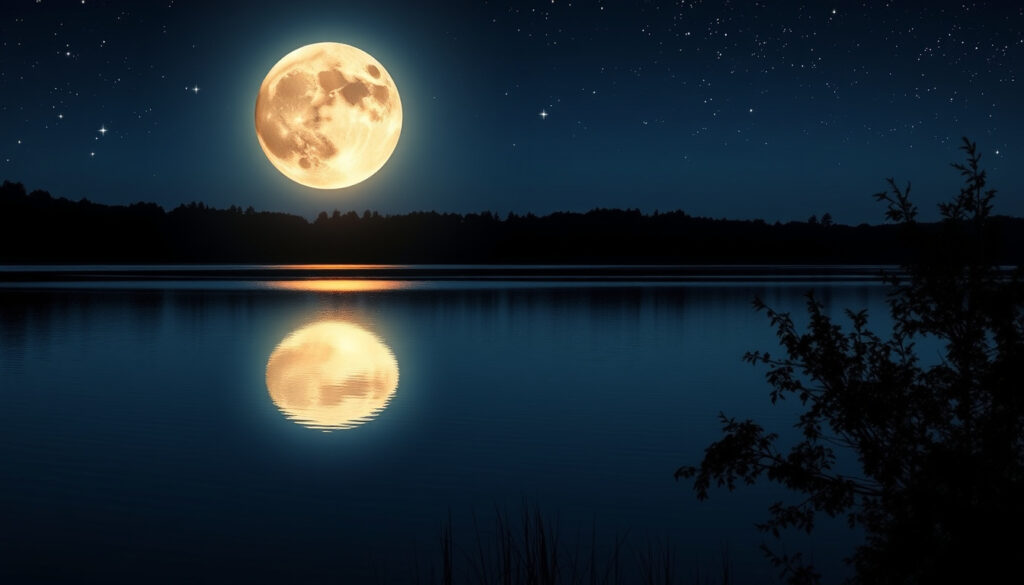
Skywatchers will have the opportunity to observe the August full moon on August 9, 2025, when it reaches peak illumination at 07:54 UTC. Known traditionally as the Sturgeon Moon, this lunar event will appear fully bright across the nights of August 8 and 9, offering a clear target for observation across most of the world.
Unlike the supermoons seen earlier in 2025, this month’s full moon sits slightly closer to Earth than average, resulting in a modestly brighter and larger appearance than typical full moons. It will be visible all night, rising in the east near sunset and setting in the west near sunrise, providing a convenient viewing window for observers in both hemispheres.
Whether viewed with the naked eye, photographed, or simply admired from a park bench, the Sturgeon Moon offers a straightforward astronomical highlight for August. This guide covers the exact timing, rise and set data for major cities, the cultural significance behind the name, and practical tips for getting the best view.
When Is the Full Moon in August 2025?
The full moon in August 2025 reaches its peak illumination on August 9 at 07:54 UTC, according to data referenced by Space.com. For observers in the Eastern United States, this converts to 3:54 a.m. EDT on the morning of August 9. Some sources list the peak time as 7:55 UTC, a difference of one minute that reflects rounding in astronomical calculations. Across the Americas, the moon reaches its fullest point during the overnight hours between August 8 and 9.
The official peak occurs at 07:54 UTC on August 9, 2025. For most locations, the moon appears fully illuminated for roughly two nights surrounding this moment, making the evenings of August 8 and 9 the primary viewing windows.
August 9, 2025
07:54 UTC
Sturgeon Moon
No
Exact Date and Peak Illumination Time
Astronomical agencies, including the United States Naval Observatory, calculate the exact moment of peak illumination using precise lunar orbit data. On August 9, 2025, the moon reaches 100% illumination at 07:54 UTC. The moon will remain essentially full to the naked eye for a window of one to two nights before and after this peak, covering approximately August 7 through August 10.
This timing places the crest event conveniently for North American evening viewers. In New York, for example, the moon peaks just before sunrise on August 9, then sets around 6:04 a.m. EDT before rising again at approximately 8:30 p.m. that same evening.
Full Moon Calendar for August 2025
Understanding where this full moon sits within the broader lunar cycle helps contextualize its timing. The following table outlines key moon phases for August 2025:
| Phase | Date | Approximate Time |
|---|---|---|
| New Moon | August 4, 2025 | Varies by timezone |
| Full Moon (Peak) | August 9, 2025 | 07:54 UTC |
| Last Quarter | August 17, 2025 | Varies by timezone |
This sequence shows that the full moon arrives roughly five days after the new moon, following the standard two-week interval between lunar phases. Anyone interested in photographing the moon’s surface in detail may find the days immediately after the full moon, when shadows along the terminator are longest, particularly useful for capturing crater details.
What Time Does the Full Moon Rise on August 9, 2025?
For most observers, the full moon becomes visible around sunset on August 9, rising in the eastern sky as the sun sets in the west. The moon remains in the sky throughout the night, setting in the west the following morning near sunrise. Unlike other celestial events that require precise timing, a full moon is visible continuously for an entire night, making it one of the most accessible astronomical phenomena.
According to EarthSky, the moon rises approximately one hour later each successive day. On the night of peak illumination, August 9, observers can expect moonrise times to vary based on their geographic location. The following table provides sample moonrise times for several major cities on August 9, expressed in local time.
| City | Moonrise (Local Time) |
|---|---|
| New York, U.S. | 8:30 p.m. |
| San Francisco, U.S. | 8:42 p.m. |
| London, U.K. | 8:57 p.m. |
| Rome, Italy | 8:40 p.m. |
| Cairo, Egypt | 8:02 p.m. |
| Sydney, Australia | 5:11 p.m. |
These times are approximate and can shift by several minutes depending on the observer’s precise latitude and longitude. Dedicated skywatchers should consult a local moonrise calculator for their specific location to plan an optimal viewing session.
Rise and Set Times by Location
Latitude plays a measurable role in moonrise timing. At higher latitudes, the moon’s path across the sky appears lower on the horizon compared to equatorial regions. For observers in the northern United States or Europe, the full moon will track lower through the southern sky, while those in the southern hemisphere will see it positioned higher in the northern sky.
The moon’s position on the night of August 9 places it in front of the Capricornus constellation. The brightness of the full moon makes the faint stars of Capricornus difficult to distinguish with the naked eye, though they remain observable through binoculars or a small telescope.
Best Viewing Windows
The most visually striking views of the full moon occur when it sits near the horizon, shortly after moonrise. During this period, an effect known as the moon illusion causes the moon to appear larger and adopt a warmer, golden hue. This is a psychological phenomenon rather than a physical change in the moon’s size, but it consistently produces memorable views.
The best views typically occur one to two hours after moonrise, when the moon has risen enough to clear obstacles on the eastern horizon while still being low enough to exhibit the moon illusion effect. Checking local weather forecasts for cloud cover is strongly recommended before planning an observation session.
For photographers, the period immediately after moonrise offers the richest color saturation and the most visually dramatic backdrop, especially when the moon rises over city skylines or natural landscapes. Mobile apps designed for astrophotography can help align compositions with foreground elements effectively.
A note for meteor shower enthusiasts: the full moon’s brightness is expected to interfere with viewing the Perseid meteor shower, which peaks around the same time in August. The abundant lunar light washes out the faint streaks that define the Perseids, making this year’s shower less favorable for observation.
What Is the August 2025 Full Moon Called?
The August full moon carries the traditional name Sturgeon Moon, a designation rooted in the seasonal habits of sturgeon fish in North America. According to multiple sources, August marked the peak season for catching sturgeon in the Great Lakes and Lake Champlain, making this fish a natural focal point for monthly naming traditions.
Full moon names of this kind originate primarily from Native American traditions, later adopted and expanded by colonial settlers and almanac publishers. Each name reflects an observable natural event or seasonal marker relevant to the month in question, making them culturally tied to agricultural cycles, animal behavior, and weather patterns.
Traditional Names and Cultural Significance
Alongside the Sturgeon Moon, August’s full moon has carried other traditional names across different cultures. Flying Up Moon and Corn Moon appear in various Native American traditions, referring to the period when young birds learn to fly and when corn harvests begin, respectively. These names collectively emphasize August’s position as a transitional month between late summer and the approaching autumn season.
Each full moon name traditionally applies to the entire lunar month, rather than just the single night of peak illumination. This means that any full moon occurring in August, regardless of the specific date, would traditionally be called the Sturgeon Moon.
Full moon names are applied to the lunar month as a whole. A full moon occurring on August 1 or August 31 would both carry the Sturgeon Moon name for that month, though in practice the peak date almost always falls near the midpoint of the lunar cycle.
Is the August 2025 Full Moon a Supermoon?
No, the August 2025 full moon does not meet the technical definition of a supermoon. A supermoon occurs when the full moon coincides with the lunar perigee, the point in the moon’s orbit when it is closest to Earth. In August 2025, the full moon falls slightly closer than average but not close enough to qualify as a supermoon, according to EarthSky’s analysis.
The distinction matters because supermoons appear roughly 7% larger and 16% brighter than a typical full moon. The August 2025 Sturgeon Moon will still be visibly bright and slightly larger than a standard full moon due to its above-average proximity to Earth, but the difference is moderate rather than dramatic.
Perigee Distance Comparison
The moon’s orbit around Earth is elliptical, with an average distance of approximately 384,400 kilometers between the two bodies. At perigee, this distance can shrink to around 356,500 kilometers, while at apogee it stretches to roughly 406,700 kilometers. Supermoon conditions require the full moon to occur near perigee, typically within approximately 360,000 kilometers.
In August 2025, the moon’s proximity to Earth at full phase is elevated compared to the average, but it does not reach the threshold that defines a supermoon. Observers expecting the dramatic size difference associated with supermoons should temper expectations slightly, though the moon will still present a notably bright disc in the night sky.
Moon Phases in August 2025: Timeline
The following timeline outlines the progression of lunar phases throughout August 2025, providing a broader context for when the full moon occurs within the monthly cycle.
- August 4: New Moon — Marks the start of the lunar cycle, when the moon is not visible at night.
- August 9: Full Moon (Peak Illumination) — The Sturgeon Moon reaches 100% illumination at 07:54 UTC.
- August 17: Last Quarter — The moon is half-illuminated as it wanes toward the next new moon.
For observers who prefer to track the moon’s phases throughout the year, resources such as The Old Farmer’s Almanac provide detailed tables for each month’s lunar events. Understanding this recurring cycle can enhance anticipation for future full moons, including the one anticipated for September 2025.
What Is Confirmed and What Varies
When preparing to view a full moon, it helps to separate the facts that are firmly established from the details that depend on location and weather conditions.
- Peak illumination: August 9 at 07:54 UTC
- Full moon name: Sturgeon Moon
- Supermoon status: No
- Visibility window: Nights of August 8-9
- Constellation: Capricornus
- Exact moonrise and moonset times
- Apparent altitude in the sky
- Clear sky conditions
- Light pollution levels
- Eastern horizon unobstructed view
The peak time published by astronomical organizations is precise and consistent across authoritative sources. Local rise and set times, however, shift based on latitude, longitude, and elevation. Observers in mountainous areas or urban environments with tall buildings on the eastern horizon may need to travel to a location with a clearer view of the horizon to catch the best moonrise.
The Sturgeon Moon: Background and Meaning
Full moon naming traditions served a practical purpose before the advent of modern calendars and digital timekeeping. Rural communities relied on observable natural cycles to mark the passage of seasons, coordinate agricultural activities, and track time in general. Assigning memorable names to each month’s full moon made this tracking intuitive and communal.
The sturgeon, a prehistoric fish species native to North American freshwater systems, was historically abundant in the Great Lakes and Lake Champlain. August represented the height of the sturgeon fishing season, when large numbers of the fish could be caught. This made the sturgeon an obvious and meaningful reference point for August’s full moon in the communities that depended on it.
Today, the Sturgeon Moon remains primarily a cultural and astronomical reference rather than a practical fishing marker, as commercial sturgeon populations have changed significantly over the centuries. Nonetheless, the name persists as part of a broader tradition of naming full moons that connects modern observers to generations of skywatchers who found meaning in the same lunar cycle.
Sources Referenced
“August’s Full Sturgeon Moon and Autumnal Equinox 2025 — When, How, and Why to Watch.” Astronomy for Change. https://astronomyforchange.org/augusts-full-sturgeon-moon-and-autumnal-equinox-2025/
“What Time Is the Full Moon on August 9, 2025?” Space.com. https://www.space.com/stargazing/what-time-is-the-full-moon-aug-9-2025
“August Full Moon.” EarthSky. https://earthsky.org/tonight/august-full-moon/
Full Moon August 2025: Key Takeaways
The August 2025 full moon reaches peak illumination on August 9 at 07:54 UTC. Known as the Sturgeon Moon, it is not classified as a supermoon but sits closer to Earth than average, producing a brighter and slightly larger appearance than typical full moons. The moon will be visible all night on August 8 and 9, rising in the east near sunset and setting in the west near sunrise. Optimal viewing occurs one to two hours after moonrise, when the moon illusion produces the most visually dramatic effect near the horizon.
For those interested in exploring related activities under the night sky, the Best Photo Editing Apps can help enhance and share lunar photographs taken during this event. Additionally, pairing a full moon observation with a search for local Live Music Near Me Tonight events can make for a well-rounded evening outing.
Frequently Asked Questions
How to see the full moon in August 2025?
Step outside on the evenings of August 8 or 9, 2025, after sunset. The moon rises in the east and will be visible all night. For the most dramatic view, wait one to two hours after moonrise and find a location with a clear eastern horizon and minimal light pollution.
What is the spiritual meaning of August 2025 full moon?
Full moons have held symbolic significance in various cultural and spiritual traditions. The Sturgeon Moon traditionally aligns with late-summer harvesting themes, transitions before autumn, and reflection cycles in certain spiritual practices. Scientifically, no evidence links the lunar cycle to human behavior.
Best places for full moon viewing in August 2025?
Locations with low light pollution, an unobstructed eastern horizon, and clear skies offer the best views. Elevated areas such as hills, rooftop bars, or open parks away from city centers are ideal. Checking local weather forecasts in advance helps avoid wasted trips.
What are the moon phases for August 2025?
August 2025 begins with a new moon on August 4, reaches full illumination on August 9, and concludes with a last quarter moon on August 17. These are the primary phases of the lunar cycle for the month.
Is the Sturgeon Moon a supermoon?
No. The August 2025 Sturgeon Moon is not classified as a supermoon. It is slightly closer to Earth than average, which makes it a bit brighter than a typical full moon, but it does not reach the perigee distance required for supermoon status.
When is the next full moon after August 2025?
The next full moon after August 2025 is expected in September 2025. Full moon names for subsequent months follow the traditional naming cycle used throughout the year.
More related posts
 Worms in Dog Poop: What to Do, Treatment & Prevention
 Ella Purnell Movies and TV Shows: Full Filmography & Guide
 Netflix Black Friday Deal: Does One Exist
 Blue Jays vs Red Sox – Final Score, Highlights and Analysis
 1923 Season 2 Episode 7 – Release, Plot, Cast Guide
 Cast of The Lincoln Lawyer TV Series: Season 4 Cast
 Honey Pack for Men: Hidden Risks, Safety & How to Use
 Sephora Credit Card Login – Secure Account Access Guide