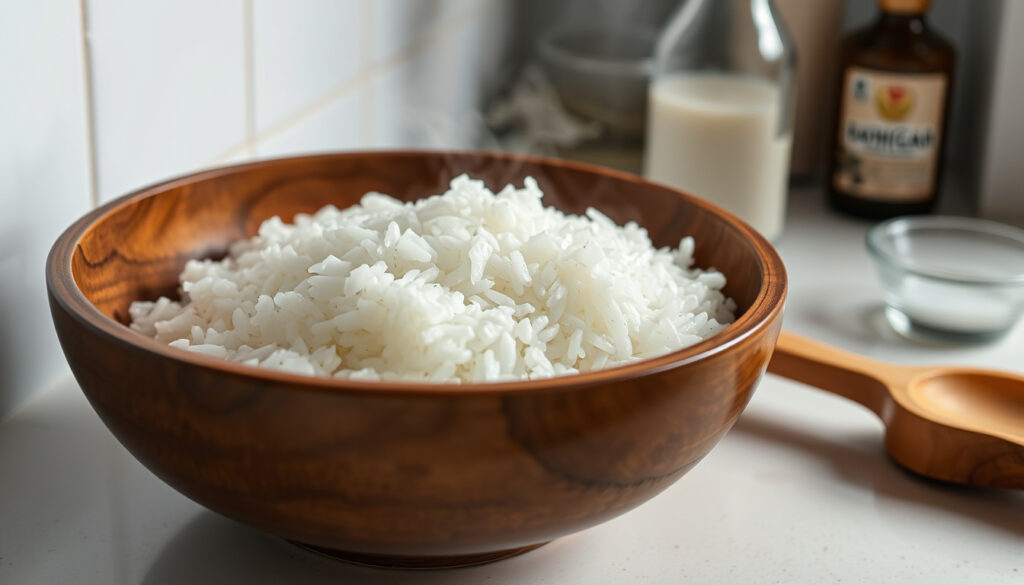
How to Make Sushi Rice: Stovetop Guide & Vinegar Ratio
Anyone who’s tried rolling sushi at home knows the hardest part isn’t the fish—it’s the rice. Getting that glossy, just-sticky-enough texture with a subtle tang of vinegar takes a specific technique and a few key ratios.
Sushi rice washes: 2-3 times until water runs clear (BBC Good Food) ·
Water to rice ratio: 1:1.2 or 1.25 cups water per 1 cup rice (Serious Eats) ·
Vinegar seasoning ratio: 5 tbsp rice vinegar, 3 tbsp sugar, 2 tsp salt for 3 cups dry rice (Allrecipes) ·
Cool-down time: 90 minutes before rolling (Yamamori) ·
Cook time (stovetop): 12 minutes simmer, 10 minutes rest (Allrecipes) ·
Rice vinegar acidity: 4.3-4.8% for sushi seasoning (Serious Eats)
Quick snapshot
- Japanese short-grain (Koshihikari) (Serious Eats)
- Calrose medium-grain substitute (Serious Eats)
- Not: jasmine, basmati, or long-grain (Serious Eats)
- Adds acidity for flavor (Serious Eats)
- Helps loosen starch bonds (Serious Eats)
- Prevents clumping and drying (Serious Eats)
- Cook rice before seasoning (Kikkoman)
- Add vinegar mix while hot (Kikkoman)
- Cool 90 min before rolling (Yamamori Restaurant)
- Rice vinegar: essential for authenticity (Mizkan Asia)
- Substitute: white wine vinegar + sugar (Mizkan Asia)
- Avoid: distilled white vinegar alone (Mizkan Asia)
Five key facts about sushi rice, one pattern: each component—grain, water, vinegar, timing—works together to produce the signature sticky, glossy texture.
The table below summarizes the five key facts every home cook needs.
| Fact | Value |
|---|---|
| Best rice type | Short-grain Japonica (Koshihikari or Calrose) (Serious Eats) |
| Vinegar seasoning base | Rice vinegar, sugar, salt (5:3:2 ratio) (Suzumokikou) |
| Cook time (stovetop) | 12 min simmer + 10 min rest (Allrecipes) |
| Yield from 500g dry rice | ~750g cooked seasoned rice (sillabjerrum.com) |
| Cooling time before rolling | 90 minutes (Yamamori Restaurant) |
What Is Sushi Rice and Why Does It Stick Together?
What makes sushi rice sticky and different from regular rice?
Sushi rice relies on short-grain Japonica varieties—like Koshihikari—because they contain high levels of amylopectin, the starch molecule responsible for stickiness (Serious Eats, food science authority). When cooked, the starch granules gelatinize and absorb water, creating a tender but cohesive grain. The addition of a seasoned rice vinegar mixture further loosens some starch bonds, giving the rice its characteristic glossy, separated-but-sticky texture.
- Short-grain Japonica rice contains 80-85% amylopectin, making it naturally sticky (Serious Eats).
- The starch gelatinization process occurs at 154-167°F (68-75°C).
- Seasoned rice vinegar (sumeshi) is mixed in after cooking, not before.
The stickiness of sushi rice is a natural property of short-grain Japonica, not something you can replicate by over-rinsing long-grain rice or adding extra water. The vinegar seasoning then fine-tunes the texture and adds the essential tang.
The pattern: sushi rice stickiness comes from grain choice, not technique gimmicks.
Can I Turn Regular Rice into Sushi Rice?
What rice can I substitute for sushi rice?
What happens if you use long-grain rice?
Long-grain varieties like jasmine or basmati contain more amylose (the non-sticky starch) than amylopectin, meaning they will not clump together the way sushi rice should. Medium-grain Calrose rice is the most common workable substitute (Serious Eats, food science authority). Adding vinegar and sugar improves the texture somewhat, but it cannot fully replicate the properties of true short-grain Japonica.
- Calrose rice: closest substitute, widely available in US supermarkets.
- Long-grain jasmine: too dry and separate; will not hold shape for rolls.
- Basmati: falls apart; too fluffy and elongated.
Six rice types, one pattern: only short-grain and some medium-grain varieties provide the correct starch composition for sushi. The table below gives a direct comparison.
| Rice type | Starch profile | Suitable for sushi? |
|---|---|---|
| Koshihikari (short-grain) | High amylopectin | Yes — ideal (Serious Eats) |
| Calrose (medium-grain) | Moderate amylopectin | Yes — acceptable substitute |
| Jasmine (long-grain) | High amylose | No — too dry |
| Basmati (long-grain) | High amylose | No — too fluffy |
| Arborio (short-grain) | High amylopectin | Marginal — too starchy, creamy |
| Sushi rice (labeled) | High amylopectin | Yes — best choice |
The implication: if you cannot find true Japanese short-grain, Calrose is your best bet. But the texture will always be a little looser, and you will need to season more carefully.
Do You Add Vinegar to Sushi Rice Before or After Cooking?
When to season sushi rice: timing and technique
How to fold in the vinegar mixture without crushing the rice
The vinegar mixture is always added after the rice is fully cooked and while it is still hot. This is non-negotiable (Kikkoman, established soy sauce and seasoning producer). Adding vinegar before cooking will evaporate the acidity and alter the starch gelatinization.
- Season immediately after the rice has rested for 10 minutes.
- Use a wooden hangiri or a wide, shallow bowl to allow steam to escape.
- Fan the rice while mixing to cool it quickly and give it a glossy finish (Serious Eats).
The key technique: pour the seasoning over the rice, then use a slicing-and-folding motion with a rice paddle (shamoji). Never stir vigorously, or the grains will break and turn gummy. Work in batches: add seasoning in thirds, folding each time before adding more.
Home cooks who skip the cooling and fanning often end up with soggy, clumpy rice. The 90-minute rest at room temperature (with a damp cloth over the bowl) is what sets the final texture—too impatient to wait, and the rice will be too wet for rolls.
The implication: rushing the cooling step undermines all prior effort.
What Is the Secret Ingredient in Sushi Rice?
Is kombu (kelp) used in sushi rice?
Does sushi rice use sugar?
One traditional addition is a small piece of kombu (dried kelp) placed in the cooking water. It adds umami depth without making the rice taste like seaweed (Serious Eats, food science authority). The “secret” ingredient, however, is often just marketing: sugar is a standard part of the seasoning, not a hidden trick. Traditional sumeshi uses three ingredients: rice vinegar, sugar, and salt.
- Kombu (2-inch piece per 2 cups dry rice): contributes glutamic acid for umami.
- Sugar: balances acidity; typical ratio is 3 tablespoons per cup of rice vinegar.
- Mirin or sake: optional additions in some regional styles (Suzumokikou, sushi equipment specialist).
The pattern: what restaurants call a “secret” is often just kombu in the cooking water and a precise sugar balance. Home cooks can replicate it easily by adding a strip of dried kelp to the pot before boiling.
How to Make Sushi Rice on the Stove: Step-by-Step
How to make sushi rice in a rice cooker
What is the correct water-to-rice ratio for stovetop sushi rice?
Here is the complete stovetop method, adapted from Allrecipes (established recipe publisher) and Serious Eats (food science authority).
- Rinse: Place rice in a fine-mesh strainer. Rinse under cold water for 2-3 minutes, rubbing gently, until water runs almost clear. This removes excess surface starch that causes gummy rice.
- Drain and rest: Let the rinsed rice sit in the strainer for 15 minutes. This allows the grains to absorb residual moisture evenly.
- Combine and soak: Transfer rice to a heavy-bottomed pot. Add water at a ratio of 1:1.2 (e.g., 1 cup rice + 1.2 cups water). Let soak for 20 minutes.
- Cook: Bring to a boil over medium-high heat. Reduce heat to low, cover tightly, and simmer for 12 minutes. Do not lift the lid.
- Rest: Remove from heat. Let stand, covered, for 10 minutes.
- Season: While rice rests, combine the seasoning: 5 tbsp rice vinegar, 3 tbsp sugar, 2 tsp salt. Heat gently (not boiling) just until sugar and salt dissolve.
- Fold and cool: Transfer rice to a wide bowl. Fold in seasoning using a slicing motion. Fan to cool quickly. Let sit at room temperature for 90 minutes before rolling (Yamamori Restaurant, Dublin sushi specialists).
The 90-minute rest is not a suggestion—it is the step that ensures your rice reaches the perfect moisture content for rolling. Yamamori Restaurant in Dublin states that rushing this leads to crushed rolls and mushy texture.
For rice cooker method: use the same water ratio. Cook on the standard white rice setting. Season and cool exactly as described above. Results are equally good and require less attention.
Sushi Rice Seasoning Ratio and Substitutes
How to make sushi rice without rice vinegar
Can I use apple cider vinegar or white vinegar for sushi rice?
Rice vinegar has a mild acidity of 4.3-4.8%, which is key to the flavor balance (Serious Eats, food science authority). If you do not have rice vinegar, you can substitute with other vinegars—but the results will differ.
- Best substitute: White wine vinegar + 1 tsp sugar per tablespoon (to soften acidity).
- Acceptable: Apple cider vinegar + 1.5 tsp sugar per tablespoon (adds slight fruity note).
- Avoid: Distilled white vinegar alone—too harsh and acidic.
Five vinegar options, one pattern: none perfectly replicate rice vinegar’s balance, but white wine vinegar with added sugar comes closest. Home cooks with acid sensitivity can use half the vinegar and supplement with lemon juice.
| Vinegar type | Acidity (%) | Flavor adjustment needed | Suitability rating |
|---|---|---|---|
| Rice vinegar | 4.3-4.8 | None (traditional) | Excellent (Mizkan Asia) |
| White wine vinegar | 5-7 | Add 1 tsp sugar per tbsp | Good |
| Apple cider vinegar | 5-6 | Add 1-1.5 tsp sugar per tbsp | Fair |
| Sherry vinegar | 6-8 | Add 1 tsp sugar + dilute 1:1 with water | Marginal |
| Distilled white vinegar | 5-10 | Not recommended (harsh) | Poor |
The trade-off: using substitutes means you lose the subtle sweetness and low acidity of rice vinegar. For authentic flavor, seek out a bottle labeled “sushi vinegar” (already seasoned) or unseasoned rice vinegar from a Japanese brand like Mizkan or Kikkoman (Mizkan Asia, leading rice vinegar producer).
How to Make Sushi Rice 500g (About 2.5 Cups Dry)
Adjusting a basic recipe for larger batches
How to store leftover sushi rice?
For 500g dry short-grain rice (approximately 2.5 cups), scale as follows (sillabjerrum.com).
| Ingredient | Amount for 500g dry rice |
|---|---|
| Dry short-grain rice | 500g (2.5 cups) |
| Water (stovetop) | 600ml (2.5 cups) |
| Rice vinegar | 60ml (4 tbsp) |
| Sugar | 40g (3 tbsp) |
| Salt | 5g (1 tsp) |
| Cooked yield | ~750g (6-8 sushi rolls) |
To store leftover sushi rice: keep it in an airtight container at room temperature for up to 8 hours (not in the fridge—cold rice hardens). For longer storage, freeze in a single layer, then transfer to a bag. When reheating: microwave on low with a damp paper towel for 30-second intervals, or steam gently. Never refrigerate for more than a few hours; the starch retrogradation ruins the texture.
Confirmed Facts vs. What’s Unclear
Confirmed facts
- Short-grain rice is required for proper stickiness (Serious Eats).
- Rice vinegar is the traditional seasoning acid (Mizkan Asia).
- Seasoning is always added after cooking (Kikkoman).
- Rinsing rice until water runs clear is necessary (BBC Good Food).
- Cooling 90 minutes before rolling improves texture (Yamamori Restaurant).
What’s unclear
- Whether kombu is a ‘secret ingredient’ or common tradition (Serious Eats notes it is common).
- Exact sugar-to-vinegar ratios vary by region and chef preference (4:2:1 vs 5:3:2) (Suzumokikou).
- Whether apple cider vinegar is a good substitute for rice vinegar (disputed among chefs; some accept, others reject) (Reddit r/sushi).
“Wash the rice thoroughly for 2-3 minutes until the water runs clear. This removes the outer starch layer that would otherwise turn the rice into glue.”
— BBC Good Food (established recipe authority)
“The correct water-to-rice ratio is 1:1.2 by volume. You want the rice to be tender but never wet.”
— Daniel Gritzer, Serious Eats (food science and testing authority)
“Let the rice cool for 90 minutes before making your rolls. If you rush it, the heat will make the nori soggy and the rice will lose its bite.”
— Yamamori Restaurant, Dublin (established sushi restaurant)
“With 1100+ positive reviews, the basic stovetop method is the most home-cook tested approach available.”
— Allrecipes community (user-tested recipe database)
The takeaway from these expert voices is consistent: the fundamentals—rinsing, ratio, and resting—matter far more than fancy equipment or secret ingredients. Master those, and you have 90% of the technique down.
Related reading: Sushi Basics: How to Make Sushi Vinegar and Vinegared Rice · How to Make Sushi Vinegar
reddit.com, suzumokikou.com, kazsushibistro.com, reddit.com, wellness.alibaba.com, facebook.com, cooking.stackexchange.com, reddit.com, sushi.mizkan.asia, reddit.com, youtube.com
Frequently asked questions
How long should I rinse sushi rice?
Rinse for 2-3 minutes under cold water, rubbing gently, until the water runs almost clear. This removes excess surface starch. Over-rinsing (more than 5 minutes) can wash away essential nutrients and make the rice too dry.
Can I make sushi rice without a rice cooker?
Yes. The stovetop method works perfectly: soak, boil, simmer, rest. A heavy-bottomed pot with a tight-fitting lid is all you need. Many chefs prefer the stovetop method for better control over the final texture.
What happens if I use too much vinegar?
The rice will taste overly sour and may become too loose to hold its shape for rolls. If you overshoot, you can add a small amount of plain cooked rice to dilute the acidity, but it is better to start with less and adjust.
Can I make sushi rice the day before?
Yes, but refrigerated sushi rice hardens due to starch retrogradation. To revive: microwave with a damp paper towel in 30-second bursts, or steam gently. Expect slightly firmer texture. Many sushi chefs advise against refrigeration for best results.
Should I wash sushi rice for sushi rolls?
Yes, always wash it. Unrinsed sushi rice releases excess starch during cooking, producing a gummy, glue-like texture that is difficult to work with and unappealing in rolls.
Is sushi rice the same as sticky rice?
No. “Sticky rice” (glutinous rice) is a different variety that becomes very sticky and chewy when steamed. It is used in Thai and Chinese desserts, not in Japanese sushi. Sushi rice uses short-grain Japonica, which is sticky enough to hold shape but remains separate grains.
How do I fix mushy sushi rice?
Spread the over-cooked rice on a baking sheet in a thin layer and let it dry at room temperature for 20-30 minutes. You can also gently fold in a small amount of dry, cooked plain rice. Avoid adding more vinegar or water.
Can I freeze sushi rice?
Yes. Spread it on a tray, freeze until solid, then transfer to an airtight bag. Thaw at room temperature (not in the microwave) and re-season lightly with a splash of vinegar mixture to restore flavor. Use within one month for best texture.
For home cooks who want to level up from basic rice to restaurant-quality rolls, the path is clear: use short-grain Japonica, follow the stovetop method to the letter, season while hot, and respect the 90-minute cool-down. The consequence for ignoring these steps is rice that either falls apart or turns into a sticky brick—neither will ever roll into a proper maki.
More related posts
 Venmo Customer Service Number: Phone, Chat & Support Guide
 Someone You Loved Lyrics – Full Lyrics, Meaning & Chords
 Best Dentist Near Me – Top Rated Local Options
 Are Pistachios Good for You? Health Benefits & Nutrition
 Bobby Witt Jr Stats: 2024, Career, Home Runs & More
 What Is Implantation Bleeding? Signs, Timing, vs Period
 How to Fix Phone Microphone: Android, iPhone & Samsung Guide
 Steven Yeun Movies and TV Shows: From Glenn Rhee to Oscar Nominee