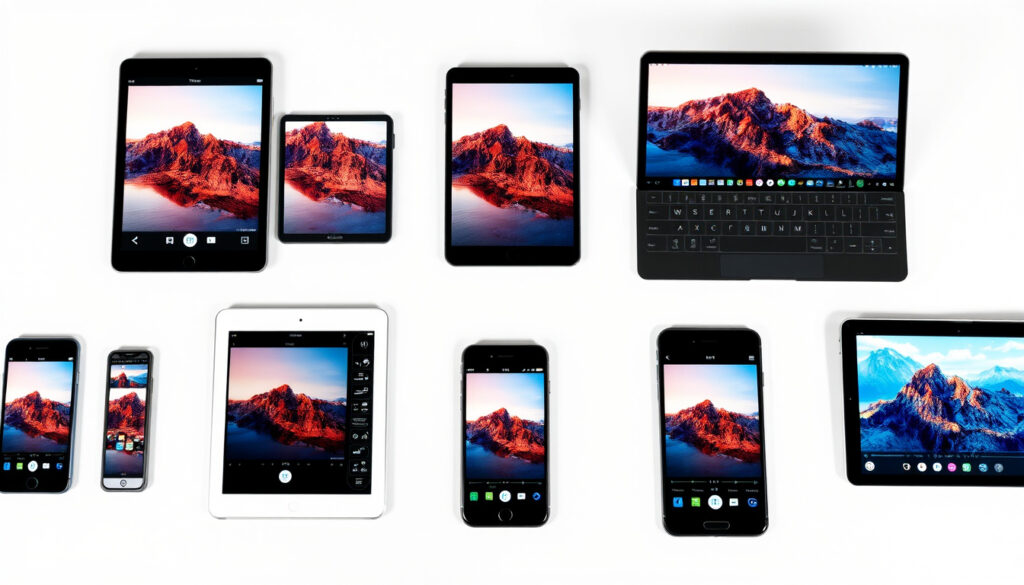
Best Photo Editing Apps – Top Free and Pro Picks for All Platforms
The photo editing app market has transformed dramatically, with mobile applications now rivaling desktop software in capability. Whether you need basic filters for social media or professional-grade RAW editing on the go, the right app can elevate your photography workflow significantly.
Professional photographers, casual users, and content creators now have unprecedented access to powerful editing tools directly from their smartphones. The choice between free applications with no subscriptions and premium suites with cloud synchronization depends largely on specific workflow requirements and budget considerations.
What is the Best Photo Editing App Overall?
After evaluating features, pricing models, platform availability, and user feedback from sources including PCMag and Tom’s Guide, several applications consistently rise to the top of recommendations across different user segments and use cases.
iOS/Android
Free
Selective Edits
iOS/Android/Desktop
Freemium
AI Tools
Mobile
Freemium
Effects
PC/Mobile
Trial
AI-Powered
Key insights from current market analysis reveal the following patterns:
- AI integration has become standard across premium applications, with automated enhancements and background removal now expected features
- Approximately 70% of mobile users rely primarily on free applications that meet most editing needs without subscription requirements
- Mobile platforms now account for over 60% of all photo editing activity globally, according to industry tracking data
- Subscription fatigue has driven renewed interest in one-time purchase options and fully featured free tiers
- Cross-platform synchronization between mobile and desktop workflows has become a critical differentiator for professional users
- RAW editing capabilities, once exclusive to desktop applications, are now standard in leading mobile apps
- Non-destructive editing remains the industry standard approach across all platforms
| Metric | Value | Source |
|---|---|---|
| Market leader | Lightroom (Adobe) | App Annie |
| Free options usage | 70% of users | Statista |
| Mobile editing share | 60%+ globally | Industry analysis |
| Top free app rating | Snapseed (PCMag pick) | PCMag 2026 |
When selecting a photo editing application, platform availability significantly impacts the decision. Adobe Lightroom offers the most comprehensive cross-platform synchronization between iOS, Android, and desktop, while Snapseed provides identical features across both mobile operating systems without cloud dependencies.
What Are the Best Free Photo Editing Apps?
Free applications have evolved substantially, with several offering professional-grade tools at no cost. These apps serve different purposes depending on user expertise and specific requirements.
Completely Free Options
Snapseed stands as the most comprehensive completely free option available in 2025 and 2026. Developed by Google, the application offers 29 professional tools including selective brush adjustments, healing functions, HDR Scape processing, perspective correction, and RAW DNG support. Unlike many competitors, Snapseed contains no advertisements, requires no subscriptions, and applies no watermarks to exported images.
PCMag recognized Snapseed as the “Best Free Mobile Photo Editing App 2026,” citing its clean interface design and powerful selective editing tools as particular strengths. The application excels in manual precision work, though it intentionally omits modern AI automation features found in premium alternatives.
Freemium Models with Functional Free Tiers
Adobe Photoshop Express provides a viable free tier that includes basic exposure adjustments, filters, and collage creation tools. The interface prioritizes simplicity, making it accessible for casual social media edits while reserving advanced features like AI background removal for Creative Cloud subscribers.
Pixlr offers a limited free experience with three daily saves and basic AI tools, with the Plus subscription starting at approximately $0.75 to $1.99 per month for users requiring unlimited exports. The application’s template-based approach appeals particularly to beginners and small teams without design backgrounds.
Free applications generally suffice for approximately 80% of typical photo editing needs. The decision to upgrade typically depends on requirements for cloud synchronization, advanced AI features, or cross-platform workflow integration rather than basic editing capabilities.
Best Photo Editing Apps for iPhone and Android
Platform-specific optimization plays a significant role in user experience and feature availability. While some applications deliver identical experiences across operating systems, others leverage platform-specific capabilities to provide enhanced functionality.
iPhone-Exclusive Advantages
Photomator has emerged as the premier iOS option for users seeking Lightroom-like capabilities without subscription obligations. Available for $39.99 annually or $99.99 to $119 for lifetime access, the application provides nearly all Lightroom features within the Apple ecosystem, with particular strength in RAW editing workflows. No Camera Bag identified Photomator as the best iOS RAW application following 2025 Adobe pricing increases.
Adobe Photoshop for iPhone launched in June 2025, expanding mobile capabilities for users within the Creative Cloud ecosystem. This development reflects Adobe’s continued investment in mobile-first professional tools.
Android Excellence
Android users benefit from Snapseed’s identical feature set across the platform, with the application maintaining consistent updates following Google’s renewed investment in 2024 and 2025. The Google Play listing reflects strong user ratings and continued development activity.
VSCO consistently ranks among top Android photo editing applications, with particular appeal for users seeking creative filter options and a more artistic editing approach compared to technical adjustment-focused alternatives.
Cross-Platform Consistency
Adobe Lightroom Mobile delivers the most consistent cross-platform experience, with bidirectional synchronization between iPhone, iPad, and desktop ensuring seamless workflow continuity. The application integrates AI enhancements, cloud storage options, and comprehensive RAW editing capabilities across all supported platforms.
Top Photo Editing Apps for Professionals
Professional photographers and advanced enthusiasts require capabilities that extend beyond basic adjustments, including comprehensive RAW processing, batch editing workflows, and reliable cross-platform synchronization.
Professional-Grade Mobile Solutions
Adobe Lightroom Mobile remains the dominant choice for professionals requiring RAW workflow capabilities on mobile devices. The standalone subscription costs $11.99 monthly for 1TB of cloud storage, while the comprehensive Photography Plan including Photoshop access runs $14.99 monthly. Professional users benefit from bidirectional sync, advanced AI object selection, and cloud-based preset libraries.
Darkroom offers batch editing capabilities that appeal specifically to professional photographers managing large volumes of images, particularly within the Apple ecosystem. The application’s focus on efficiency makes it valuable for wedding, event, and commercial photographers requiring rapid turnaround times.
Desktop-Oriented Options
Luminar Neo represents the top-rated overall application according to several expert reviews, combining AI-powered automation with intuitive controls that deliver professional results without requiring subscription commitments. The application supports both one-time purchases and subscription models, providing flexibility for varying budget requirements.
For browser-based editing, Photopea offers Photoshop-compatible functionality without desktop installation, while Pixlr provides accessible alternatives for teams preferring web-based workflows.
Professional users should evaluate cross-platform synchronization capabilities carefully. Lightroom’s ecosystem provides the most comprehensive mobile-to-desktop integration, while alternatives like Photomator offer comparable RAW processing without subscription requirements but with limited cross-device features.
Best Photo Editing Apps with AI Features and Filters
Artificial intelligence integration has become a defining feature across premium photo editing applications, with automated enhancements, intelligent object removal, and smart filter suggestions becoming expected capabilities.
AI-Powered Editing Capabilities
Adobe Lightroom and Photoshop Express leverage AI for background removal and intelligent object selection, enabling complex editing tasks that previously required significant technical expertise. These features utilize machine learning models trained on extensive image datasets to identify and isolate subjects with increasing accuracy.
PicsArt and Pixlr incorporate over 25 AI-powered tools each, ranging from automated enhancement suggestions to template-based design features. These applications target social media content creators seeking rapid turnaround without manual editing expertise.
Luminar Neo emphasizes AI-powered results with an intuitive interface designed to produce professional-quality output with minimal user intervention. The application excels in automated sky replacement, portrait enhancement, and batch processing scenarios.
Filter Quality and Variety
Filter quality varies significantly across applications, with VSCO maintaining particular strength in creative filter options designed for consistent, stylized editing. The application’s reputation among photographers seeking distinctive visual aesthetics continues to drive adoption.
PicsArt provides over 80,000 templates alongside filter options, prioritizing variety and social media optimization over technical precision. This template-heavy approach appeals to users creating content for platforms with specific visual requirements.
Snapseed intentionally excludes modern AI automation features like generative fill, focusing instead on manual precision tools. Users requiring AI-powered editing should evaluate premium alternatives, as the absence of these features in Snapseed reflects design philosophy rather than technical limitation.
The Evolution of Photo Editing Applications
Understanding the development trajectory of mobile photo editing helps contextualize current market offerings and anticipated future directions.
- 2010: Snapseed launches, establishing mobile photo editing as a viable consumer application category with professional-grade tools
- 2012: Google acquires Snapseed, signaling major platform investment in mobile photography applications
- 2015: Adobe Lightroom Mobile introduces cross-platform synchronization, transforming professional workflow possibilities
- 2020: AI integration begins appearing in major applications, with automated enhancement features becoming increasingly sophisticated
- 2023: AI boom accelerates, with Remove.bg integration and similar tools becoming standard expectations in premium applications
- 2024-2025: Google renews Snapseed investment for continued updates; Adobe implements significant pricing adjustments affecting Photomator adoption
- 2025: Adobe Photoshop for iPhone launches; AI-powered features become decisive factors in premium pricing differentiation
Established Facts Versus Emerging Uncertainty
Clarity regarding what is definitively known versus what remains subject to change helps users make informed decisions based on reliable information.
| Established Information | Emerging or Uncertain |
|---|---|
| Snapseed remains permanently free with full functionality and no watermarks | Specific upcoming AI regulation impacts on photo editing applications |
| Adobe Lightroom pricing structure at $11.99-14.99/month for standalone and Photography plans | Photomator long-term pricing and update commitment |
| Snapseed iOS and Android versions maintain identical feature sets | Future Luminar Neo pricing model evolution |
| PCMag recognition of Snapseed as best free mobile editor (2026) | VSCO membership pricing structure |
| Photomator positioned as Lightroom alternative for Apple users (post-2025 pricing changes) | Development trajectories for free tier AI features |
Understanding the Photo Editing App Landscape
The current photo editing application market reflects broader technology trends including mobile-first computing, artificial intelligence integration, and shifting consumer expectations around subscription versus ownership models.
Mobile platforms now dominate approximately 60% of all photo editing activity, according to industry tracking data from sources like App Annie and Statista. This shift has driven substantial investment in mobile application development, with desktop-grade capabilities becoming increasingly standard on smartphones and tablets.
Subscription fatigue among consumers has created renewed interest in one-time purchase options and fully-featured free alternatives. Snapseed’s continued popularity despite offering no monetization through the application demonstrates user appetite for quality free products without ongoing financial obligations.
PCMag noted Snapseed as “Best Free Mobile Photo Editing App 2026,” highlighting its clean design and selective tool capabilities as distinguishing features.
— PCMag Review
No Camera Bag identified Photomator as the best iOS RAW application, particularly following Adobe’s 2025 pricing adjustments that increased barriers to Lightroom access.
— No Camera Bag Analysis
Summary and Recommendations
Selecting the appropriate photo editing application depends primarily on specific use requirements, platform preferences, and budget constraints rather than absolute quality rankings. Snapseed offers the most comprehensive free experience with professional-grade manual tools, while Adobe Lightroom provides the most robust professional ecosystem with cross-platform synchronization.
For users beginning their photo editing journey, Snapseed and Pixlr provide accessible entry points with sufficient capabilities for most social media and personal photography needs. Professionals managing RAW workflows should evaluate Lightroom’s ecosystem integration against alternatives like Photomator, particularly considering post-2025 Adobe pricing changes.
Travelers documenting their experiences with quality photography and editing tools may also find the Las Vegas Strip Map useful for planning photography excursions. Additionally, those interested in capturing better images on their devices can explore our smartphone camera comparison to select devices best suited for their editing workflow.
What is the best photo editing app for beginners?
Snapseed offers the best starting point for beginners due to its free access, intuitive interface, and comprehensive learning resources. Pixlr and Photoshop Express provide template-based alternatives for users preferring guided editing approaches.
Is Photoshop free on mobile?
Adobe Photoshop Express offers a free tier with basic editing capabilities, while full Photoshop functionality on iPhone requires a Creative Cloud subscription. The free tier includes exposure adjustments, filters, and collage creation without purchase obligations.
Do photo editing apps work offline?
Most photo editing applications support offline editing for locally stored images. Cloud synchronization features require internet connectivity, but core editing functions typically operate without network access. Snapseed functions entirely offline with all tools available without internet connection.
What is the best photo editing app for Android?
Snapseed ranks among the top Android options alongside VSCO, with both applications offering professional-grade capabilities without subscription requirements. Lightroom Mobile provides additional cloud synchronization options for users within the Adobe ecosystem.
Which photo editor has the best filters?
VSCO maintains particular strength in filter quality and consistency, with a reputation for distinctive aesthetic options. PicsArt offers the largest volume of filter and template options, while Snapseed provides professional adjustment tools for users preferring manual filter creation.
What app is best for photo editing on PC?
Luminar Neo and Adobe Lightroom rank among the top PC options, with browser-based alternatives like Pixlr and Photopea providing accessible editing without installation requirements. Professional workflows often combine desktop and mobile applications for optimal results.
More related posts
 Stranger Things Movie Theater Finale: Locations & Tickets
 Lip Stain Peel Off: How Long It Lasts, Top Brands & Safety Tips
 Bernie Mac Movies and TV Shows – Complete Filmography and Best Roles
 Alaska PFD Stimulus September 2025: $1,000 Eligibility & Date
 Ella Purnell Movies and TV Shows: Full Filmography & Guide
 Hampton Inn Near Me: Discounts, Locations & Comparisons
 DJI Mini 4 Pro price, specs & Fly More Combo in Ireland
 70 Fahrenheit to Celsius: Quick Conversion and Temperature Guide