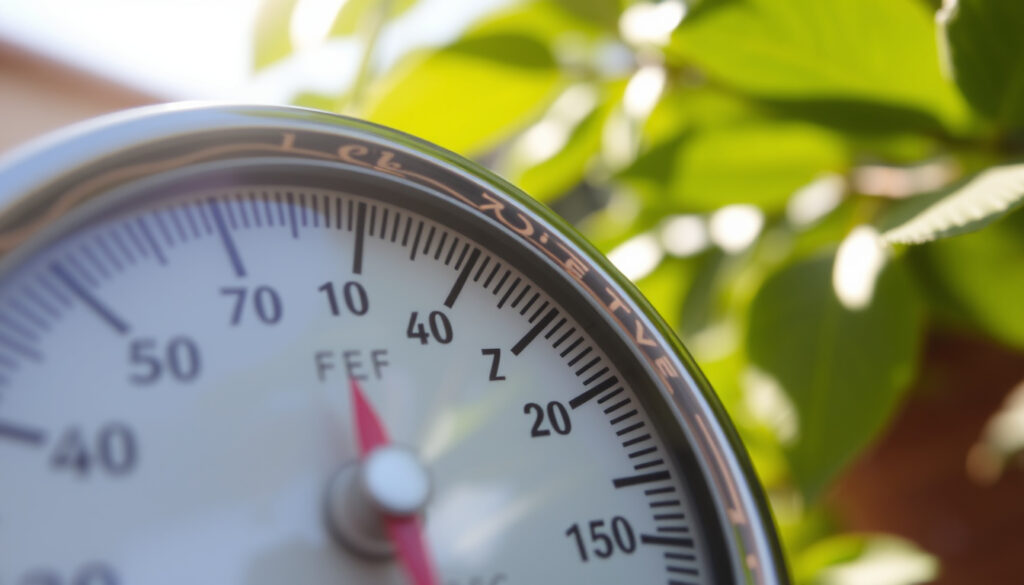
70 Fahrenheit to Celsius: Quick Conversion and Temperature Guide
You’ve probably heard a weather forecast in Fahrenheit and wondered what that means in Celsius. The conversion itself is straightforward, but understanding what 70°F actually feels like — indoors or out — is where it gets useful. This guide gives you the exact math, a few mental shortcuts, and the practical context you need whether you’re setting your thermostat or packing for a trip.
70°F in Celsius: 21.11°C · Conversion Formula: (°F – 32) × 5/9 · Room Temperature: 20-22°C / 68-72°F
Quick snapshot
- Subtract 32 (Cuemath (math education resource))
- Multiply by 5/9 (Cuemath (math education resource))
- Result: 21.11°C (Cuemath (math education resource))
- 70°F = 21.11°C
- 68°F = 20°C
- 72°F = 22.22°C
- 70°F feels warm indoors
- Outdoors: pleasant spring/fall
- Jacket optional depending on wind
- Thermostat at 70°F saves energy
- Adjust for sleeping comfort
- Use programmable thermostat
Four key reference points help anchor the Fahrenheit and Celsius scales.
| Label | Value |
|---|---|
| 70°F in Celsius | 21.11°C |
| Boiling point (water) | 212°F / 100°C |
| Freezing point (water) | 32°F / 0°C |
| Typical room temperature | 68-72°F / 20-22°C |
How many degrees Celsius are in 70°F?
Using the standard formula
The exact conversion is given by the formula °C = (°F – 32) × 5/9. Plug in 70: (70 – 32) = 38, then 38 × 5/9 = 21.111… Rounding to two decimal places gives 21.11°C (Cuemath (math education resource)). The German-language conversion reference Schnelle Online (conversion tool) confirms the same formula: T_C = (T_F – 32) × 5/9. The NASA AFRC Weather (government weather data) chart rounds 70°F to 21.1°C, a common presentation for quick reference.
Quick reference: 70°F to °C
If you only need a ballpark figure, remember that 70°F is roughly 21°C. Conversion charts often round to whole degrees — for instance, Schnelle Online (conversion tool) gives 21°C when showing only integers. The more precise 21.11°C appears when decimals are retained (Cuemath (math education resource)).
Examples with other temperatures
Using the same formula, 68°F = 20°C and 72°F = 22.22°C (NASA AFRC Weather (government weather data)). This places 70°F squarely in the middle of the typical indoor comfort zone.
The conversion is exact math — 70°F will always equal 21.11°C. But how that temperature feels depends on humidity, wind, and your own comfort preferences. The number only tells part of the story.
How to convert F to C easy?
The subtract 32 then multiply by 5/9 method
The official method: take the Fahrenheit number, subtract 32, then multiply the result by 5/9 (Cuemath (math education resource)). For 70°F: (70 – 32) = 38; 38 × 5/9 = 21.11.
Mental math shortcut
A popular approximation: subtract 30 from the Fahrenheit value, then halve the result (YouTube tutorial (educational video)). For 70°F: 70 – 30 = 40; 40 ÷ 2 = 20°C. That’s within 1.1°C of the exact value — close enough for most everyday situations. The video also demonstrates 86°F → 30°C and 77°F → 25°C using the same shortcut (though the latter is approximate).
Using online converters
For instant accuracy, any temperature converter app or website will apply the formula. NASA AFRC Weather (government weather data) provides a PDF conversion chart covering a wide range of Fahrenheit values.
- Take the Fahrenheit temperature.
- Subtract 32.
- Multiply the result by 5.
- Divide that product by 9.
- The answer is degrees Celsius.
For 70°F: 70 – 32 = 38; 38 × 5 = 190; 190 ÷ 9 = 21.11°C.
The mental shortcut is fast but loses precision — about 1°C off at 70°F. Use the full formula when you need accuracy for cooking, science, or healthcare.
Is 70 F considered warm?
Average room temperature
Indoors, 70°F falls within the standard comfort range of 68–72°F (20–22°C) (NASA AFRC Weather (government weather data)). Most people find it neither hot nor cold in a climate-controlled space.
Outdoor comfort
Outside, 70°F feels pleasant in spring or fall — light jacket weather if there’s a breeze. A secondary conversion source labels 70°F as “room temperature” (Scribd (user-generated content)), but comfort outdoors depends on humidity and sun exposure.
Comparison to body temperature
Human body temperature is 98.6°F (37°C). At 70°F, the body loses heat slowly — it’s why 70°F feels cool after a hot shower but warm on a chilly day.
Whether 70°F feels warm or cool is subjective. The data says it’s right at the boundary — warm enough for shorts indoors, but often cool enough outdoors that a jacket doesn’t hurt.
Is 70 degrees cold for a house?
Recommended thermostat settings
Energy agencies typically recommend setting the thermostat to 68–70°F during winter for energy efficiency and comfort (NASA AFRC Weather (government weather data) notes 70°F is typical indoor comfort). At 70°F, most people feel comfortable in light clothing. Going below 68 may start to feel chilly.
Energy efficiency
Every degree lower in winter can save 1–3% on heating costs. 70°F strikes a balance between comfort and savings — it’s the most common recommended setting.
Personal comfort preferences
Some prefer 72°F; others find 68°F ideal. The Schnelle Online (conversion tool) scale notes 70°F is near the midpoint of the human comfort range.
Is 21 C 70 F?
Verifying the conversion
21°C is approximately 69.8°F, not exactly 70°F. The precise reverse formula — °F = (°C × 9/5) + 32 — gives 21 × 9/5 = 37.8 + 32 = 69.8°F (Cuemath (math education resource)). So 21°C is 0.2°F short of 70°F.
Common misconceptions
Many people round 21°C to “70°F” because they’re close, but the exact match is 21.11°C = 70°F. If you hear “21 degrees Celsius” in a forecast, expect high 60s Fahrenheit, not quite 70.
Practical applications
For cooking, weather, and home temperature, the 0.2°F difference is negligible. Most digital thermostats display whole degrees anyway. The key takeaway: 21°C is essentially 70°F for everyday use.
“70°F is close to typical indoor comfort temperatures used in homes and offices.”
NASA AFRC Weather (government weather data)
“The standard Fahrenheit-to-Celsius formula is °C = (°F – 32) × 5/9.”
Cuemath (math education resource)
“A simplified mental-math method approximates 77°F as 25°C.”
“The Fahrenheit scale is tied to the freezing and boiling points of water at 32°F and 212°F.”
Schnelle Online (conversion tool)
Knowing 70°F equals 21.11°C is the first step. The real takeaway is how to apply that number to your daily life — whether you’re adjusting a thermostat, packing for a trip, or simply trying to make sense of a weather report. For anyone in the U.S. who regularly encounters Fahrenheit, the choice is clear: learn the formula (or the shortcut) and keep 70°F as your anchor for “comfortably warm.” Forgetting the conversion means relying on guesswork — and that’s a small risk when the exact math takes seconds.
Related reading: Which Expression Is Equivalent To? · What Is the Mean in Math?
For a comprehensive breakdown of the same temperature, refer to this 70°F to Celsius conversion guide that also covers formula and comfort contexts.
Frequently Asked Questions
What is the formula for Fahrenheit to Celsius?
The formula is °C = (°F – 32) × 5/9 (Cuemath (math education resource)).
How do you convert Celsius to Fahrenheit?
Use °F = (°C × 9/5) + 32. For example, 21°C × 9/5 = 37.8 + 32 = 69.8°F.
What temperature is 70°F in Celsius for cooking?
70°F is 21.11°C, which is well below any cooking temperature. Cooking uses much higher ranges.
Is 70°F hot enough to swim?
Most people find 70°F (21°C) water cool but swimmable, especially in summer. Comfort varies.
What should I wear when it’s 70°F outside?
Light layers work best — a t-shirt and jeans or a light jacket. Wind and sun affect comfort.
Is 70°F a good temperature for sleeping?
Yes, 65-70°F (18-21°C) is often recommended for sleep. 70°F is at the upper end of that range.
How does 70°F compare to room temperature?
70°F equals 21.11°C, which is right in the middle of the typical room temperature range of 20-22°C.
More related posts
 What is the Mean in Math? Definition, Formula & Examples
 Neiman Marcu Chicken Ca erole: Recipe, Hi tory, Side
 What Is an Autopen? Definition, How It Works & Cost (2025)
 Dodgers vs Padres Match Player Stats – Key Batting and Pitching Leaders
 Fruit Riot Sour Grapes: Buy, Reviews & Copycat Recipe
 How to Organize a Small Closet: Best Setup, Tips & Mistakes
 Department of Health and Human Services: What It Does
 Screen Repair Near Me: Cost, Worth, DIY vs Shop (2025 Guide)