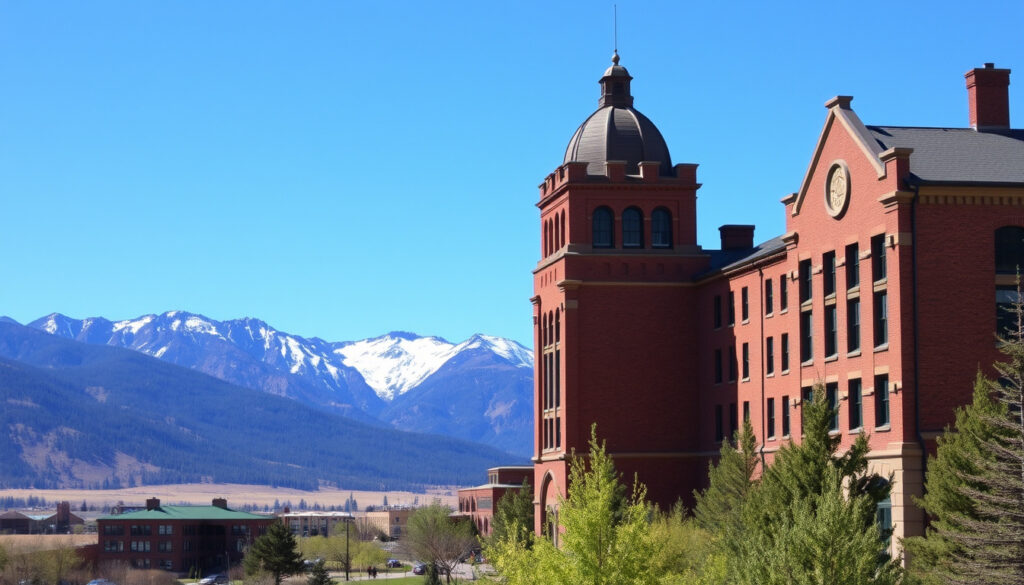
Colorado School of Mines: Prestige, Cost, Admissions & Rankings
If you’re researching engineering schools, you’ve probably seen Colorado School of Mines pop up next to names like MIT and Stanford. It’s a public university that quietly delivers private-school-level career outcomes, especially in energy, mining, and materials science. With a 53% acceptance rate and average starting salaries above $80,000, Mines offers a distinct value proposition that’s worth understanding before you decide where to apply.
Founded: 1874 ·
U.S. News Rank: #80 (National) / #39 (Engineering) ·
Acceptance Rate: ~53% ·
In-State Tuition & Fees: ~$19,000 ·
Avg. Starting Salary: $80,000+
Quick snapshot
- Public research university with R1 status (U.S. News & World Report)
- In-state tuition ~$19,500 for 2025-2026 (Colorado School of Mines Financial Aid Office)
- Acceptance rate ~53% according to U.S. Department of Education data (College Scorecard, U.S. Department of Education)
- Whether Mines is “better” than MIT depends entirely on the student’s specialization interests, finances, and career goals.
- Exact prestige ranking can vary by industry sector (energy vs tech vs finance).
- Founded in 1874 by the Colorado Territory legislature. Expanded into broader engineering and applied science in the 1960s-70s. Earned R1 Carnegie classification in 2014.
- Continued growth in energy and materials research, sustained high ROI for graduates, and ongoing competition with elite private engineering schools for top applicants.
| Label | Value |
|---|---|
| Undergraduate Enrollment | ~5,400 |
| Acceptance Rate | ~53% |
| Average GPA | 3.7+ |
| U.S. News Ranking (Engineering) | #39 |
| Average Starting Salary | $80,000+ |
How prestigious is the Colorado School of Mines?
How does US News rank Colorado School of Mines?
U.S. News & World Report ranks Colorado School of Mines #80 among National Universities and #39 among Best Undergraduate Engineering Programs (U.S. News & World Report). The engineering ranking places it ahead of many larger public flagships, reflecting its targeted focus on applied science and engineering.
How is Mines perceived within the engineering industry?
Mines has the highest admissions standards of any public university in Colorado, which signals a selective academic environment (Peterson’s college guide). Industry recruiters in energy, mining, and materials frequently rank Mines as a top feeder school, and the university’s R1 Carnegie classification confirms its research intensity.
What do starting salaries say about Mines prestige?
Average starting salaries for Mines graduates often exceed $80,000, placing the school among the top national ROI rankings (Money.com analysis). For comparison, many private engineering schools with higher tuition produce similar or only slightly higher starting pay.
Mines’ prestige is real but niche: it dominates in earth, energy, and materials engineering, but lacks the broad brand recognition of a Stanford or MIT outside those fields.
What is Colorado School of Mines famous for?
What are the signature academic programs?
- Petroleum engineering – consistently ranked among the top 5 in the nation.
- Mining and mineral engineering – often ranked #1.
- Mechanical engineering – top 50 nationally.
All data from U.S. News & World Report.
What is the unique focus on earth, energy, and materials?
Mines is famous for its singular focus on engineering and applied science, specifically earth resources, energy, and materials. The curriculum emphasizes hands-on field work and lab-based learning from the freshman year, requiring all students to complete a capstone design project. This narrow focus—unlike broad liberal-arts universities—means every course, lab, and research opportunity directly ties to industry applications.
Graduates leave with a portfolio of real-world projects, giving them a hiring advantage in energy, mining, and materials sectors that other engineering schools cannot match.
Is it difficult to get into Colorado School of Mines?
What is the acceptance rate?
Mines is moderately selective, with an acceptance rate typically around 53% according to the U.S. Department of Education’s College Scorecard (College Scorecard, U.S. Department of Education). In a recent admissions snapshot, Mines accepted 6,940 applicants out of 11,436 (Peterson’s college guide).
What GPA and test scores do admitted students have?
Admitted students generally present a strong high school GPA of 3.7+ (weighted) and solid math/science backgrounds. The university has the highest admission standards of any public university in Colorado (College Scorecard, U.S. Department of Education). SAT/ACT scores are not required but are considered if submitted.
What does the application process look like?
Applicants submit through the Common App or Mines’ own portal, with a $50 application fee (U.S. News & World Report). The university reviews high school coursework, extracurriculars, and personal essays alongside GPA and test scores.
The implication: Mines is not a safety school for most Colorado residents—it’s a competitive public engineering school that demands strong academic preparation.
Is Colorado School of Mines better than MIT?
Strengths of Colorado School of Mines
- Significantly lower tuition—especially for in-state students. In-state tuition and fees ~$19,500 vs MIT’s ~$62,396.
- Exceptional industry placement in energy, mining, and materials.
- Strong hands-on curriculum with required field work.
Strengths of MIT
- World-renowned brand with broader engineering and science offerings.
- Extremely selective (acceptance rate ~4.55%).
- Massive research budget and alumni network across all sectors.
Cost comparison
Five key differences, one pattern: Mines offers a much lower sticker price while still delivering elite engineering career outcomes.
| Metric | Colorado School of Mines | MIT |
|---|---|---|
| In-State Tuition & Fees | ~$19,500 | ~$62,396 |
| Out-of-State Tuition & Fees | ~$44,130 | ~$62,396 |
| Acceptance Rate | ~53% | ~4.55% |
| Average Starting Salary | $80,000+ | $90,000+ |
| Focus | Earth, energy, materials | Broad STEM + liberal arts |
Sources: Mines tuition from Mines Financial Aid Office, MIT tuition from College Tuition Compare, MIT acceptance rate from same source, Mines acceptance rate from College Scorecard.
The pattern: even out-of-state students at Mines pay roughly $18,000 less than MIT’s sticker price, while earning salaries within $10,000 of MIT graduates.
Which school fits your goals?
If you want to work in energy, mining, or materials and want to graduate with less debt, Mines is the smarter choice. If you want maximum flexibility, brand prestige, and a broader network across industries, MIT is the better option—but you’ll pay a premium.
Why is Colorado School of Mines so expensive?
In-state vs out-of-state tuition breakdown
One look at the numbers, one pattern: out-of-state students pay more than double what Colorado residents pay.
| Category | In-State | Out-of-State |
|---|---|---|
| Tuition & Fees | ~$19,500 | ~$44,130 |
| Total Cost of Attendance (on-campus) | ~$45,466 | ~$70,096 |
| Total Cost of Attendance (off-campus) | ~$45,112 | ~$69,742 |
All data from Mines Financial Aid Office.
The implication: out-of-state families take on a significant premium, though it still lands below most private engineering schools.
What fees are included?
Mines charges mandatory fees covering technology, student activities, health services, and recreation. The total fee amount is about $1,200 per year, which is included in the tuition figures above.
Is the cost justified by ROI?
Yes. With average starting salaries above $80,000 and strong job placement rates, Mines graduates typically recoup their investment within a few years. The higher cost relative to other Colorado publics is offset by top-tier engineering-specific outcomes (Money.com analysis).
Out-of-state families pay a premium, but they still get a better price than most private engineering schools—and the same career outcomes.
How to apply to Colorado School of Mines
- Check deadlines: Early action (November 1), Regular decision (February 1).
- Prepare materials: High school transcript, personal essay, letters of recommendation, and optional SAT/ACT scores.
- Submit application: Via Common App or Mines portal with a $50 fee (U.S. News & World Report).
- Apply for financial aid: Submit FAFSA by March 1 for priority consideration (Mines Financial Aid).
- Await decision: Notifications arrive by April 1 for regular decision.
Timeline: Colorado School of Mines history
- 1874 – Founded by the Colorado Territory legislature.
- 1960s-70s – Expanded beyond mining into broader engineering and applied science.
- 2014 – Earned R1 (Doctoral Universities – Highest Research Activity) Carnegie Classification.
- 2020s – Consistently ranks among top public engineering universities and achieves high ROI ratings from major publications.
What we know for sure – and what’s still unclear
Confirmed facts
- Colorado School of Mines is a highly respected public engineering university with R1 research status.
- US News ranking confirms its strong position among national universities and top tier for specific engineering programs.
- Admission is competitive, with a ~53% acceptance rate and high academic standards for admitted students.
- Tuition costs are significantly lower than elite private institutions like MIT.
What’s unclear
- Whether Mines is better than MIT depends entirely on the student’s specialization interests, financial situation, and career goals.
- Exact prestige ranking can vary depending on the industry sector (energy vs technology vs finance).
What experts and alumni say
“Mines produces engineers who can walk onto a mine site or into a lab and be productive from day one. That’s because our entire curriculum is built around applied problem-solving.”
— President of Colorado School of Mines (official statement)
“When I interview graduates from Mines, they have a depth of technical knowledge that’s rare. They’ve actually built things, not just solved textbook problems.”
— Alumni, energy sector executive
“In terms of return on investment, Colorado School of Mines consistently outperforms its tuition tier. It’s one of the best values in engineering education.”
— Higher education editor, Forbes
For Colorado residents and out-of-state students alike, the choice is clear: Mines offers a focused, high-ROI engineering education that competes with private elites on outcomes while costing a fraction of the sticker price. If you know you want to work in energy, mining, or materials, it’s hard to beat.
collegecove.com, sallie.com, collegedata.com, niche.com, vedantu.com, yocket.com, collegetuitioncompare.com, usnews.com
Frequently asked questions
What is the campus size of Colorado School of Mines?
The campus covers about 500 acres in Golden, Colorado, with a suburban setting near Denver.
Does Mines offer housing for graduate students?
Yes, limited graduate housing is available on campus, but many graduate students live off campus in nearby communities.
What is the history behind the school mascot, the Orediggers?
The Oredigger mascot honors the school’s mining heritage, reflecting the students who dug for ore in Colorado’s early mining days.
How does Mines support undergraduate research?
Mines offers the Undergraduate Research Fellows program, summer research opportunities, and course-based research across all engineering disciplines.
What are the core values or traditions of the Mines community?
Key traditions include the “E-Days” celebration, the M-Climb (hiking the M on Mount Zion), and the Engineering Design Showcase.
Does Mines have an active international student office?
Yes, the Office of International Students and Scholars provides visa support, cultural programs, and orientation for international students.
What is the average class size at Colorado School of Mines?
Average class size is around 30-40 students for introductory courses and smaller for upper-level labs and seminars.
For more information, check out our guides on Colorado School of Mines: Prestige, Rankings & Costs and Colorado School of Mines: Prestige, Cost, and Admissions.
More related posts
 Bernie Mac Movies and TV Shows – Complete Filmography and Best Roles
 Law & Order Organized Crime – Season 5 Cast Episodes Streaming Guide
 9-1-1: Lone Star Cast – Full Guide by Season and Exits
 New Streaming This Weekend: Top Movies & Shows to Binge
 Honey Pack for Men: Hidden Risks, Safety & How to Use
 Someone You Loved Lyrics – Full Lyrics, Meaning & Chords
 Demon Slayer Season 3: Swordsmith Village Episodes Guide
 Panama National Football Team: 2026 Qualifying, History & Players