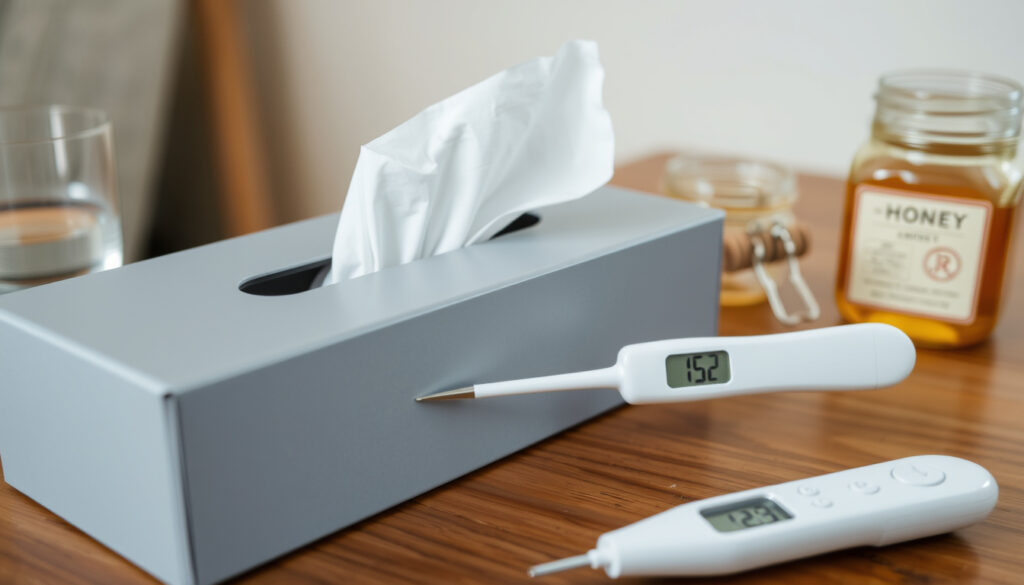
COVID Symptoms 2025: Current Signs and How to Tell from a Cold
It’s hard to remember a winter without that nagging thought: “Is this just a cold, or could it be COVID?” In 2025, the answer is more complicated than ever, because the symptoms of the latest variants often look exactly like a common cold. According to the NHS (the UK’s national health service) and the Centers for Disease Control and Prevention (CDC) (the US public health agency), the symptom list now includes runny nose, sore throat, and fatigue — signs many people associate with a mild cold. That’s why understanding what to look for — and when to test — matters for your health and the people around you.
Most common symptoms (NHS & CDC): Fever or chills, cough, sore throat, congestion or runny nose, fatigue ·
CDC symptom list (March 2025): Fever or chills, cough, shortness of breath, sore throat, congestion, new loss of taste or smell, fatigue ·
Irish Department of Health: Fever, dry cough, shortness of breath
Quick snapshot
- Fever, cough, sore throat, runny nose, and fatigue are commonly reported across health authorities (NHS, CDC, Irish Department of Health).
- Loss of taste or smell remains a possible symptom but is less frequent in recent variants (NHS).
- Whether certain symptoms like skin rashes or pink eye are definitively linked to current variants.
- Exact prevalence of each symptom among vaccinated vs. unvaccinated populations in 2025.
- 2025: New COVID variants emerge, prompting updated symptom advice from health authorities (CDC, NHS).
- As COVID symptoms continue to mimic the common cold, testing and isolation guidance may evolve.
Here is a summary of key facts about COVID-19 symptoms.
| Fact | Detail |
|---|---|
| Incubation period | 2–14 days (CDC) |
| Typical duration | 7–10 days (NHS) |
| Most common symptom in 2025 | Runny nose (NHS, CDC) |
| Fever threshold | 38°C or above (HSE winter booklet – for cold; inferred for COVID from Irish Department of Health) |
What are the current COVID symptoms in 2025?
Common symptoms according to CDC and NHS
- Fever or chills – listed by CDC (the US public health agency) and NHS (the UK’s national health service).
- Cough – often dry, according to the Irish Department of Health (the national health authority).
- Sore throat – reported by both NHS and CDC.
- Congestion or runny nose – now a core symptom (NHS, CDC).
- Fatigue – common across all three sources.
- New loss of taste or smell – still on the official list but less frequent in recent variants (NHS).
The pattern: the symptom list has shifted away from the classic “fever, cough, loss of smell” triad toward a broader, cold-like presentation. The CDC now includes 11 possible symptoms, while the NHS lists 10. The overlap with the common cold is substantial.
Symptoms of the latest variant
According to the CDC and NHS, the symptoms of the newest variants (e.g., XEC) are essentially the same as the general list: low-grade fever, mild sore throat, runny or blocked nose, fatigue, and cough. Some patients report gastrointestinal issues or conjunctivitis, but these are not in the official top-tier lists. The Irish Department of Health notes that shortness of breath can occur with COVID but not with a cold, which remains a key differentiator.
Anyone with a sore throat and runny nose in 2025 should assume COVID until proven otherwise, because the symptoms are now virtually indistinguishable from the common cold. Testing is the only reliable way to know.
The implication: the symptom overlap is so wide that relying on symptom-checking alone is no longer reliable. Testing remains the only definitive way to distinguish COVID from a cold.
How can I tell if I have COVID or a cold?
Key differences in symptoms
Four key differences, one pattern: fever and shortness of breath point to COVID, while sneezing and a gradual onset point to a cold — but the overlap is wide.
| Symptom | COVID-19 (2025) | Common cold |
|---|---|---|
| Fever | Common (38°C or above) (Irish Dept of Health) | Rare (NHS common cold) |
| Shortness of breath | Sometimes present (CDC) | Not present (Irish Dept of Health) |
| Runny or blocked nose | Common (NHS) | Very common (NHS common cold) |
| Loss of taste/smell | Possible but less frequent (NHS) | Uncommon (NHS common cold) |
The implication: if you have a fever or shortness of breath, COVID is more likely. But if your main symptoms are sneezing and a runny nose without fever, a cold is still possible — and so is COVID.
When to test
The NHS advises testing if you have any of the main symptoms: fever, cough, or loss of taste/smell. The CDC recommends testing if you have symptoms consistent with COVID, especially after exposure. Given the overlap, the safest approach is to test whenever you have any respiratory symptoms, even mild ones.
What are the main symptoms of the newest COVID variant?
Reported symptoms for 2025 variants
Both the CDC and NHS state that the symptom list for the newest variants is the same as the standard list. The Irish Department of Health adds that the cough is often dry in COVID versus mild in colds. No new “weird” symptoms have been officially added by major health bodies.
Weird symptoms (gastrointestinal, skin rashes, etc.)
Some patients report gastrointestinal issues (nausea, diarrhea) and conjunctivitis, but these are not in the official top-tier lists from the CDC or NHS. The CDC does list nausea or vomiting and diarrhea as possible symptoms, but these are less common.
What are the very first signs of COVID?
Early symptoms to watch for
The first signs of COVID in 2025 are often sore throat, fatigue, and headache, according to the NHS. The Irish Department of Health notes that fever may be one of the first signs. The incubation period is 2–14 days (CDC), so symptoms can appear quickly or take up to two weeks.
When symptoms appear after exposure
Most people develop symptoms within 4–5 days of exposure (CDC). If you’ve been in close contact with someone who tested positive, watch for sore throat, fatigue, and fever starting around day 3–5.
How long does the latest strain of COVID last?
Typical duration of symptoms
The NHS says most people recover within 7–10 days. The CDC notes that symptoms may last longer in severe cases. For comparison, the HSE (Ireland’s public health service) says adults with a cold usually feel better after 3–4 days and are fully recovered within 7 days.
Factors that affect recovery time
Recovery depends on age, vaccination status, and underlying health conditions. The CDC emphasizes that people with weakened immune systems may take longer to clear the virus. The NHS also warns that some people experience long COVID, with symptoms lasting weeks or months.
For the average healthy person, a 2025 COVID infection feels like a bad cold and resolves in about a week. But for older adults or those with compromised immunity, the risk of severe illness remains higher than with a cold, making early testing and treatment access crucial.
The pattern: duration depends on individual factors, but for most people, COVID in 2025 is a short-lived illness similar to a cold.
Confirmed facts vs. what’s unclear
Confirmed facts
- Fever, cough, sore throat, runny nose, and fatigue are commonly reported symptoms across health authorities (NHS, CDC, Irish Department of Health).
- Loss of taste or smell remains a possible symptom but is less frequent in recent variants (NHS).
- Shortness of breath is sometimes present in COVID but not in colds (Irish Department of Health).
What’s unclear
- Whether certain “weird” symptoms (e.g., skin rashes, pink eye) are definitively linked to current variants.
- Exact prevalence of each symptom among vaccinated vs. unvaccinated populations in 2025.
- How long immunity from previous infection or vaccination protects against symptomatic infection with the newest variants.
“The main symptoms of COVID-19 in October 2025 are now very similar to the common cold: runny nose, sneezing, sore throat, hoarse voice, cough, and feeling tired and unwell.”
— UK Health Security Agency (UKHSA) (the UK’s public health protection body)
“People with COVID-19 have reported a wide range of symptoms ranging from mild to severe. Symptoms may appear 2–14 days after exposure to the virus.”
— Centers for Disease Control and Prevention (CDC) (the US national public health agency)
For the average person in Ireland or the UK, the practical reality is that a runny nose and sore throat could be COVID — and the only way to know is to test. The NHS and CDC both recommend testing when symptoms appear, especially if you have been exposed. With the symptom overlap so wide, the old rule of thumb — “if it’s just a cold, don’t worry” — no longer applies. For anyone with respiratory symptoms, the choice is clear: test, isolate if positive, and protect those around you.
assets.gov.ie, britaindaily.uk, bbc.com, mayoclinic.org, nhs.uk, gov.ie, mobidoctor.eu, primarycare24.org.uk
Frequently asked questions
Can COVID symptoms appear without a fever?
Yes. The NHS and CDC both note that fever is common but not universal. Many people with mild cases experience only a sore throat, runny nose, or fatigue.
Are sore throats common with COVID in 2025?
Yes. Sore throat is listed as a common symptom by both the NHS and CDC.
Do COVID symptoms change with each new variant?
Yes, the dominant symptoms have shifted over time. The CDC notes that the symptom list has broadened, and loss of taste/smell is less common with newer variants.
Should I test if I have only mild symptoms?
Yes. The NHS recommends testing if you have any of the main symptoms, even mild ones, because mild cases can still spread the virus.
When are you most contagious after exposure?
The CDC states that you are most contagious 1–2 days before symptoms appear and during the first few days of illness.
Do symptoms differ for children compared to adults?
The CDC lists the same symptoms for children, though children may also experience nausea, vomiting, or diarrhea. The NHS notes that children often have milder symptoms.
More related posts
 Take 5 Car Wash – Locations, Services, Pricing and Reviews
 P Diddy Net Worth 2025: $400M–$900M After Billionaire Loss
 Does Walmart Take Apple Pay? (2025 Update) – What to Use Instead
 Taylor Swift Concert Dates 2026-2027: No Shows Announced Yet
 BMW X5 for Sale in Ireland: Best Years, Problems & Guide
 Department of Health and Human Services: What It Does
 Timberwolves vs 76ers Match Player Stats – Box Score, Key Stats
 76ers vs Magic Player Stats: Latest Box Score & Analysis