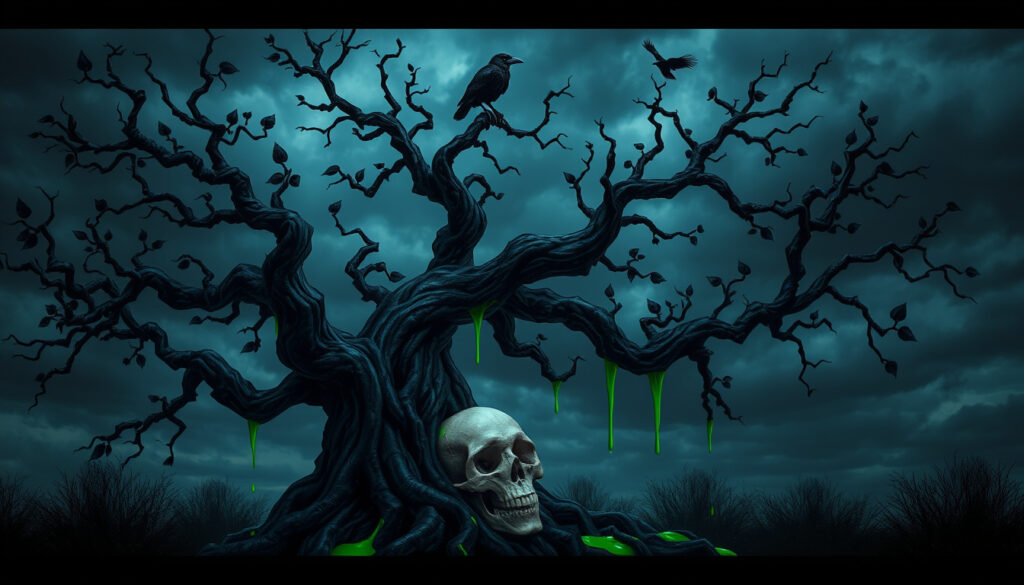
Poison Tree Tattoo Meaning: Symbolism & Design Ideas
There’s a reason why a tree with black roots and a single bright apple has become one of the most emotionally loaded tattoo designs in recent years. Rooted in William Blake’s 1794 poem “A Poison Tree” (part of Songs of Experience), the design carries layers of symbolism about hidden anger, suppressed resentment, and the heavy cost of emotional silence. Whether you’re drawn to its dark minimalism or its connection to mental health awareness, the meaning behind it is far more specific than most people realize.
Poem author: William Blake ·
Year published: 1794 ·
Primary symbolism: Hidden anger and resentment ·
Common tattoo style: Black ink, minimalist ·
Modern association: Mental health awareness
Quick snapshot
- Represents the destructive nature of suppressed anger and resentment (Poem Analysis (poetry interpretation site)).
- Inspired by William Blake’s 1794 poem (BBC Bitesize (UK educational guide)).
- The apple symbolizes the deadly outcome of suppressed emotions (LitCharts (literary analysis resource)).
- Exact personal meaning for each individual wearer.
- Whether the tattoo always implies negative emotions or can represent healing.
- Origin of the specific design elements (serpent, apple) in tattoo culture.
- Whether the biblical reference is intentional in every design or an artistic coincidence.
- Whether the association with XXXTentacion is intentional or incidental to the design’s meaning.
- 1794: Blake publishes “A Poison Tree” in Songs of Experience (BBC Bitesize).
- 2010s: The design gains traction in mainstream tattoo culture (Jade & Dagger Tattoo (tattoo culture blog)).
- Modern: Widely associated with mental health discourse (Hidden Gem Tattoo Studio (body art and wellness blog)).
- Growing interest in minimalist, meaningful literary tattoos (Mad Rabbit (tattoo culture brand)).
- Increased focus on mental health symbolism in body art (Hidden Gem Tattoo Studio (body art and wellness blog)).
- Expanding design variations and personal interpretations. (Mad Rabbit (tattoo culture brand))
Six key facts about the poison tree tattoo, one pattern: the design’s meaning is anchored in literary history and emotional psychology rather than passing fashion.
| Attribute | Value |
|---|---|
| Poem | A Poison Tree |
| Author | William Blake |
| Year | 1794 |
| Collection | Songs of Experience |
| Core theme | Suppressed anger and its consequences |
| Common tattoo style | Black ink, minimalist |
What does the poison tree symbolize?
The poison tree tattoo isn’t just a dark aesthetic—it’s a permanent confession that suppressed anger doesn’t fade; it grows roots and bears fruit.
Symbolism in William Blake’s poem
- Blake’s tree is a direct metaphor for concealed rage. The speaker nurtures his anger by hiding it from his enemy, and it grows into a poisonous plant (LitCharts).
- The poem belongs to Songs of Experience (1794), Blake’s collection that critiques social hypocrisy and emotional repression (BBC Bitesize).
Hidden anger and suppressed emotions
- The poem contrasts two outcomes: openness with a friend dissolves anger; secrecy with an enemy cultivates it into a tree. The tree is the physical embodiment of this concealed hostility.
The fruit of resentment
- The “bright apple” represents the culmination of destructive emotion. It is tempting, beautiful, and lethal—symbolizing how resentment, once fully grown, destroys both the target and the bearer (LitCharts).
The implication: wearing this design signals that the bearer understands the devastating mechanics of unexpressed anger, either from personal experience or as a psychological warning.
What is the poem ‘A Poison Tree’ about?
Summary of the poem
- A speaker holds anger toward a friend, discusses it, and the anger disappears. He holds anger toward an enemy, says nothing, and the resentment grows into a poisonous tree.
- The enemy steals the bright apple from the tree and dies. The speaker is glad (BBC Bitesize).
Themes of deception and confession
- Finding Blake, a preservation group, argues that Blake wanted readers to confront real enemies honestly rather than let resentment fester (Finding Blake (preservation group)).
- The poem critiques hypocrisy not just in personal relationships but as a social problem entrenched in 18th-century England (LitCharts).
Role of the speaker
- The speaker’s satisfaction at the enemy’s death is intentionally unsettling. Blake is showing the moral decay that follows nurturing ill will in secret (Interesting Literature (literary criticism platform)).
What this means: the “poison tree” is a universal symbol for how silence and deception—whether toward others or yourself—can corrode your ethical compass.
What does a poison tree tattoo mean for different people?
A design rooted in vengeance can be reframed as one of resilience, but the choice of style and context matters heavily for the message projected.
For women: personal empowerment and emotional release
- Women often choose the tattoo to signify overcoming emotional suppression and reclaiming their narrative (Jade & Dagger Tattoo).
- The tattoo can represent a shift from victim of hidden anger to survivor who understands its mechanics.
For men: stoicism and hidden struggle
- Men may use the design to represent unspoken burdens, tapping into the cultural pressure to conceal emotional vulnerability.
- The growing mental health movement in tattoo culture normalizes using visible symbols to initiate conversations about inner struggle (Hidden Gem Tattoo Studio).
For fans of XXXTentacion: tribute to the artist
- The late rapper XXXTentacion had a prominent poison tree tattoo, which helped popularize the design among his fanbase.
- For them, it often represents the artist’s well-documented struggles with anger, depression, and personal transformation.
The pattern: the poison tree is a remarkably flexible symbol—it can signify regret, recovery, defiance, or devotion, depending on the wearer’s story.
What do different variations of the poison tree tattoo mean?
Black poison tree tattoo: minimalism and darkness
- Black ink is the most common, emphasizing the shadowy, somber theme of the poem and its focus on hidden inner darkness.
Simple poison tree tattoo: subtle symbolism
- Simple designs focus on the silhouette of the tree and apple, making it accessible as a discreet symbol of emotional history without overt aggression.
Biblical interpretation: the tree of knowledge or sin
- LitCharts notes that the poem alludes to the Tree of Knowledge in Eden, using the apple as a direct nod to original sin and forbidden knowledge (LitCharts).
- Some wearers intentionally amplify this layer, connecting their design to themes of moral awakening and the cost of hidden truth.
The catch: changing the ink color, complexity, or additional symbols (serpent, roots, fruit) completely alters the emotional register of the tattoo.
What are common poison tree tattoo designs?
A poorly executed design can lose the nuance of Blake’s metaphor entirely, reducing a rich psychological symbol to a generic dark tree.
Tree with serpent and apple
- Many designs include a serpent coiled around the tree to represent temptation, echoing the Eden parallels drawn in the poem.
- The apple is often shaded or colored to stand out, drawing the eye to the core symbol of lethal temptation.
Minimalist line art
- Minimalist versions use thin lines and no shading, relying on the bare silhouette of the tree and roots to convey the narrative of exposure.
- This style suits people who want the symbolism without an overtly dark or heavy visual presence.
Incorporating Blake’s text or quote
- Some tattoos include the line “I was angry with my friend” or “I told my wrath, my wrath did end” from the poem.
- Combining text with the tree imagery anchors the design explicitly to Blake’s work, making the literary reference unmistakable.
Why this matters: the design choices aren’t just aesthetic preferences—they are interpretative acts that decide which layer of Blake’s dense symbolism the wearer wants to broadcast.
Clarity check: what’s certain and what’s not
What we know
- William Blake wrote ‘A Poison Tree’ in 1794 as part of Songs of Experience (BBC Bitesize).
- The poem describes the growth of hidden anger into a destructive force (Poem Analysis).
- The tattoo is widely associated with suppressed emotions and inner turmoil (Jade & Dagger Tattoo).
- XXXTentacion had a poison tree tattoo, which boosted its visibility.
What’s still open
- Exact personal meaning for each individual wearer—no survey data exists.
- Whether the tattoo always implies negative emotions or can purely represent healing.
- The origin of the specific design elements (serpent, apple) in tattoo culture—no formal record.
- Whether the biblical reference is intentional in every design or an artistic coincidence.
The implication: the poison tree tattoo’s meaning remains deeply personal, with no universal consensus.
Perspectives on the poison tree tattoo
“The poison tree symbolizes the destructive nature of suppressed anger and resentment.”
“A poison tree tattoo can symbolize inner turmoil and unresolved conflict… appealing to people confronting personal struggles or celebrating resilience.”
— Jade & Dagger Tattoo (tattoo culture blog)
“Symbolic tattoos can externalize internal battles and help people feel less alone.”
— Hidden Gem Tattoo Studio (body art and wellness blog)
The poison tree tattoo is more than a literary reference—it’s a visual manifesto about emotional honesty. For anyone wearing it, the design signals a conscious decision to expose internal conflict rather than let it grow in the dark. In a culture that often prizes stoicism, this tattoo makes a permanent case for the power of opening up. For the wearer, the choice is clear: let resentment grow invisible roots, or bring your anger into the light.
poemanalysis.com, boredpanda.com, universeinwords.blogspot.com, reddit.com, renewedmentalhealthgroup.com
Frequently asked questions
What is the best placement for a poison tree tattoo?
Popular choices include the forearm, upper arm, chest, or thigh. Placement often depends on how personal or visible the wearer wants the meaning to be.
Is the poison tree tattoo associated with XXXTentacion?
Yes. The late rapper had a poison tree tattoo, which significantly boosted the design’s popularity among his fanbase and those who connect with his music’s themes of pain and transformation.
Can a poison tree tattoo be colorful?
While black ink is the most common, some versions use red for the apple to emphasize temptation and danger. The Mighty’s mental health tattoo collection notes that color symbolism such as red for anger is effective in this design (The Mighty (health and disability community)).
What does the apple in the poison tree represent?
The bright apple represents the culmination of destructive emotion. In Blake’s poem, it is a tempting but lethal fruit that symbolizes the deadly outcome of nurturing resentment (LitCharts).
How to choose a poison tree tattoo design?
Consider whether you want a minimalist line-art version or a more detailed tree with roots, serpent, and apple. Think about the message you want to convey—dark warning, personal resilience, or literary tribute.
Does the poison tree tattoo have a positive meaning?
While rooted in a dark poem, many wearers reframe it as a symbol of resilience, self-awareness, and healing. It represents acknowledging hidden pain rather than burying it (Renewed Mental Health Group (wellness resource)).
What other symbols are often combined with the poison tree?
Common additions include a serpent (representing temptation or knowledge), a bright apple (the dangerous fruit), twisted roots (deep-seated emotions), or text from the poem.
The variety of questions shows the broad interest in this tattoo’s meaning.
Related reading
These related articles provide further context on the literary and mental health dimensions.
More related posts
 Come as You Are Book: Summary, Key Takeaways, and Review
 Alex Cooper Net Worth 2025: $32M from Call Her Daddy
 COVID Symptoms 2025: Current Signs and How to Tell from a Cold
 A Quiet Place 1: Connections, Watch Order, and Future
 Small Living Room Ideas: Color Rules and Layout Tips
 Don Cheadle Movies and TV Shows: Career Guide
 Olive and June Press-On Nails Review: Wear, Removal
 Can Men Get Pregnant? Facts, Myths, and Future Possibilities