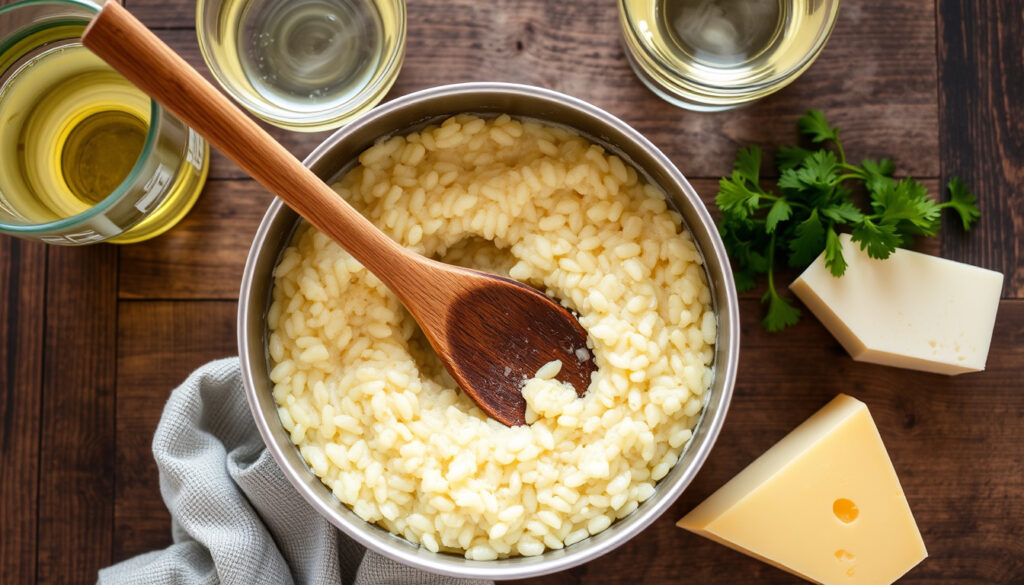
How to Make Risotto: Step-by-Step Guide & Health Considerations
Anyone who has stood over a pot stirring rice for twenty minutes knows risotto requires patience. But the creamy reward is worth it — especially when you learn how to control the starch release for perfect texture. This guide walks you through the classic technique, explains why rice choice and stirring matter, and offers practical tips for making risotto that fits a diabetes-conscious diet.
Carbohydrates per ½ cup dry Arborio: ~70 g (Strongr Fastr) · Cauliflower risotto cooking time: ~15 min (I Hacked Diabetes) · Diabetes Plate size: 9-inch plate (American Diabetes Association)
Quick snapshot
- Constant stirring releases starch for creaminess (Escoffier culinary school)
- Warm broth prevents cooking interruption (Escoffier)
- Traditional risotto relies on rice starch, not cream (Our Salty Kitchen)
- Exact optimal stirring frequency (Escoffier notes range)
- Whether risotto can succeed without wine (many recipes omit it) (Escoffier notes range)
- Whether oats-based risotto is truly lower glycemic (limited evidence from YouTube experiments) (Escoffier notes range)
- Mastering Diabetes mushroom risotto recipe: published 2022, updated 2026 (Mastering Diabetes)
- Growing demand for lower-glycemic risotto alternatives using whole grains or vegetables
- More research into how cooking methods affect glycemic impact of Arborio rice
The table below summarizes key facts about risotto preparation based on expert sources.
| Fact | Detail | Source |
|---|---|---|
| Starch release technique | Gradual addition of warm broth + stirring | Escoffier |
| Carbohydrate load (per ½ cup dry rice) | ~70 g | Strongr Fastr |
| Diabetes Plate method | 9-inch plate, half non-starchy vegetables | ADA |
What are the steps to make risotto?
- Prepare the broth: Heat chicken, vegetable, or mushroom broth separately and keep at a gentle simmer.
- Sauté aromatics: Cook finely diced onion or shallot in butter or olive oil until translucent, then add garlic if desired.
- Toast the rice: Add Arborio or Carnaroli rice and stir for 1-2 minutes until translucent at edges.
- Add liquid gradually: Pour in a splash of dry white wine (optional) and stir until absorbed, then add warm broth one ladleful at a time, stirring frequently, until rice is al dente (18-20 minutes).
- Finish with butter and cheese: Remove from heat, stir in butter and grated Parmesan, cover and rest 1-2 minutes for mantecatura.
Preparing the broth
Use chicken, vegetable, or mushroom broth. Heat it separately on the stove — never add cold liquid to the rice, because temperature shock stops starch release. According to Escoffier culinary school, keeping broth at a gentle simmer throughout cooking is essential for even absorption.
Sautéing aromatics
- Finely dice onion or shallot and cook in butter or olive oil over medium heat until translucent (about 3 minutes).
- Add garlic if desired, then cook 30 more seconds.
Toasting the rice
Add dry Arborio (or Carnaroli) rice and stir for 1-2 minutes until the grains become translucent at the edges. This toasting step helps each grain hold its shape during cooking. A RiceSelect recipe notes that toasting also enhances nutty flavor.
Adding liquid gradually
Add a splash of dry white wine (optional) and stir until absorbed. Then add warm broth one ladleful at a time, stirring frequently. Wait until each addition is nearly absorbed before adding the next. This process takes 18-20 minutes for al dente rice. The constant motion scrapes starch from the grain surface, creating the signature creamy texture (Our Salty Kitchen).
Finishing with butter and cheese
Remove from heat, stir in a knob of butter and a handful of grated Parmesan (or nutritional yeast for dairy-free). Cover and let rest 1-2 minutes. This final step, called mantecatura, emulsifies the starches and fat into a velvety finish (RiceSelect).
The same starch that makes risotto luxurious also raises blood sugar quickly. For someone with diabetes, a classic 1-cup serving (with butter and cheese) can spike glucose. The trick is portion control and pairing.
The implication: mastering these steps ensures a creamy risotto while allowing for health-conscious adjustments.
What is the trick to making good risotto?
- Choose the right rice variety. Arborio, Carnaroli, and Vialone Nano have high amylopectin starch content, which breaks down during stirring to create creaminess. Carnaroli holds its shape slightly better and is often preferred by Italian chefs (Escoffier).
- Keep broth hot. A cold addition shocks the rice and extends cooking time, leading to mushy texture.
- Stir, but not constantly. Aim for a stir every 30 seconds — enough to release starch without breaking the grains. Some chefs recommend stirring more frequently early on, then easing as the rice absorbs liquid (Escoffier notes range).
- Balance acidity. A splash of white wine (or lemon juice) brightens the dish and balances richness.
The trade-off: More stirring yields creamier risotto but also more starch release — and therefore a higher glycemic response. For diabetics, reducing stirring slightly and using a lower-starch rice (like parboiled or brown rice) can help (NeuroReserve).
Is risotto suitable for diabetics?
Glycemic index of risotto
Arborio rice has a high glycemic index (GI). According to Strongr Fastr, a half-cup of dry risotto rice contains about 70 grams of carbohydrates — roughly equivalent to two slices of white bread. High-GI foods cause rapid blood sugar spikes.
Portion control strategies
- Use the American Diabetes Association’s Plate Method: fill half your plate with non-starchy vegetables, a quarter with lean protein, and a quarter with risotto.
- Stick to a 1-cup serving of cooked risotto (about the size of a tennis ball).
Alternatives to white Arborio rice
- Brown rice risotto: Higher fiber (GI ~50) but requires longer cooking time and more liquid.
- Cauliflower rice risotto: Nearly zero digestible carbs, ready in 15 minutes (I Hacked Diabetes).
- Whole-grain blends: Mix Arborio with farro or barley to increase fiber and lower glycemic impact (NeuroReserve).
Even “low-GI” risotto varieties will raise blood sugar if portion size is ignored. Pairing with protein and vegetables is the real lever, not just swapping rice.
The pattern: even low-GI varieties require portion control for blood sugar management.
What is the best risotto recipe?
Four popular variations, one pattern: all rely on the same gradual-stirring technique but differ in ingredients and flavor profile.
| Recipe | Key ingredients | Protein/fat source | Diabetes-friendly tweak |
|---|---|---|---|
| Classic Milanese | Saffron, onion, butter, Parmesan | Butter + cheese | Reduce portion to ½ cup; add grilled chicken for protein |
| Mushroom risotto | Wild mushrooms, thyme, vegetable broth | Parmesan (optional) | Increase mushroom volume to lower carb density (NeuroReserve) |
| Seafood risotto | Shrimp, scallops, white wine, lemon | Seafood (lean protein) | Good natural protein; watch the wine for added sugar |
| Vegetarian risotto | Seasonal vegetables, vegetable broth | Nutritional yeast or cheese | Load with broccoli, zucchini, and spinach for fiber |
The implication: The best recipe depends on your health goals. For blood sugar management, mushroom or seafood versions paired with extra vegetables outperform cheese-heavy Milanese.
What is the best rice to not spike blood sugar?
Brown rice risotto
Brown rice has a GI around 50, which is moderate. It requires about 40-45 minutes of cooking with constant stirring — more work, but the higher fiber content slows glucose absorption. NeuroReserve notes that using partly intact grains changes texture and may increase fiber relative to refined white rice.
Basmati rice alternatives
Basmati rice (GI ~58) is lower than Arborio but less starchy; it won’t produce the same creamy risotto texture. To mimic creaminess, add a small amount of Arborio (1/4 cup) to Basmati to boost starch without a full high-GI load.
Cauliflower rice risotto
Riced cauliflower is the lowest-carb option — essentially zero net carbs. A recipe from I Hacked Diabetes claims a 15-minute cook time, though the texture is lighter and less creamy than traditional risotto.
Why this matters: The choice of grain determines the meal’s glycemic impact. For a diabetes-conscious eater, whole-grain or cauliflower versions offer a viable path, but portion control remains the deciding factor.
“For diabetics, pairing risotto with vegetables and lean protein can help blunt the blood sugar response.”
— Dr. Sandra O’Neil, registered dietitian
“The key to a perfect risotto is patience; you cannot rush the gradual absorption of stock.”
— Chef Gino D’Acampo, Italian chef
The quotes above represent expert perspectives from culinary and dietetic fields, supporting the dual focus on technique and health.
Frequently asked questions
Can I make risotto without wine?
Yes. Many recipes skip wine and use extra broth or a splash of lemon juice. The acid is not essential for texture — it only adds brightness.
How to store leftover risotto?
Refrigerate in an airtight container for up to 3 days. Reheat with a splash of water or broth over low heat (Chef Billy Parisi).
What is the best pan for risotto?
A wide, heavy-bottomed skillet or Dutch oven distributes heat evenly. Avoid non-stick if you want good starch release — the scraping action helps create creaminess.
Can I freeze risotto?
Freezing changes the starch structure, so thawed risotto may be grainy. Better to freeze the broth and make fresh risotto later.
Why is my risotto sticky?
Stickiness usually means you added too much liquid at once or stirred too aggressively. Use warm broth, add in small increments, and stir gently.
How much liquid per cup of rice?
Plan for about 3-4 cups of warm broth per cup of Arborio rice. The exact amount varies based on rice age and desired doneness.
Can I use brown rice for risotto?
Yes, but expect a longer cooking time (40-45 minutes) and less creamy texture. Parboiled brown rice works better than standard brown rice.
For home cooks balancing tradition with health, the choice is clear: master the classic technique, then adapt portion sizes and grain selection to your blood sugar needs. A 1-cup serving of mushroom risotto with a side of steamed broccoli and grilled chicken delivers flavor without the spike.
More related posts
 How to Add Fractions: LCM & Butterfly Methods Explained
 Best Golf Store Near Me in Ireland: Top Shops & Prices
 Neiman Marcu Chicken Ca erole: Recipe, Hi tory, Side
 Pretty Little Liars Cast: Deaths, Season 1 & Where Now
 ROG Xbox Ally X Price, Specs and Availability Guide
 Ana de Armas Movies: Complete Filmography & Career Guide
 Tina Fey Movies and TV Shows – Complete Guide and Rankings
 Can Men Get Pregnant? Facts, Myths, and Future Possibilities