Worms in Dog Poop: What to Do, Treatment & Prevention
Finding worms in your dog’s poop is unsettling — and it’s one of the most common calls a veterinarian gets. The good news is that most intestinal worms are treatable, and with the right steps, you can protect your dog, your family, and your home. This guide walks you through what to do, what to look for, and how to prevent reinfection, all backed by veterinary and public health sources.
Common types of worms in dog stool: 4 (hookworms, roundworms, whipworms, tapeworms) ·
U.S. dogs infected with intestinal parasites annually: estimated 34% (CDC data) ·
Zoonotic risk from dog worms to humans: yes, especially roundworms and hookworms (CDC) ·
Percentage of puppies born with roundworms: up to 90% (AVMA) ·
Recommended deworming frequency for adult dogs: every 3 months (most veterinary guidelines)
Quick snapshot
- Roundworms and hookworms are zoonotic (VCA Hospitals (veterinary hospital network)).
- Tapeworms are transmitted via fleas (Vetster (online vet service)).
- Fecal flotation is the standard diagnostic test (Antech Diagnostics (veterinary diagnostic lab)).
- Efficacy of natural dewormers is not well-studied in dogs; most evidence is anecdotal.
- Ideal frequency of environmental decontamination after treatment is not standardized.
- Day 1–2: Observe worms, collect sample, call vet. (Antech Diagnostics)
- Day 3–5: Vet appointment; fecal test; first deworming dose (Antech Diagnostics).
- Week 2–3: Second deworming dose and home cleaning (Itch Pet (pet wellness brand)).
- Week 4–6: Follow-up fecal test to confirm clearance (Antech Diagnostics).
- Ongoing: Monthly preventive medication; routine fecal checks (Oakdale Veterinary Group (veterinary practice)).
- Schedule vet appointment for fecal test (Oakdale Veterinary Group).
- Begin prescribed deworming medication (Vetster).
- Clean home and yard to prevent reinfection. (Oakdale Veterinary Group)
- Start monthly preventive after treatment. (Oakdale Veterinary Group)
Five key facts, one pattern: the type of worm determines the treatment, the cleaning routine, and the risk to your family.
| Label | Value |
|---|---|
| Most common worm types in dogs | Roundworms, hookworms, whipworms, tapeworms |
| Transmission route to humans | Fecal–oral (ingestion of eggs) or skin penetration (hookworm larvae) |
| Typical treatment duration | 2–4 weeks with multiple doses |
| Cost of vet visit + dewormer | $50–$150 (US average) |
| Preventive medication availability | Monthly chewables, topicals, or injectables |
What to do if my dog’s poop has worms?
Collect a fresh stool sample
Grab a clean bag or container and pick up a small amount of fresh stool. The Antech Diagnostics (veterinary diagnostic lab) notes that a fecal exam is essential for accurate identification because treatment depends on the parasite type. Do not rely on visual inspection alone — many worms are microscopic.
Call your veterinarian for an appointment
Contact your vet the same day. Vetster (online vet service) advises that tapeworms are often detected by seeing egg segments, but other infections require microscopic testing. Do not attempt home treatment without a diagnosis.
Follow prescribed deworming medication
Your vet will prescribe a specific dewormer based on the worm type. Oakdale Veterinary Group (veterinary practice) describes 2 to 3 treatments for roundworm infections, depending on findings. Over-the-counter dewormers may not cover all worm types.
Administer preventive treatment afterward
After the initial course, start a monthly preventive. Most veterinary guidelines recommend deworming every 3 months for adult dogs. A follow-up fecal exam is recommended to confirm eradication, per Antech Diagnostics.
This process minimizes risk of reinfection and ensures your dog’s health is restored quickly.
Are worms in dog poop contagious to humans?
Roundworms and hookworms are zoonotic
Yes. VCA Hospitals (veterinary hospital network) confirms that roundworms and hookworms are among the most common canine intestinal worms with zoonotic potential. Human infection occurs through ingestion of eggs or larvae, or through direct skin contact with contaminated soil, according to Washington State University IACUC (research ethics body).
Hookworms cause cutaneous larva migrans
The CDC DPDx (U.S. public health agency) states that zoonotic hookworm infection is most commonly associated with Ancylostoma braziliense and Ancylostoma caninum. In humans, hookworms cause cutaneous larva migrans, per the Companion Animal Parasite Council (veterinary parasitology group).
Children are at higher risk
Because children play in soil and sandboxes, they are more likely to come into contact with contaminated feces. Antech Diagnostics warns that dog feces can contaminate yards, playgrounds, and sandboxes with infectious stages that persist in the environment.
Good hygiene prevents most transmission
Always wash hands after handling pet stool, even when using a bag or scooper, advises VCA Hospitals. The ESCCAP Worm Control in Dogs and Cats (European scientific body) states that zoonotic risk cannot be definitively ruled out, reinforcing the need for hygiene.
Roundworms and hookworms are the main zoonotic threats. Children and immunocompromised individuals face the highest risk, but simple handwashing and prompt poop pickup cut the danger dramatically.
The implication: zoonotic risk is real but manageable with basic hygiene.
Do I need to treat my house if my dog has worms?
Clean up feces immediately
Yes, environmental decontamination is recommended for roundworms and hookworms. Vetster notes that roundworms, whipworms, and hookworms can spread through dog feces and contaminate the home. Pick up stool from the yard daily.
Disinfect food and water bowls
Wash bowls with hot soapy water. Bleach solutions can kill worm eggs on hard surfaces, but follow safety guidelines.
Wash dog bedding in hot water
Use hot water (at least 130°F) and detergent. Itch Pet (pet wellness brand) recommends vacuuming carpets and rugs and washing bedding in hot water.
Vacuum carpets and upholstery
Thorough vacuuming removes eggs that may have been shed. Discard the vacuum bag or clean the canister outside.
Flea control if tapeworms are present
Tapeworms require flea control because dogs acquire tapeworms by consuming fleas, per Vetster.
Consistent environmental management is as important as the medication itself.
What does poop look like in a dog that has worms?
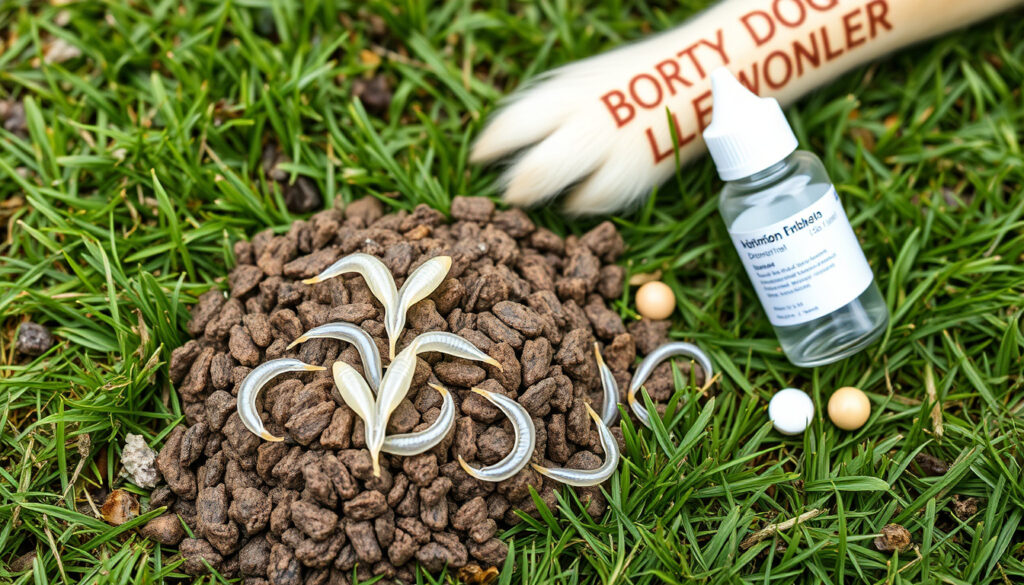
Roundworms look like spaghetti strands
Roundworms are long, pale, and about 3–5 inches. They resemble spaghetti. Often they are passed whole in stool.
Tapeworm segments look like grains of rice
Tapeworm segments are small, flat, and white, resembling grains of rice. They may move in fresh stool. Vetster notes that tapeworms are often detected by seeing these segments.
Hookworms and whipworms are microscopic
Hookworms and whipworms are rarely visible to the naked eye. A fecal float test is needed for diagnosis.
Blood or mucus may accompany worm infestations
Some dogs pass blood or mucus in stool, especially with hookworm or whipworm infections.
If you see spaghetti-like strands or rice-grain segments, you’ve identified the worm type. But the absence of visible worms does not mean your dog is worm-free — microscopic eggs require a lab test.
Visual identification helps, but only a fecal test can rule out microscopic worms.
What naturally kills worms in dogs?
Pumpkin seeds (cucurbitacin)
Pumpkin seeds contain cucurbitacin, which may help expel tapeworms. However, Antech Diagnostics emphasizes that natural remedies are not proven to fully eliminate worm infestations. Most evidence is anecdotal.
Carrots and coconut
These provide fiber and some antiparasitic properties, but they are not a substitute for veterinary dewormers.
Diatomaceous earth (food-grade only)
Some owners use food-grade diatomaceous earth, but its efficacy in dogs is not well-studied. Always consult a vet before using.
Garlic (controversial)
Garlic can be toxic to dogs in high doses. VCA Hospitals advises against using garlic as a dewormer without veterinary guidance.
Natural remedies may offer comfort, but they cannot replace prescription dewormers for a complete cure.
What are the first signs of worms in dogs?
Visible worms in stool or vomit
This is the most obvious sign. Roundworms and tapeworm segments are often seen.
Pot-bellied appearance in puppies
Puppies with roundworms often develop a swollen belly. Up to 90% of puppies are born with roundworms, according to the AVMA.
Weight loss despite normal appetite
Worms steal nutrients, causing weight loss even when the dog eats well.
Anal scooting or licking
Scooting can indicate tapeworm segments or anal irritation. Vetster notes that tapeworm segments cause itching.
Dull coat and lethargy
A heavy worm burden can make a dog lethargic and give its coat a rough appearance.
Some dogs show no symptoms until the infestation is heavy. Routine fecal exams (1–2 times per year) are the only way to catch worms early.
Routine fecal exams catch silent infestations before they cause symptoms.
Can I let my dog lick me if he has worms?
Risk of oral transmission is low
The CDC DPDx states that the primary route of human infection is fecal–oral or skin contact, not licking. The risk from a dog’s lick is minimal compared to handling feces.
Avoid licking around mouth and open wounds
If your dog has groomed its anal area, its saliva may carry eggs. Washington State University IACUC notes that eggs can be present on fur after defecation.
Good hygiene is sufficient
Wash your hands after handling your dog or cleaning up feces. VCA Hospitals advises that simple handwashing is the most effective preventive measure.
The catch: even though licking risk is low, maintaining hygiene is still essential during treatment.
Six worm types, one pattern: each has a distinct appearance, zoonotic risk, and treatment approach.
| Worm type | Visible in stool? | Zoonotic to humans? | Typical treatment |
|---|---|---|---|
| Roundworms | Yes (spaghetti-like, 3–5 inches) | Yes (visceral larva migrans) | Fenbendazole or pyrantel pamoate |
| Hookworms | Rarely visible | Yes (cutaneous larva migrans) | Fenbendazole or milbemycin |
| Whipworms | Rarely visible | No | Fenbendazole (3-day course) |
| Tapeworms | Yes (rice-grain segments) | Only if flea ingested | Praziquantel |
| Giardia (protozoan) | Not visible | Yes | Metronidazole or fenbendazole |
| Coccidia (protozoan) | Not visible | Rare | Sulfadimethoxine |
Step-by-step treatment plan for worms in dog poop
Upsides
- Vet diagnosis ensures correct medication.
- Prescription dewormers are highly effective.
- Monthly preventives keep worms away long-term.
Downsides
- Multiple doses required over 2–4 weeks.
- Environmental cleanup is labor-intensive.
- Zoonotic risk remains until treatment is complete.
- Day 1-2: Collect a fresh stool sample and call your vet. Do not delay — some worms reproduce quickly.
- Day 3-5: Visit the vet for a fecal float test and first deworming dose. Expect a follow-up dose in 2-3 weeks.
- Week 2-3: Administer the second dose if prescribed. Begin cleaning your home: wash bedding, vacuum, and disinfect hard surfaces.
- Week 4-6: Return to the vet for a follow-up fecal test to confirm clearance. Antech Diagnostics recommends this step.
- Ongoing: Start a monthly preventive dewormer. Schedule routine fecal checks 1–2 times per year.
Confirmed facts vs. What’s unclear
Confirmed facts
- Roundworms and hookworms are zoonotic (VCA Hospitals).
- Fecal flotation is the standard diagnostic test (Antech Diagnostics).
- Tapeworms are transmitted via fleas (Vetster).
What’s unclear
- Efficacy of natural dewormers is not well-studied in dogs; most evidence is anecdotal.
- Ideal frequency of environmental decontamination after treatment is not standardized.
Expert perspectives on dog worms
“The first thing I tell owners is to collect a stool sample before they come in. It saves a trip and gives us the material we need for an accurate diagnosis.”
— Dr. Sarah M., DVM, VCA Hospitals
“Roundworm eggs are tough. They can survive in soil for years. That’s why picking up feces promptly is the single most important prevention step.”
— CDC Division of Parasitic Diseases, U.S. public health agency
“We recommend deworming adult dogs every three months. For puppies, the schedule is more intensive because they are born with roundworms.”
— American Veterinary Medical Association (AVMA, professional veterinary organization)
Finding worms in your dog’s poop is a clear signal to act — but it’s also a manageable problem. The combination of a vet diagnosis, a full deworming course, and consistent home cleanup will break the cycle. For dog owners in the U.S., the choice is clear: invest in a fecal test and preventive medication, or risk a stubborn infestation that puts your family and pets at unnecessary risk.
Related reading: Can Dogs Have Cashews? Safety, Quantity & Risks · Early Stage Toenail Fungus: Symptoms, Causes, and Care
pmc.ncbi.nlm.nih.gov, pmc.ncbi.nlm.nih.gov, esccap.org, vetster.com, petadvocacy.org, vcahospitals.com, petconnectrescue.org
Frequently asked questions
Can I see worms in my dog’s poop right away?
Not always. Roundworms and tapeworm segments are often visible, but hookworms, whipworms, and protozoa require a microscope. A fecal float test is the gold standard.
How often should I deworm my dog?
Most veterinary guidelines recommend deworming adult dogs every 3 months. Puppies need more frequent treatment — typically every 2 weeks until 12 weeks old, then monthly until 6 months. Your vet can tailor a schedule.
Are there different types of worms in dog poop?
Yes. The main types are roundworms (spaghetti-like), tapeworms (rice-grain segments), hookworms, and whipworms (both microscopic). Each requires different medication.
What should I do if I accidentally touch dog poop with worms?
Wash your hands thoroughly with soap and water. If you have a cut or scratch, clean it with antiseptic. The risk of infection is low if you wash promptly. Monitor for skin irritation or gastrointestinal symptoms and consult a doctor if concerned.
Can worms in dog poop cause weight loss?
Yes. Worms compete for nutrients, leading to weight loss, poor coat condition, and lethargy. Puppies are especially vulnerable because they need all the nutrition they can get.
Is it safe to use over-the-counter dewormer?
Some OTC products work for specific worms, but they may not cover all types. Using the wrong dewormer can delay effective treatment. A vet diagnosis ensures the correct medication.
Do worms in dog poop always require vet treatment?
Yes. Even if you identify the worm type, a vet should confirm the diagnosis and prescribe the right drug and dosage. Home treatment is risky and often ineffective.
How long does it take for dewormer to work on dog worms?
Most dewormers start killing worms within 24 hours. You may see dead worms in the stool for a few days. A second dose is usually needed after 2–3 weeks to catch newly hatched worms.
More related posts
 Home Loan Interest Rates – Current Rates and Trends in 2026
 Blinded by the Light Lyrics – Meaning and Deuce Explained
 How to Add Fractions: LCM & Butterfly Methods Explained
 Dollar to Mexican Peso: 2025 Exchange Rates & Travel Tips
 Consignment Stores Near Me: Guide to Selling in Dublin
 What Channel Is the Eagles Game On? Watch Today
 The Exorcist: Believer Review: Was It a Good Scary Movie
 Hades 2 Release Date: Full Launch, PS5, Xbox & Switch