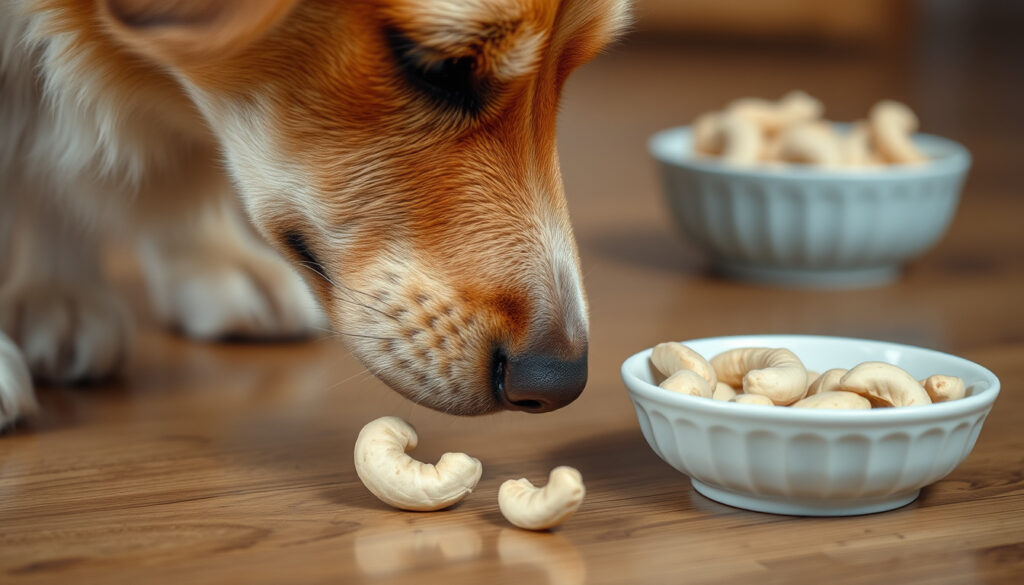
Can Dogs Have Cashews? Safety, Quantity & Risks
Cashews are safe for dogs in small amounts, but their high fat content means portion control is critical. A plain, unsalted cashew now and then won’t hurt your pup, but the catch is that these buttery nuts require careful serving sizes to avoid a trip to the vet.
Safe for dogs: Yes, in moderation ·
Fat content per ounce: 12 grams ·
Daily limit (small dog): 1-2 cashews ·
Daily limit (large dog): 5-6 cashews ·
Toxic nuts to avoid: Macadamia, black walnuts, raw cashews ·
Risk with salted cashews: High sodium danger
Quick snapshot
- Cashews are not toxic to dogs Purina (pet nutrition authority)
- Salted cashews can cause sodium poisoning Pooch and Mutt (pet food experts)
- Macadamia nuts are toxic to dogs Vets Now (emergency vets)
- Plain unsalted cashews are safe as occasional treats PetMD (veterinary health resource)
- The exact number of cashews that can trigger pancreatitis varies by dog size and health (PetMD (veterinary health resource))
- Whether cashew shells cause intestinal blockage depends on size and sharpness (PetMD (veterinary health resource))
- Long-term effects of regular cashew consumption are not well studied (PetMD (veterinary health resource))
- Whether cashew consumption affects dogs with existing health conditions (e.g., diabetes) is not well studied PetMD (veterinary health resource)
- Feed only plain, unsalted, shelled cashews
- Limit to portion guidelines based on dog size
- Introduce slowly and observe for allergic reaction
- If any signs of distress, contact your veterinarian
Six key specs, one takeaway: cashews are safe but high-fat; moderation is everything.
| Attribute | Value |
|---|---|
| Scientific name | Anacardium occidentale |
| Fat per 100g (cashews) | 44g |
| Safe for dogs | Yes, in moderation |
| Toxic compound | None (unlike macadamia) |
| Common risks | Pancreatitis from high fat, salt toxicity |
| Vet-recommended limit | Up to 5% of daily caloric intake |
How many cashews can a dog eat?
The answer depends on your dog’s size and overall health. PetMD (veterinary health resource) provides size-based examples: 1-2 cashews for extra-small dogs, up to 12-18 for extra-large dogs. But these upper limits are for healthy, adult dogs, and even then, cashews should never become a daily staple.
The implication: portion guidelines are a starting point; individual dog health and activity level matter.
Can dogs have cashews seeds?
- Cashew “seeds” are the raw nuts before roasting. Raw cashews contain urushiol, the same irritant found in poison ivy, and should not be given to dogs Bug Bakes (pet treat resource)
- Roasted or baked unsalted cashews are safe Pawlicy (pet insurance experts)
Can dogs eat salted cashews?
- Avoid salted cashews. High sodium can lead to salt poisoning, causing vomiting, diarrhea, and in severe cases, seizures MetLife Pet Insurance (pet health experts)
- Flavored nuts (honey-roasted, chili, garlic) often contain ingredients harmful to dogs, so stick to plain.
The implication: even “safe” cashews carry risks if not portion-controlled or prepared properly. Know your dog’s size and choose plain nuts only.
What to do if a dog eats cashews?
Most scenarios are low-risk, but action steps vary depending on what kind of cashew your dog ate. Follow this protocol.
- Identify the type: Plain unsalted, salted, flavored, or shells? Check the package.
- Plain unsalted cashews: Monitor for mild upset stomach. No action needed unless vomiting or diarrhea persists (PetMD, veterinary health resource)
- Salted or flavored cashews: Watch for excessive thirst, vomiting, or lethargy. Offer plenty of water and contact a vet if symptoms appear (Pooch and Mutt, pet food experts)
- Cashew shells: Call your vet immediately – sharp fragments can cause intestinal blockage (Vets Now, emergency vets)
- Quantity matters: If a small dog ate more than 10 cashews (especially salted), consult a vet proactively.
Most cases resolve with monitoring, but salted cashew ingestion in large amounts is a genuine emergency. If your dog shows weakness or unsteadiness, don’t wait – head to the vet.
The catch: timely intervention can prevent severe outcomes, so be prepared.
How to monitor for choking
- If your dog swallowed a whole cashew, watch for coughing, pawing at the mouth, or distress.
- Small dogs are more at risk of choking on whole nuts. Crush cashews into smaller pieces before offering.
When to contact a vet
- Any ingestion of raw cashews, shells, or large quantities of salted/flavored nuts.
- Signs of pancreatitis: vomiting, abdominal pain, hunched posture, loss of appetite.
- Excessive vomiting or diarrhea for more than 12 hours.
What this means: having a plan before a mishap reduces panic. Keep your vet’s number handy and know which cashew types require immediate attention.
What nuts are dogs not allowed?
Some nuts are outright toxic; others are safe in tiny amounts. The table below separates the dangerous from the permissible.
Five nuts, one pattern: toxicity comes from compounds the dog’s body cannot process.
| Nut | Safe for dogs? | Key risk / notes | Source |
|---|---|---|---|
| Macadamia | No – toxic | Causes weakness, vomiting, hyperthermia | Vets Now |
| Black walnut | No – toxic | Tremors, seizures, urinary issues | Purina |
| Moldy walnuts | No – toxic | Tremorgenic mycotoxins cause neurological symptoms | PetMD |
| Rancid nuts (any) | No – toxic | Oxidized fats cause vomiting and diarrhoea | Pooch and Mutt |
| Cashew (plain, unsalted) | Yes, in moderation | High fat – risk of pancreatitis if overfed | MetLife Pet Insurance |
Cashews sit in the safe column, but “safe” doesn’t mean “healthy”. The fat content rivals that of macadamia nuts – the difference is the absence of a specific toxin. Portion control is the only safety net.
What are the most toxic nuts for dogs?
- Macadamia nuts – even a few can trigger severe reactions within 12 hours (Vets Now)
- Black walnuts – contain juglone and other compounds that cause neurological signs
- Moldy walnuts – tremorgenic mycotoxins can lead to seizures (PetMD)
- Rancid nuts – any nut that smells off can cause digestive upset
The pattern: toxic nuts share no single chemical – some affect the nervous system, others the digestive tract. Knowing which nuts to keep out of reach prevents most emergencies.
What are the most toxic nuts for dogs?
This section zooms in on the worst offenders: macadamia nuts and walnuts. While cashews are safe, these nuts demand caution.
Are macadamia nuts dangerous?
Yes. Macadamia nuts contain a yet-unidentified toxin that causes weakness, vomiting, hyperthermia, and depression. Symptoms typically appear within 12 hours of ingestion. Even small amounts – as few as 2-3 nuts – can affect a small dog (Vets Now).
Can dogs eat walnuts?
English walnuts (the common grocery store variety) are not toxic in small amounts, but they are high in fat and risk rancidity. Black walnuts and moldy walnuts are dangerous. PetMD warns that moldy walnuts can produce tremorgenic mycotoxins, leading to tremors, seizures, and even death.
Why this matters: the line between safe and toxic is blurry with walnuts. Unless you are certain of the walnut type and freshness, it’s better to avoid them altogether.
Can dogs have cashews and nuts?
Mixing safe nuts is acceptable in tiny amounts, but the cumulative fat content can add up quickly. Avoid combining with any toxic nuts.
Can dogs have cashew milk?
Cashew milk is generally safe, but check for additives like xylitol, sugar, or chocolate. Purina advises that nut milks should only be given occasionally and in small amounts to avoid digestive upset.
Can dogs eat almonds alongside cashews?
Almonds are safe in small numbers, but they are high in fat and can pose a choking hazard for small dogs. MetLife Pet Insurance suggests giving no more than 1-2 almonds to a large dog, and only unsalted.
The pattern: when mixing nuts, the fat content compounds, making portion control even more important.
Upsides
- Cashews are non-toxic – safe treat option
- Provide energy, magnesium, and healthy fats in small doses
- Easy to break into small pieces for training treats
- Plain unsalted cashews widely available
Downsides
- High fat content can cause pancreatitis
- Salted or flavored cashews pose serious health risks
- Empty calories – no nutritional benefit over fruits or vegetables
- Risk of overfeeding because dogs love the taste
- Raw cashews contain urushiol (poison ivy toxin)
“Cashews are safe for dogs in small quantities, but they are high in fat and should only be an occasional treat.”
— Purina Nutritionist (Purina, pet nutrition experts)
“Even safe nuts like cashews can lead to weight gain and pancreatitis if overfed.”
— Vets Now (emergency veterinary service)
For the average dog owner, the choice is clear: a plain unsalted cashew now and then won’t hurt, but the treat pouch should stay stocked with lower-fat alternatives. Stick to 1-2 for small dogs, 5-6 for large dogs, and never let salted or flavored nuts cross the bowl. Your dog’s pancreas will thank you.
instagram.com, metlifepetinsurance.com, shilohsvet.com, nutrish.com, facebook.com
For a broader overview of which nuts are safe and which pose serious risks, refer to our guide on safe and toxic nut varieties.
Frequently asked questions
Can dogs eat cashew butter?
Yes, as long as it is unsalted, unsweetened, and contains no xylitol. Cashew butter is even more calorie-dense than whole nuts, so limit to a teaspoon for small dogs and a tablespoon for large dogs.
Can dogs eat roasted cashews?
Yes, dry-roasted plain cashews are safe. Avoid oil-roasted or salted varieties. Roasting reduces the urushiol content found in raw cashews.
Can dogs eat cashew shells?
No. Cashew shells are not digestible and can cause intestinal blockages. Contact your vet immediately if your dog swallows a shell.
Are cashews good for dogs coat?
Not directly. The fatty acids in cashews might contribute to a shiny coat theoretically, but the risks of overfeeding outweigh any benefit. Choose omega-3 supplements designed for dogs instead.
Can puppies eat cashews?
It is best to avoid offering cashews to puppies. Their digestive systems are sensitive, and the high fat content can cause diarrhea or pancreatitis. Stick to puppy-formulated treats.
Do cashews cause allergies in dogs?
Tree nut allergies are rare in dogs but possible. Symptoms include itching, swelling, hives, or digestive upset. If you see signs, stop feeding cashews and consult a vet.
Can dogs eat honey roasted cashews?
No. Honey roasted cashews contain added sugar, salt, and often other flavorings. The high sugar content is not appropriate for dogs and can cause obesity and dental issues.
Looking for more on nut safety? Check out Are Pistachios Good for You? and How to Make Risotto: Step-by-Step Guide & Health Considerations for additional food safety guidance. Also see our pistachio deep dive and health considerations in cooking for more context.
More related posts
 Alex Cooper Net Worth 2025: $32M from Call Her Daddy
 Codes for Azure Latch July 2026: Active Codes List
 Wordle New York Times: Best Starting Words, Access, and History
 Nintendo Switch 2 Restock – Where and When to Buy
 Best Home Coffee Grinders: Expert Reviews & Reddit Picks
 Microsoft Customer Service Phone Number 24/7: Get Help Now
 Boats for Sale Near Me: Find Used Boats in Ireland | Guide
 Dow Jones Industrial Average Compare: Live DJIA vs Indexes