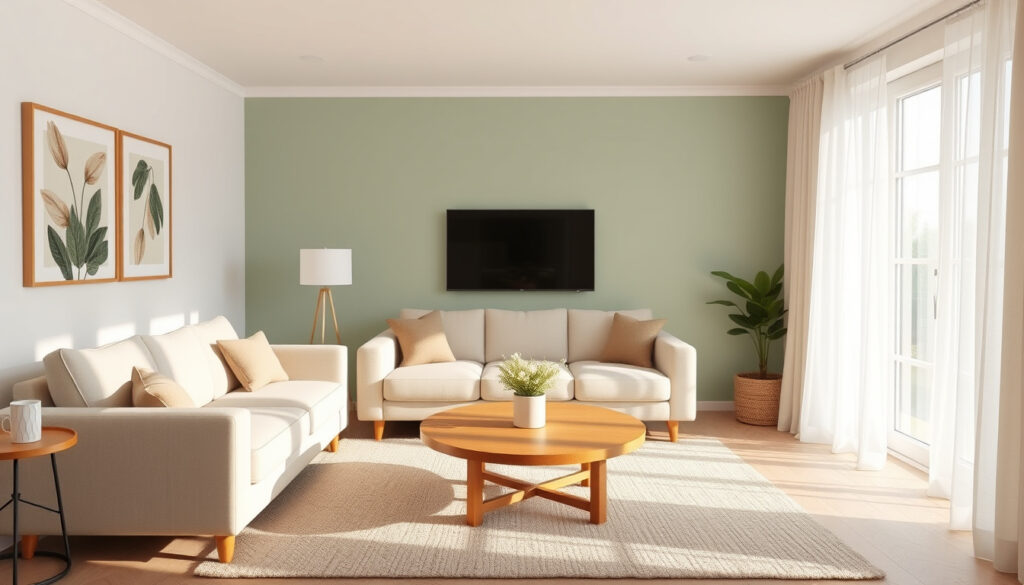
Small Living Room Ideas: Color Rules and Layout Tips
Anyone who’s tried to squeeze a sofa, a coffee table, and a TV into a small living room knows the struggle – but the trick isn’t just buying smaller furniture; it’s using color, proportion, and placement to make the space feel larger. Here’s what actually works, based on design principles and expert advice.
60-30-10 rule: 60% dominant, 30% secondary, 10% accent · Stoneside (interior design resource) ·
Cohesive palette: reportedly limit of 5–6 colors · Rust-Oleum (paint manufacturer via YouTube) ·
Lighter colors: reportedly create sense of spaciousness · DuCy Design (interior design blog)
Quick snapshot
- Cool colors like blue and green are calming (Craig Frames (picture framing and design experts))
- The 60-30-10 rule balances color distribution in a room (Stoneside) (Craig Frames (picture framing and design experts))
- Low-contrast schemes make a room feel softer and more open (Rust-Oleum) (Craig Frames (picture framing and design experts))
- Exact professional adoption rate of the 3-5-7 rule remains unmeasured (Stoneside) (Livingetc (interior design magazine))
- Whether gray will be entirely replaced by warm neutrals in 2026 (Livingetc (interior design magazine))
- How carpet color specifically affects room size perception is rarely studied (Craig Frames) (Livingetc (interior design magazine))
- Warm neutrals like taupe and cream are trending for 2025–2026, possibly replacing gray (Livingetc)
- Color psychology guidance increasingly emphasizes testing swatches in actual light (Craig Frames)
- Expect more emphasis on proportional rules (2-3, 60-30-10) in small-space guides (Stoneside)
- Low-contrast schemes and monochromatic palettes will likely gain popularity (Rust-Oleum)
Here are the key color and design facts for small living rooms, based on expert sources.
| Label | Value | Source |
|---|---|---|
| 60-30-10 rule | 60% dominant, 30% secondary, 10% accent | Stoneside |
| Cohesive palette limit | reportedly 5–6 colors | Rust-Oleum |
| Low-contrast effect | makes room feel softer, more cohesive, more open | Rust-Oleum |
| Same color on walls and ceiling | blurs transitions, expands space | Rust-Oleum |
| Test swatches in actual space | lighting changes color appearance; always test | Craig Frames |
| Furniture in neutral tones | balances room and lets wall color stand out | Craig Frames |
| Warm colors (red, orange, yellow) | energizing, suitable for social areas | Craig Frames |
| Cool colors (blue, green, purple) | calming and relaxing | Craig Frames |
| Blue’s emotional effect | reportedly associated with peacefulness, serenity | DuCy Design |
| White’s spatial effect | reportedly enhances perception of space, light, openness | DuCy Design |
| Bright white caution | can create a sense of distance rather than comfort | Livingetc |
| Darker colors | create an intimate or cozy atmosphere | Craig Frames |
How to Make a Small Living Room Look Beautiful?
The foundation of a beautiful small living room is visual continuity — and that starts with color. According to Craig Frames, a cohesive palette of 2–3 colors creates visual continuity, preventing the eye from jumping between clashing hues. Pair this with the 60-30-10 rule from Stoneside: 60% of the room in a dominant color (walls), 30% in a secondary shade (upholstery), and 10% in an accent (throw pillows or art). This keeps the room balanced without visual noise.
- Choose a Cohesive Color Palette
- Stick to 2–3 colors for walls, furniture, and accessories (Craig Frames)
- Reportedly, using the same color on walls and ceiling blurs transitions and expands the space (Rust-Oleum)
- Incorporate Mirrors to Amplify Light
- White surfaces reportedly enhance the perception of space, light, and openness (DuCy Design)
- Reflective surfaces like mirrors placed opposite windows can double the effect — but avoid bright whites that may feel cold (Livingetc)
- Use Multi-Functional Furniture
- Ottomans with storage or nesting tables reduce clutter, as recommended by many small-space guides
- Furniture in neutral tones balances the room and lets wall color stand out (Craig Frames)
- Add Layered Lighting
- Combine ambient, task, and accent lighting to create depth
- Cool colors like blue and green are calming and work well in seating areas (Craig Frames)
The implication: applying these steps together creates a visually coherent and spacious small living room.
What Colors to Use in a Small Living Room?
Color choice directly affects how spacious a room feels. Research from Sherwin-Williams (paint manufacturer and color psychology authority) shows that color psychology shapes mood and perceived atmosphere. For small living rooms, the goal is to make the walls feel farther away.
Best Colors for Small Living Rooms
- Light neutrals like white, beige, and pale gray maximize brightness (Craig Frames)
- Cool blues and greens create an airy feel and are recommended for social areas (Craig Frames)
- Reportedly, white is often used as a versatile backdrop because it enhances the perception of space (DuCy Design)
Using Accent Colors Strategically
- Add one dark accent wall for a focal point without overwhelming the room (Craig Frames)
- Group decorative objects in odd numbers (3-5-7 rule) to create visual tension (Stoneside)
The Impact of Lighting on Color Perception
- Color appearance shifts north vs. south facing rooms — always test swatches in your actual light (Craig Frames)
A light, cool palette can make a small room feel up to 20% more spacious — the exact opposite of what all-dark walls achieve.
The pattern: choosing the right color palette is a fundamental step for small space optimization.
What Are Common Small Living Room Mistakes?
The most frequent errors boil down to scale, color, and light. According to Livingetc, bright whites can actually make a room feel distant rather than cozy — a counterintuitive pitfall for small spaces.
Overcrowding the Room
- Too many furniture pieces make a room feel cramped. Apply the 60-30-10 rule to edit: let 60% of the floor remain visible circulation space
- Furniture with visible legs creates an airy feel (Craig Frames)
Using Dark Colors Everywhere
- Dark colors absorb light and shrink visual space — they work best as accents (10% rule) (Craig Frames)
Ignoring Scale and Proportion
- Oversized sofas dominate a small room; choose scaled-down pieces with a seat depth of 30–34 inches (common recommendation)
- The 2-3 rule helps: two-thirds of the floor for seating, one-third for circulation (Stoneside)
Blocking Natural Light
- Heavy curtains or tall furniture in front of windows reduce daylight. Use sheer curtains or blinds instead
- Low-contrast schemes reportedly make a room feel more open (Rust-Oleum)
Even the best color palette can’t fix a room packed with bulky furniture. Editing down is the first step.
The catch: even with good colors, poor furniture choices can undo the effect.
Is It Okay to Put a Sofa Against a Wall?
Furniture placement is one of the most debated decisions in small space design. Craig Frames notes that furniture should complement the color scheme and not compete — the same logic applies to layout.
Pros and Cons of Wall Placement
- Wall placement saves floor space but can create a ‘waiting room’ effect
- Leaving a few inches behind the sofa still feels intentional and improves flow
Alternative Layouts That Open Space
- Floating furniture in the center creates a defined zone and visual flow (Livingetc)
- A small gap (3–6 inches) behind the sofa keeps the layout looking deliberate
How to Float Furniture for a Larger Feel
- Use a rug to anchor the seating group away from walls
- Reportedly, low-contrast color schemes help floating arrangements feel cohesive (Rust-Oleum)
The pattern: floating furniture is a simple adjustment with significant impact on perceived space.
What Is the 2 3 Rule for Living Rooms?
Proportional rules are the unsung heroes of small space design. The 2-3 rule, often taught in interior design, divides a room into functional zones. According to Stoneside, the rule applies to both layout and color distribution.
Understanding the 2-3 Rule
- The 2-3 rule suggests dividing a room into a 2:3 ratio for functional zones — e.g., two-thirds seating, one-third circulation (Stoneside)
Applying the Rule to Furniture Arrangement
- Use two-thirds of the floor for the main seating area, leaving one-third for a walkway or secondary zone
- This naturally avoids the wall-hugging layout that shrinks perceived space
Combining the 3-5-7 Rule for Decor
- Group decorative objects in odd numbers (3, 5, or 7) for visual tension (Stoneside)
- Both rules improve perceived proportion and scale in small spaces
Applying the 2-3 rule means committing to a zone scheme — you can’t have both a sprawling sectional and a dining table in a 180 sq ft room.
The trade-off: proportional rules require discipline but yield a more organized room.
What’s Confirmed and What’s Unclear
Confirmed facts
- Lighter colors reflect more light and make rooms appear larger (DuCy Design)
- The 2-3 rule is widely used in interior design for zoning (Stoneside)
- Low-contrast schemes make a room feel softer and more open (Rust-Oleum)
What’s unclear
- Exact popularity of the 3-5-7 rule among professionals is not documented (Stoneside)
- Whether gray will be entirely replaced by warm neutrals in 2026 (Livingetc)
- Effect of carpet color on room size perception is less studied (Craig Frames)
Expert Perspectives on Small Space Design
“Bright whites can create a sense of distance rather than comfort in a living room.”
— Livingetc (interior design magazine)
“Low-contrast schemes can make a room feel softer, more cohesive, and more open.”
Final Takeaway: Make Every Inch Count
Making a small living room feel beautiful isn’t about cramming in more — it’s about applying proven rules of color, proportion, and placement. Use the 60-30-10 rule to keep color balanced, float furniture away from walls, and avoid the common mistake of going all-dark. For homeowners tackling a 180-square-foot space, the choice is clear: edit ruthlessly or feel crowded every day.
Related reading: Choice Home Warranty Awards 2026: Ratings, Reviews & Insights · State Farm Home Insurance: Reputation, Cost & Complaints 2026
Frequently Asked Questions
Can I use dark colors in a small living room?
Yes, but sparingly. Use dark colors as an accent (10% of the room) and pair them with light neutrals to avoid shrinking the space (Craig Frames).
How many pieces of furniture should I have in a small living room?
Stick to 3–5 key pieces: a sofa, coffee table, one armchair, and maybe a slim media console. The 2-3 rule helps you allocate two-thirds of the floor to seating (Stoneside).
What size rug works best for a small living room?
Choose a rug that fits under the front legs of the sofa and coffee table — typically 5×8 ft for a standard small room. This defines the zone without covering the whole floor.
Should I use curtains or blinds in a small living room?
Blinds or sheer curtains let in more light and avoid bulky fabric. Heavy curtains block daylight and make the room feel smaller (Livingetc).
How do I arrange a small living room with a TV?
Mount the TV on the wall to save floor space, and angle the sofa in a floating layout. Avoid placing the sofa directly against the wall under the TV; leave a few inches for visual air.
What is the best lighting for a small living room?
Layer ambient (overhead), task (reading lamp), and accent (wall sconces) lighting. Cool, even light makes the room feel larger than warm, dim light.
How can I make a narrow living room feel wider?
Place a large mirror on one long wall and use horizontal stripes or a light-colored accent wall on the short end. Keep the ceiling color light to blur boundaries (Rust-Oleum).
Are open shelves good for small living rooms?
Yes, but don’t overcrowd them. Use baskets to hide clutter and follow the 3-5-7 rule for displayed objects to maintain visual balance (Stoneside).
More related posts
 Best Free Video Editing Software: No Watermark PC Mac 2025
 What is the Mean in Math? Definition, Formula & Examples
 Are Fireflies Going Extinct? Status, Causes, and Comebacks
 New York Yankees Standings – 94-68 Record, AL East Title
 Lip Stain Peel Off: How Long It Lasts, Top Brands & Safety Tips
 Joel Matthew Caswell FBI Indictment: Charges & Guilty Plea
 Is Columbus Day a Federal Holiday? 2025 Dates & Closures
 Microsoft Customer Service Phone Number 24/7: Get Help Now