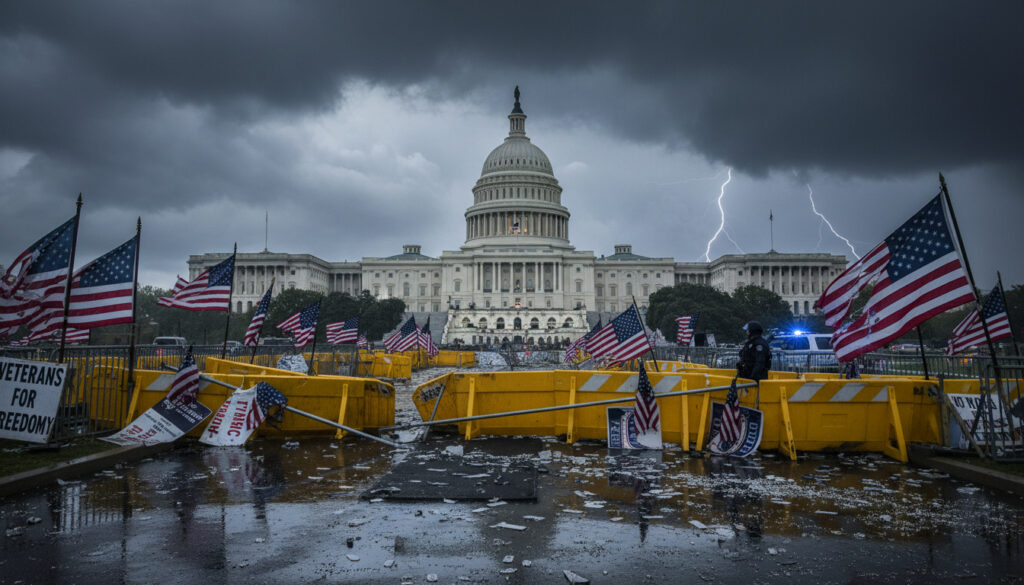
Veterans Arrested at Capitol – Charges, List and 2025 Updates
Military veterans represented a disproportionately large segment of those charged in the January 6, 2021, U.S. Capitol attack, with approximately 20 percent of the 1,575 defendants brought before federal courts identifying as former or active-duty service members. This figure translates to roughly 315 veterans facing charges ranging from misdemeanor trespassing to felony seditious conspiracy, a statistical overrepresentation that has drawn scrutiny from military leadership and federal investigators alike. The involvement spans from decorated Special Forces operatives to active-duty Marines, with many maintaining affiliations to extremist organizations such as the Oath Keepers and Proud Boys.
Department of Justice records indicate the cohort includes at least five active-duty personnel identified among the breach participants, complicating the military’s relationship with the prosecutions. Cases have progressed through federal courts since 2021, yielding sentences from probationary terms to multi-year prison commitments, though the legal landscape shifted significantly following presidential pardons issued on January 20, 2025. Subsequent arrests of pardoned individuals have since emerged, indicating ongoing legal complications for certain defendants.
The following analysis examines the scope of military participation, specific individuals facing prosecution, the charges levied against them, and their current legal standings based on available court records and Department of Justice filings.
How Many Veterans Were Arrested in the January 6 Capitol Riot?
- Veterans constitute roughly one in five defendants despite representing less than 7 percent of the general population, indicating significant statistical overrepresentation.
- Active-duty participation included enlisted Marines and at least one Major, triggering internal military investigation protocols.
- Prominent leadership roles within extremist groups were frequently occupied by veterans, including the Oath Keepers founder.
- Sentencing outcomes vary dramatically based on specific conduct, from probation for minor trespassing to 96 months for violent assaults.
- Post-pardon recidivism has occurred, with some veterans facing new criminal charges following their release.
- Military branches cooperated with federal investigators to identify personnel through internal channels.
- Discharges from reserve components followed convictions for several defendants.
| Defendant | Military Background | Primary Charges | Status |
|---|---|---|---|
| Stewart Rhodes | Army Paratrooper | Seditious Conspiracy | Convicted Nov. 2022 |
| Christopher Alberts | Virginia National Guard | Assault, Firearm Possession | 84 Months Prison |
| Timothy Hale-Cusanelli | Army Reservist (Discharged) | Obstructing Congress | 4 Years Prison |
| Micah Coomer | Active-Duty Marine | Illegal Entry | Arrested Jan. 2023 |
| Larry Brock Jr. | Air Force Lt. Col. | Entering Senate Floor | Released Pre-Trial |
| Jessica Watkins | Army Veteran | Oath Keepers Affiliation | Awaiting Trial (2022) |
Who Are the Key Veterans Arrested at the Capitol?
Active Duty Service Members
At least five active-duty service members have been identified among the Capitol defendants, including three Marines arrested in January 2023. Micah Coomer, stationed at Camp Pendleton; Joshua Abate, assigned to Fort Meade; and Dodge Dale Hellonen, from Camp Lejeune, each face misdemeanor charges including illegal entry and disorderly conduct after spending approximately 52 minutes inside the Capitol building. Marine Corps Times reported that fellow Marines assisted investigators in identifying the trio, indicating internal cooperation with federal authorities.
Active-duty Marine Major Chris Warnagiris faces separate charges related to the breach, with his case status listed as awaiting trial as of 2022 court filings. The presence of currently serving personnel distinguished these cases from the majority involving former military members.
The Marine Corps actively aided federal investigators by providing identification assistance for active-duty personnel allegedly present during the Capitol breach. This cooperation facilitated the January 2023 arrests of three Marines through internal identification protocols.
Oath Keepers and Proud Boys Affiliations
Veterans held prominent positions within extremist organizations implicated in the riot. Stewart Rhodes, an Army paratrooper veteran and founder of the Oath Keepers, was convicted of seditious conspiracy in November 2022 for his role in orchestrating the group’s participation. Fellow Oath Keeper Jessica Watkins, an Army veteran, also faces charges related to her organizational leadership during the events.
Jeremy Bertino, associated with the Proud Boys, pleaded guilty to seditious conspiracy and felon-in-possession of firearms charges. Connecting Vets documented these organizational ties alongside other veteran defendants. For additional service information, see our Take 5 Car Wash – Locations, Services, Pricing and Reviews.
Special Operations and Intelligence Backgrounds
Several defendants brought specialized military training to the proceedings. Jeremy Brown, a Special Forces veteran, faces charges alongside illegal firearms possession allegations. Jeffrey McKellop, another Special Forces veteran and former CIA contractor, was accused of assaulting officers with a flagpole. Thomas Webster, a Marine Corps veteran, allegedly used a Marine Corps flagpole as a weapon against law enforcement personnel.
What Charges and Sentences Face the Arrested Veterans?
Felony and Misdemeanor Classifications
The Department of Justice pursued charges spanning the entire severity spectrum. Misdemeanor cases typically involved allegations of entering restricted grounds and disorderly conduct, common among veterans who spent limited time inside the building. Felony prosecutions targeted those accused of assaulting officers, seditious conspiracy, or carrying weapons.
Christopher Michael Alberts, a Virginia National Guard member, received one of the longest sentences among military defendants: 84 months imprisonment, 36 months supervised release, and $2,000 in fines following convictions on nine charges including civil disorder and assault. Court records documented his possession of a pistol and body armor during the breach.
Violent offenses involving weapons or assaults on law enforcement have resulted in multi-year prison terms for veteran defendants, with some sentences exceeding seven years. Non-violent entry charges have typically resulted in probation or short-term incarceration.
Post-Pardon Legal Complications
The presidential pardons issued on January 20, 2025, created a complex legal landscape for veteran defendants. While many saw their convictions vacated, others faced subsequent arrest on separate charges. Zachary Jordan Alam, sentenced to 96 months for assault and obstruction before receiving a pardon, was arrested again on felony burglary charges on May 9, 2025. Similarly, Bryan Betancur faced rearrest in March 2026 on assault and battery charges following his pardon and initial 4-month sentence.
What Is the Current Status of January 6 Veteran Defendants?
As of early 2025, veteran defendants occupy various positions within the federal justice system. Many completed sentences prior to the 2025 pardons, while others remain subject to ongoing supervised release conditions. A significant portion of cases involving lesser charges concluded with probationary terms or short incarceration periods served shortly after arrest. For those interested in the actors involved, you can find the Fantastic Beasts 3 Cast.
The current legal status of numerous veteran defendants remains unclear in available public records. While high-profile cases received extensive documentation, the disposition of minor misdemeanor charges against active-duty Marines arrested in 2023 has not been comprehensively updated.
Treatment Comparisons
Available data does not indicate systematic differential treatment for veterans compared to civilian defendants in sentencing outcomes. Military status has not served as a mitigating factor in federal guidelines application, though defense attorneys have occasionally cited service records during plea negotiations. The Department of Justice maintains that prosecution standards apply uniformly regardless of military background.
However, military cooperation with investigators proved distinctive in certain cases. The identification of active-duty personnel through internal Marine Corps channels contrasted with civilian investigations reliant primarily on social media and video evidence.
When Were the Veterans Arrested at the Capitol?
- January 6, 2021: Initial breach occurs; immediate arrests include some veterans present at the Capitol. Source: FBI Capitol Violence Cases
- January 20, 2023: Three active-duty Marines (Coomer, Abate, Hellonen) arrested following identification by fellow service members. Source: Marine Corps Times
- November 2022: Stewart Rhodes convicted of seditious conspiracy following trial proceedings. Source: Federal Court Records
- September 2022: Army reservist Timothy Hale-Cusanelli sentenced to four years imprisonment. Source: Court Documents
- November 2024: Zachary Jordan Alam receives 96-month sentence for assault and destruction charges. Source: Federal Sentencing Records
- January 20, 2025: Presidential pardons issued for numerous Capitol breach defendants including veterans. Source: Case Tracking Data
- May 9, 2025: Post-pardon arrest of veteran defendant Alam on felony burglary charges. Source: Legal Records
What Remains Unclear About Veteran Defendants?
| Established Facts | Pending or Uncertain Information |
|---|---|
| Approximately 20% of 1,575+ defendants have military backgrounds | Final disposition of all misdemeanor cases from 2023 arrests |
| At least 5 active-duty service members identified | Whether veterans face different conviction rates than civilians |
| Sentences range from probation to 96 months imprisonment | Outcomes of ongoing appeals and post-pardon prosecutions |
| Presidential pardons issued January 20, 2025 | Complete current status for all 315+ veteran defendants |
| Extremist group leadership roles confirmed for Rhodes, Watkins | Specific defense strategies employed across all veteran cases |
How Did Military Background Influence Capitol Riot Participation?
Veteran participation in the January 6 events represents a statistically significant deviation from general population demographics. While military veterans comprise approximately 7 percent of the adult population, their representation among Capitol defendants reaches 20 percent, suggesting distinctive mobilization patterns within this demographic. This overrepresentation has prompted analysis regarding the relationship between military service and susceptibility to extremist recruitment narratives.
The organizational structures of groups like the Oath Keepers deliberately leveraged veterans’ tactical training and command experience. Stewart Rhodes founded the organization specifically as a coalition of current and former military and law enforcement personnel, creating hierarchical command structures familiar to service members. This institutional framework placed veterans in decision-making positions during the Capitol breach rather than merely peripheral participation.
Military branches responded to these events through internal investigations and cooperation with federal authorities. The Marine Corps’ assistance in identifying active-duty personnel demonstrated institutional distance from the defendants’ actions. Some reservists, including Hale-Cusanelli, faced discharge proceedings following their arrests, indicating internal consequences separate from criminal prosecutions. The Project On Government Oversight has documented these institutional responses alongside prosecution data.
What Do Official Records Show About Veteran Prosecutions?
Federal court documents and Department of Justice filings provide the primary source material for understanding veteran involvement. The Department of Justice Capitol Breach Cases portal maintains public records of charges and dispositions, though military status is not always explicitly tagged in these databases. Investigative reporting from Military Times has compiled specific service connection data not always available in court dockets.
Tracking efforts by organizations including the Insurrectionist Tracker attempt to maintain current status updates, though comprehensive 2025 data for all military defendants remains incomplete. Connecting Vets reporting from early 2022 provided foundational identification of many initial veteran defendants, while consolidated case lists offer reference points for specific sentencing and appeal information.
What Does the Data Reveal About Veterans at the Capitol?
The prosecution of approximately 315 veterans for January 6-related offenses represents an unprecedented intersection of military service and domestic extremism in American legal history. While the vast majority of defendants charged in connection with the Capitol breach faced appropriate prosecution regardless of background, the overrepresentation of veterans—particularly in leadership roles within extremist organizations—has prompted ongoing military policy reviews. Current status varies widely: some serve prison terms, others received presidential pardons followed by subsequent arrests, and many completed probationary sentences. For additional account security information, see our Sephora Credit Card Login – Secure Account Access Guide.
Frequently Asked Questions
How many active-duty military members were arrested?
At least five active-duty service members have been identified, including three Marines arrested in January 2023 and Marine Major Chris Warnagiris.
What sentences have veterans received?
Sentences range from probation and fines to 96 months imprisonment, depending on whether defendants engaged in violent acts or merely entered restricted areas.
Did any veterans receive pardons?
Yes, presidential pardons issued on January 20, 2025, covered many veteran defendants, though some faced subsequent arrests on new charges.
Which extremist groups included veterans?
The Oath Keepers, founded by Army veteran Stewart Rhodes, and the Proud Boys both included veterans in leadership positions during the Capitol breach.
Are veterans treated differently in court?
No systematic differential treatment has been documented; federal prosecution standards apply uniformly regardless of military background.
What military branches were represented?
Defendants came from the Army, Marine Corps, Air Force, and National Guard components, with particular representation from special operations backgrounds.
More related posts
 Consignment Stores Near Me: Guide to Selling in Dublin
 Right to Bear Arms: 2nd Amendment History, Text & Meaning
 Pokémon Legends: Z-A Release Date Confirmed for Oct 16, 2025
 What Is Implantation Bleeding? Signs, Timing, vs Period
 70 Fahrenheit to Celsius: Quick Conversion and Temperature Guide
 What Is a Liberal? Definition, Beliefs & Politics
 New Hunger Games Book 2025: Sunrise on the Reaping
 Sephora Credit Card Login – Secure Account Access Guide